Afghan Refugees and Displaced People Teach-Out (Coursera)

Afghan Refugees and Displaced People Teach-Out (Coursera)

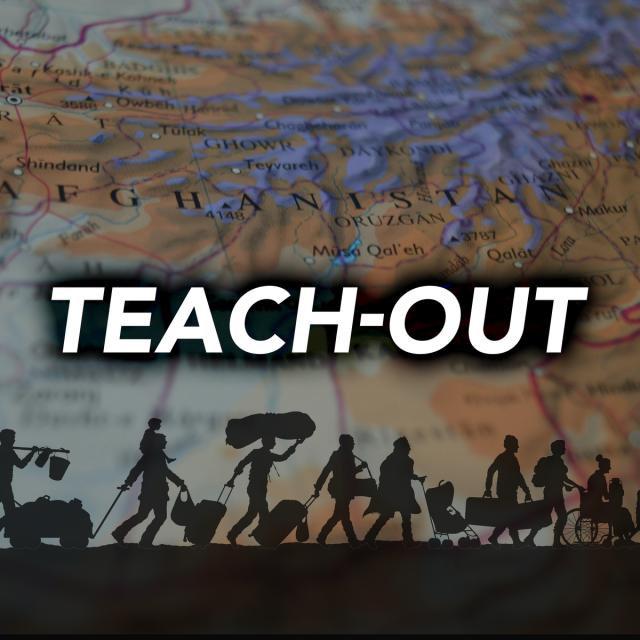
Following the removal of American troops from Afghanistan, there has been a surge of Afghans trying to escape the country’s turmoil. From food insecurity, economic concerns, health and safety hazards, mental health impacts and more, it is apparent that the people of Afghanistan are facing a range of issues.

Class Deals by MOOC List - Click here and see Coursera's Active Discounts, Deals, and Promo Codes.

Given that the resettlement of displaced peoples into new communities is an ongoing need, with currently nearly 26 million refugees worldwide, this arising situation raises questions and invites conversation about how to best support these new refugees - and displaced peoples globally. In this Teach-Out, learners will learn about the short and longer-term implications of the multi-nation evacuation of Afghan nationals to other countries as well as ways to raise awareness about what’s happening in Afghanistan and help displaced people or refugees in their own communities.

Syllabus

WEEK 1: Afghan Refugees and Displaced People Teach-Out

Go to Class
MOOC List is learner-supported. When you buy through links on our site, we may earn an affiliate commission.

Related Courses

Introduction to Key Constitutional Concepts and Supreme Court Cases (Coursera) Coursera
University of Pennsylvania

Introduction to Key Constitutional Concepts and Supreme Court Cases (Coursera)

This course offers an introduction to the U.S. Constitution and landmark Supreme Court cases interpreting it. It explores the Constitution’s origins, its amendment over the years, and methods of constitutional interpretation. Topics include the nature and structure of the federal government, the powers of the federal government, and individual rights.

Oct 5th 2026
4 Weeks
Interpreting for Refugees: Contexts, Practices and Ethics (FutureLearn) FutureLearn
University of Glasgow

Interpreting for Refugees: Contexts, Practices and Ethics (FutureLearn)

Learn skills to meet the challenges of interpreting for refugees and share your experiences with other interpreters in the sector. Learn about humanitarian interpreting and the role of the interpreter. On this course, you’ll discover the role of the interpreter and explore the specific challenges of interpreting for refugees. You’ll cover topics like cultural awareness, ethics and emotional reflexivity when working in situations that require cross-cultural communication.

Self Paced
3 Weeks
Climate change and migration: predictions, politics and policy (Climate Outreach) Other Providers
The Climate and Migration Coalition

Climate change and migration: predictions, politics and policy (Climate Outreach)

How will climate change reshape migration? And what are governments planning to do about it? This online course examines these questions in depth. Over the space of 10 months, this course examines the major issues around climate-linked migration and displacement. Climate change is set to play a key role in patterns of human settlement and migration in the future. Altered patterns of drought, storms and sea level rise are already creating new patterns of migration.

Self Paced
Self-Paced
Droits humains: Les droits des réfugiés (edX) EdX
Amnesty International,AmnestyInternationalX

Droits humains: Les droits des réfugiés (edX)

Agissez pour les droits humains. Ce cours vous permettra d’acquérir des connaissances sur les droits humains des personnes réfugiées et vous donnera les moyens de défendre ces droits. Aux quatre coins du globe, des barrières se dressent. Chaque jour, des personnes fuyant la guerre et les persécutions voient les portes se fermer devant eux.

No sessions available
3 Weeks
International migrations :a global issue (FUN) FUN
Sciences Po

International migrations :a global issue (FUN)

The world is moving, but not all opinions and governments are willing to accept this poorly understood reality. The issue affects both states and the planet, in a process of globalization and of regionalization of migrations, and raises new questions for international relations, now including the South. This course aims at improving knowledge of the subject, addressing the key issues raised by international migration, and assessing the trends of tomorrow.

No sessions available
5-12 Weeks
Remote food security monitoring (mVAM) Other Providers
Leiden University,mVAM

Remote food security monitoring (mVAM)

Collecting primary data on food security in can be challenging, time consuming and costly ‒ particularly in areas with limited humanitarian access. Remote data collection is a flexible and efficient way to collect food security information and it allows for frequent food security monitoring in unstable areas without putting the enumerators at risk.

Self Paced
Self-Paced