EdX

Droits humains: Les droits des réfugiés (edX)

Droits humains: Les droits des réfugiés (edX)

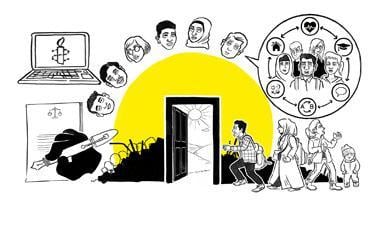
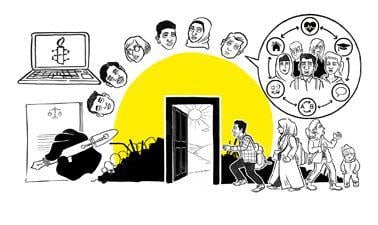
Agissez pour les droits humains. Ce cours vous permettra d’acquérir des connaissances sur les droits humains des personnes réfugiées et vous donnera les moyens de défendre ces droits. Aux quatre coins du globe, des barrières se dressent. Chaque jour, des personnes fuyant la guerre et les persécutions voient les portes se fermer devant eux.

Class Deals by MOOC List - Click here and see EdX's Active Discounts, Deals, and Promo Codes.

Les réfugiés ont des droits humains. Quels sont ces droits ? Qui est responsable de les faire respecter et de les protéger ? Comment faire en sorte que les personnes responsables rendent des comptes ?
Ce cours vous permettra de trouver les réponses à ces questions et vous donnera les clés pour défendre et promouvoir les droits des réfugiés. Vous découvrirez aussi comment devenir vous-même une partie de la solution.
Dispensé par des experts, des chargés de campagne et des militants d’Amnesty International, ce cours vous apprendra à reconnaître les violations des droits humains et à faire valoir, défendre et promouvoir les droits humains des réfugiés.
Vous serez amené-e à exercer votre esprit critique et à interagir avec d’autres participants. Ensemble, vous apprendrez à développer les capacités nécessaires pour faire changer les choses.

Il s’agit du deuxième cours en ligne ouvert à tous sur les droits humains d’Amnesty International. Préparez-vous à un apprentissage actif, à interagir avec des participants du monde entier et à devenir membre d’une communauté mondiale militant pour que les droits des réfugiés soient respectés aux quatre coins de la planète.
Le cours est aussi disponible en anglais et en espagnol.

Ce que vous allez apprendre:

  • Comment expliquer et défendre les droits humains des réfugiés
  • Le rôle des gouvernements dans la prévention des violations des droits humains des réfugiés
  • Comment dénoncer les idées reçues, les préjugés et les attitudes discriminatoires à l’égard des réfugiés et des demandeurs d’asile
  • Comment agir pour protéger les droits des personnes ayant besoin d’une protection internationale
Go to Class
MOOC List is learner-supported. When you buy through links on our site, we may earn an affiliate commission.

Related Courses

Privacy in the Western World (Coursera) Coursera
EIT Digital

Privacy in the Western World (Coursera)

Welcome to this course about privacy. We are thrilled to see that you are interested and will provide you with a comprehensive study of this intriguiging subject. We hope this course will enthuse you to look further into privacy and personal data regulation. Especially in the light of recent events it becomes more important to know about your (alleged!?) rights and freedoms.

May 25th 2026
5-12 Weeks
Providing Harm Reduction Services for Drug Users and Sex Workers (edX) EdX
ZHAWx,ZHAW Zurich University of Applied Sciences

Providing Harm Reduction Services for Drug Users and Sex Workers (edX)

Learn the professional and methodological competencies for working with drug users and sex workers according to the principles of human rights. Did you ever ask yourself how the perspective of substance users and sex workers differs from your own? How can drug consumption rooms work, or how can sex work be practised in a self-determined manner? These and other questions will be explored in the MOOC «Harm Reduction Services for Drug Users and Sex Workers».

Mar 4th 2024
5-12 Weeks
International Human Rights Law (edX) EdX
LouvainX,Université Catholique de Louvain - UCL

International Human Rights Law (edX)

Learn how an individual’s human rights are protected from both public and private power by international laws. Human rights are developed through the constant dialogue between international human rights bodies and domestic courts, in a search that crosses geographical, cultural and legal boundaries. The result is a unique human rights grammar, which this course shall discuss and question, examining the sources of human rights, the rights of individuals, the duties of States, and the mechanisms of protection.

Self Paced
Self-Paced
Human Rights-based Approach to Dignity in Care (DIGNISPACE) (Coursera) Coursera
University of Edinburgh,University of Strathclyde

Human Rights-based Approach to Dignity in Care (DIGNISPACE) (Coursera)

Dignispace is an innovative and evidence informed digital resource underpinned by the PANEL principles - Participation, Accountability, Non Discrimination, Empowerment and Legality] principles of the Scottish Human Rights Framework [Scottish Human Rights Commission, 2017]. Dignispace was co-produced with students through interdisciplinary research. It is the first such resource on Dignity education using a Human Rights lens to interrogate the abstract nature of Dignity.

May 11th 2026
4 Weeks
Children’s Right to Education in Armed Conflict (GCHumanRights) Global Campus of Human Rights
Global Campus of Human Rights

Children’s Right to Education in Armed Conflict (GCHumanRights)

Wars, armed conflicts, and displacement are not only attacks to spaces, places and people, but also violations of a fundamental human right recognised in numerous international, regional and national instruments. Education is a right in itself and a multiplier of other rights. Legal frameworks, measures and tools already exist that provide a variety of solutions. Alas, proper knowledge of such instruments and possible avenues for action is still limited. The MOOC on Children’s Right to Education in Armed Conflict, offered by the Global Campus in partnership with Right to Education, fills this knowledge gap and mobilises more people and resources in the defence of such a fundamental right when and where it is most needed.

Feb 19th 2024
5-12 Weeks
Privacy in Europe (Coursera) Coursera
EIT Digital

Privacy in Europe (Coursera)

After having followed Privacy in the Western world you have become acquainted with the overall global legal system and the origins of privacy as a concept as well as privacy as a (human) right. This course deals with the European legal system to protect privacy. European privacy protection is based upon human rights treaties, both on a European level as well global level such as, e.g. the UN Declaration on Human Rights. This course outlines and deals with these human rights treaties as well as with the specific rules and regulations that govern day to day privacy protection in Europe.

Jun 1st 2026
5-12 Weeks
Global Diplomacy: the United Nations in the World (Coursera) Coursera
University of London,SOAS University of London

Global Diplomacy: the United Nations in the World (Coursera)

The course offers a well-researched and broad-ranging primer to the United Nations system. Consisting of an introduction to the complex UN family and its history, and a series of ‘snapshots’ of key UN functions, which are used to explore important UN themes and help learners develop important analysis, communication, and policy-based skills.

May 11th 2026
5-12 Weeks
Menstruation in a Global Context: Addressing Policy and Practice (edX) EdX
Columbia University,ColumbiaX

Menstruation in a Global Context: Addressing Policy and Practice (edX)

Recently, menstruation has attracted attention as an important public health issue, resulting in the proliferation of new research, programs, and policies aimed at tackling menstrual health and hygiene (MHH) challenges faced by girls, women, and others who menstruate. Advocates are directly combating ongoing menstrual stigma and calling for an end to period poverty.

Self Paced
Self-Paced
Public Health in Humanitarian Crises 1 (Coursera) Coursera
Johns Hopkins University

Public Health in Humanitarian Crises 1 (Coursera)

This course, Public Health in Humanitarian Crises 1, introduces discussions about the public health approach to problems experienced by people affected by disasters, both natural and related to conflict. The course discusses the many changes which occur in people’s lives when they are uprooted by a disaster, ranging from changes in disease patterns, access to health care, livelihoods, shelter, sanitary conditions, nutritional status, etceteras. We will explore what humanitarian interventions could look like if we want to mitigate the effects of disasters. The course content is a mix of theoretical knowledge and many practical examples from recent disasters. We think this course is unique because it contains so many practical ‘real-life’ examples and is taught by instructors and guest lecturers who together have over 200 years of experience in this field.

May 11th 2026
5-12 Weeks