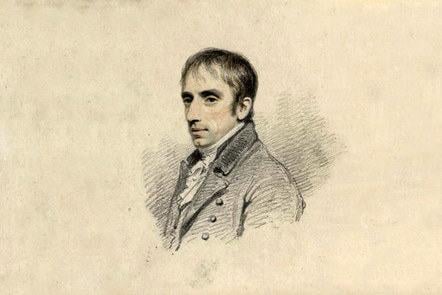
William Wordsworth: Poetry, People and Place (FutureLearn)

Offered by Lancaster University,
William Wordsworth: Poetry, People and Place (FutureLearn)

Explore the influence of the Lake District on Wordsworth with this free online course, filmed at his home, Dove Cottage, Grasmere. Explore the great poetry of William Wordsworth and his writing process. This free online course will explore the great poetry of William Wordsworth, with an emphasis on his writing process and the inspirational landscape of the Lake District. This course is presented in association with the Wordsworth Trust, Grasmere.

Class Deals by MOOC List - Click here and see FutureLearn's Active Discounts, Deals, and Promo Codes.

This free online course will explore the great poetry of William Wordsworth, with an emphasis on his writing process and the inspirational landscape of the Lake District. This course is presented in association with the Wordsworth Trust, Grasmere.
You will study how Wordsworth created and revised some of his greatest works including “I wandered lonely as a Cloud” (perhaps better known as “Daffodils”) and The Prelude (his autobiographical masterpiece). We will draw on the magnificent collection of manuscripts held by the Wordsworth Trust in the museum next to his home.
Through readings and discussions focusing on Grasmere and the landscape of the Lake District, the course will explore why this location was so important for Wordsworth.

What topics will you cover?

  • William Wordsworth’s life and work and the archive of his manuscripts at the Jerwood Centre, Grasmere
  • Manuscript materials as evidence of how Wordsworth created his poetry
  • The importance of a sense of place in Wordsworth’s writing
  • Wordsworth’s conception of the role of ‘Nature’, especially as expressed in ‘The Tables Turned’, The Prelude, ‘Michael’ and ‘I wandered lonely as a cloud’
  • The significance of Lyrical Ballads and the volume’s key principles
  • Wordsworth’s ideas about education and his concept of ‘spots of time’
  • Ideas of home and community and their relationship to creativity
  • The relationship between different forms of writing, especially letters, journals and poetry
  • Dorothy Wordsworth’s journals and their relationship to her brother’s poetry

What will you achieve?
By the end of the course, you'll be able to...

  • Develop an understanding of a range of William Wordsworth’s poems
  • Explore how Wordsworth created his poetry through study of his manuscripts
  • Assess the importance of the Lake District to Wordsworth’s poetry
  • Compare William’s writing with that of his sister, Dorothy
  • Engage in critical debate about literary issues with other learners
  • Develop skills of close reading

Go to Class
MOOC List is learner-supported. When you buy through links on our site, we may earn an affiliate commission.

Related Courses

Plagues, Witches, and War: The Worlds of Historical Fiction (Coursera) Coursera
University of Virginia

Plagues, Witches, and War: The Worlds of Historical Fiction (Coursera)

A unique and exciting introduction to the genre and craft of historical fiction, for curious students, aspiring authors--anyone with a passion for the past. Read classics of the genre, encounter bestselling writers of historical fiction, and discover your own historical archive while interacting with a global community of interested readers.

Aug 3rd 2026
5-12 Weeks
Humphry Davy: Laughing Gas, Literature, and the Lamp (FutureLearn) FutureLearn
Lancaster University,Royal Institution - RI

Humphry Davy: Laughing Gas, Literature, and the Lamp (FutureLearn)

Discover Humphry Davy and his contribution to science and the arts. Before culture was divided into the sciences and the arts there was a chemist who was also a poet. Sir Humphry Davy (1778-1829) is one of the best known men of science of the nineteenth century: he was the first person to inhale nitrous oxide; he isolated nine chemical elements; and he invented the miners’ safety lamp known as the Davy lamp. This course will consider Davy’s life and career using manuscript sources held at the Royal Institution of Great Britain.

Oct 9th 2023
4 Weeks
Sharpened Visions: A Poetry Workshop (Coursera) Coursera
California Institute of the Arts

Sharpened Visions: A Poetry Workshop (Coursera)

Why just write poems when you can write better ones? This course is built on the notion that the most exciting writing begins after the first draft. It is specifically for folks who believe that writing poems just to express oneself is like using the Internet just for email. After all, poetry can change the way you and your readers think of the world and its inhabitants; it can break new ground for language; turn a blank sheet of paper into a teeming concert of voices and music.

Aug 3rd 2026
5-12 Weeks
Dante tra poesia e scienza (Federica Web Learning) Federica Web Learning
University of Naples Federico II

Dante tra poesia e scienza (Federica Web Learning)

La Commedia di Dante, una delle opere più importanti della letteratura di tutti i tempi, è endiadi di poesia e scienza. Certamente la cultura scientifica di Dante è vasta per i suoi tempi; essa è talmente fusa nel discorso poetico che non disturba l’orecchio e la mente del lettore; essa non è espressione di mera conoscenza, ma rientra sempre nel concetto del poeta di leggere unitariamente il mondo e le sue espressioni; e di sicuro essa è la manifestazione più alta della scienza del Medioevo, frutto di non poche letture di una cultura scientifica non solo europea, ma anche araba, conosciuta attraverso le traduzioni latine delle opere o dalla frequentazione, come appare dalle ultime ipotesi di ricerche, di musulmani residenti in paesi dell’Italia settentrionale.

Mar 6th 2017
5-12 Weeks
The Great Poems Series: Unbinding Prometheus (OpenLearning) OpenLearning
OpenLearning

The Great Poems Series: Unbinding Prometheus (OpenLearning)

Jean-Jacques Rousseau wrote “Man is born free, but he is everywhere in chains.” Poet Percy Shelley believed words could be stronger than shackles, and wrote poems intended to free mankind from their chains. Some have argued that poetry can do nothing--or as W.H. Auden said, "Poetry makes nothing happen." Yet Henry David Thoreau, Karl Marx, Mahatma Gandhi, Martin Luther King and Nelson Mandela were inspired by Shelley's words to live in the service of freedom and dignity, and they changed the world. The Unbinding Prometheus MOOC investigates both what Shelley's words have meant over time, and what his words might mean for us today.

Self Paced
Self-Paced
Samuel Johnson’s Rasselas: An Introduction (FutureLearn) FutureLearn
Ralston College

Samuel Johnson’s Rasselas: An Introduction (FutureLearn)

Explore the humane realism of Samuel Johnson in a deep dive into his only novel with Theodore Dalrymple as your guide. Explore the humane realism of Samuel Johnson in a deep dive into his only novel. Learn from Theodore Dalrymple. Theodore Dalrymple, the pseudonym of Anthony Daniels, is an English cultural critic of great distinction. He has written extensively on culture, its contemporary neglect, and its enduring potential.

Jan 24th 2022
5-12 Weeks
Poetry: How to Read a Poem (FutureLearn) FutureLearn
University of York

Poetry: How to Read a Poem (FutureLearn)

Discover what poetry can tell us about human emotion and learn key ideas and techniques for understanding and interpreting verse. Dive into the wonderful world of poetry and learn how to analyse a poem. Humans have communicated their thoughts, ideas, and feelings through poetry throughout history. At its best, it tells us new truths about the human experience. However, it’s often presented as hard to understand without expert knowledge. On this course, you’ll build your confidence in reading and enjoying poetry.

Self Paced
4 Weeks