The Poetry of John Milton (saylor.org)

Offered by Saylor.org,
The Poetry of John Milton (saylor.org)

In this course, we will study the poetry of John Milton, focusing not only on the texts themselves, but also on the various contexts that are relevant to Milton’s oeuvre, from the tumultuous political and religious period in which Milton lived to the literary network with which his texts interact.

Please note: this legacy course does not offer a certificate and may contain broken links and outdated information. Although archived, it is open for learning without registration or enrollment.

We will also take a close look at the man behind Paradise Lost, a man that brazenly announced, relatively early in his poetic career, that he would pen a great epic in the classical tradition. Who was John Milton, and how did he manage to accomplish this goal? Though Milton has gone in and out of literary favor since his death in 1674—Romantic poets greatly valued his formal techniques as well as his figuration of Hell, while Modernists like T.S. Eliot scowled at his bookish, Puritan austerity—there is no question that Milton is a force to be reckoned with, as his works undoubtedly shaped the face and the future of English poetry. By the end of this course, you will possess a comprehensive understanding of Milton, his times, and his works.
Upon completion of this course, you will be able to:

  • explain the social and historical context of John Milton’s work;
  • define some of the most important ideas related to Milton’s life and times, including (but not limited to) Calvinism, Puritanism, Protestantism, Neo-Classicism, and Predestination;
  • provide accounts of the life of Charles I, the significance of the British Commonwealth, and the Restoration of the Monarchy;
  • explain Milton’s major philosophies, his politics, and his religious beliefs;
  • describe Milton’s chosen literary forms and rhetoric;
  • provide a brief account of Milton’s life, his relationship to Cavalier Poetry, his early elegies and eulogies, and his pastoral elegies, sonnets, and odes;
  • list and describe the major plot developments that occur in Paradise Lost, Paradise Regained, and Samson Agonistes;
  • analyze and describe both Paradise Lost and Paradise Regained in terms of their respective treatments of Biblical versions of Heaven and Hell, the Creation, Predestination, gender relations, representations of human nature, and the Fall of humankind; and
  • discuss the formal aspects and structure of both Paradise Lost and Paradise Regained and analyze and describe both of these works in terms of their epic styles and conventions.
Go to Class
MOOC List is learner-supported. When you buy through links on our site, we may earn an affiliate commission.

Related Courses

Cultural and Literary Expression in the English Renaissance (saylor.org) Saylor Academy
Saylor.org

Cultural and Literary Expression in the English Renaissance (saylor.org)

At the outset of the 16th century, Europeans tended to dismiss English literature as inferior to continental literary traditions; the educated Englishman was obliged to travel to the continent and speak in other languages in order to “culture” himself. By the end of the Renaissance, however, some of the greatest works in the English language—from Shakespeare’s dramas to Thomas More’s Utopia—had been written. In this course, we will read and examine these works, situating them within their socio-historical and literary contexts, while attempting to determine how the art of English language and letters came into its own during this dynamic period.

Legacy Course
Self-Paced
Global Shakespeares: Re-Creating the Merchant of Venice (edX) EdX
MIT,MITx

Global Shakespeares: Re-Creating the Merchant of Venice (edX)

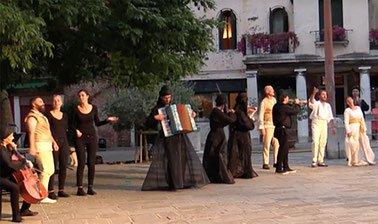
Learn how performance of William Shakespeare’s The Merchant of Venice provides occasions for creative, thoughtful communication across personal, historical, and cultural boundaries on topics including language and theatricality, gender relations, and religious prejudice. William Shakespeare is the most performed playwright on the globe; this course brings his play The Merchant of Venice into the 21st century by comparing multiple recent performances, from film and television stagings to an international production that marked the first performance of the play in the former Jewish Ghetto of Venice, Italy.

Self Paced
Self-Paced
Sharpened Visions: A Poetry Workshop (Coursera) Coursera
California Institute of the Arts

Sharpened Visions: A Poetry Workshop (Coursera)

Why just write poems when you can write better ones? This course is built on the notion that the most exciting writing begins after the first draft. It is specifically for folks who believe that writing poems just to express oneself is like using the Internet just for email. After all, poetry can change the way you and your readers think of the world and its inhabitants; it can break new ground for language; turn a blank sheet of paper into a teeming concert of voices and music.

Sep 28th 2026
5-12 Weeks
Poetry: How to Read a Poem (FutureLearn) FutureLearn
University of York

Poetry: How to Read a Poem (FutureLearn)

Discover what poetry can tell us about human emotion and learn key ideas and techniques for understanding and interpreting verse. Dive into the wonderful world of poetry and learn how to analyse a poem. Humans have communicated their thoughts, ideas, and feelings through poetry throughout history. At its best, it tells us new truths about the human experience. However, it’s often presented as hard to understand without expert knowledge. On this course, you’ll build your confidence in reading and enjoying poetry.

Self Paced
4 Weeks
Fairy Tales: Meanings, Messages, and Morals (FutureLearn) FutureLearn
The University of Newcastle, Australia

Fairy Tales: Meanings, Messages, and Morals (FutureLearn)

Build your skills in literary analysis and creative writing by exploring the meaning of fairy tales. Discover the fascinating circumstances and meanings behind fairy tales. On this course, you will look deeper into the enchanting and surprisingly dark themes of several well-known European fairy tales. What were the authors thinking? What were the cultural and personal concerns that have shaped these stories? What are the readers being asked to believe?

No sessions available
3 Weeks
Introduction to Literary Studies (saylor.org) Saylor Academy
Saylor.org

Introduction to Literary Studies (saylor.org)

This course will introduce you to the history and practice of English as a scholarly discipline with the goal of preparing you for your future endeavors as an English major. It has been designed to familiarize you with the various tools that scholars have devised in order to facilitate the study of literary expression in English, from critical frameworks to close reading techniques.

Legacy Course
Self-Paced
Dante tra poesia e scienza (Federica Web Learning) Federica Web Learning
University of Naples Federico II

Dante tra poesia e scienza (Federica Web Learning)

La Commedia di Dante, una delle opere più importanti della letteratura di tutti i tempi, è endiadi di poesia e scienza. Certamente la cultura scientifica di Dante è vasta per i suoi tempi; essa è talmente fusa nel discorso poetico che non disturba l’orecchio e la mente del lettore; essa non è espressione di mera conoscenza, ma rientra sempre nel concetto del poeta di leggere unitariamente il mondo e le sue espressioni; e di sicuro essa è la manifestazione più alta della scienza del Medioevo, frutto di non poche letture di una cultura scientifica non solo europea, ma anche araba, conosciuta attraverso le traduzioni latine delle opere o dalla frequentazione, come appare dalle ultime ipotesi di ricerche, di musulmani residenti in paesi dell’Italia settentrionale.

Mar 6th 2017
5-12 Weeks
The Great Poems Series: Unbinding Prometheus (OpenLearning) OpenLearning
OpenLearning

The Great Poems Series: Unbinding Prometheus (OpenLearning)

Jean-Jacques Rousseau wrote “Man is born free, but he is everywhere in chains.” Poet Percy Shelley believed words could be stronger than shackles, and wrote poems intended to free mankind from their chains. Some have argued that poetry can do nothing--or as W.H. Auden said, "Poetry makes nothing happen." Yet Henry David Thoreau, Karl Marx, Mahatma Gandhi, Martin Luther King and Nelson Mandela were inspired by Shelley's words to live in the service of freedom and dignity, and they changed the world. The Unbinding Prometheus MOOC investigates both what Shelley's words have meant over time, and what his words might mean for us today.

Self Paced
Self-Paced