EdX

Oscar Wilde, écrivain et penseur du langage (edX)

Offered by Sorbonne University,
Oscar Wilde, écrivain et penseur du langage (edX)

Ce MOOC présente l’œuvre entière d’Oscar Wilde: conférences, poésie, contes, roman, théâtre, essais, De profundis. L’accent est mis sur les relations de Wilde avec la France, sa langue et sa littérature, dont l’écrivain avait une connaissance profonde, et la nature innovante de sa relation au langage et à la littérature.

Class Deals by MOOC List - Click here and see EdX's Active Discounts, Deals, and Promo Codes.

Oscar Wilde est l’auteur d’une œuvre abondante qui illustre tous les genres littéraires.
Parfois mal compris, sans doute en raison de la confidence qu’il aurait faite à André Gide (« J’ai mis tout mon génie dans ma vie; je n’ai mis que mon talent dans mon œuvre ») dont tout invite à penser qu’elle n’est pas authentique, Wilde, souvent perçu comme un esthète brillant ancré dans son siècle, était au contraire un écrivain innovant qui a bel et bien mis son génie dans son œuvre.
Si sa culture était immense, il a su l’utiliser pour créer une œuvre profondément originale qui s’interroge en permanence sur le pouvoir, ou sur l’impuissance, du langage.
Wilde avait également une pensée politique qui remettait en cause les présupposés de son temps, et son théâtre, notamment, rend compte de sa capacité à déstabiliser les catégories établies, par exemple celles du « masculin » et du « féminin », avec les implications idéologiques que cela suppose.
Ce MOOC s’intéresse aussi, par conséquent, à sa postérité qui montre bien que son œuvre fait sens pour les lecteurs contemporains.

Syllabus

Séance I : Oscar Wilde, écrivain
1ère séquence : Wilde, l’Irlandais
2ème séquence : Oxford, John Ruskin et Walter Pater
3ème séquence : Création d’une réputation : Oscar Wilde en Amérique
4ème séquence : La conquête de Londres, succès littéraires
5ème séquence : Les procès et la prison
6ème séquence : Mort et transfiguration

Séance II : Oscar Wilde, poète
1ère séquence : Wilde, lecteur
2ème séquence : Wilde, jeune poète
3ème séquence : « La Sphinge »
4ème séquence : Les poèmes en prose
5ème séquence : La Ballade de la Geôle de Reading (I)
6ème séquence : La Ballade de la Geôle de Reading (II)

Séance III : Les essais critiques et De profundis
1ère séquence : Conférences en Amérique (1882)
2ème séquence : « L'Âme de l'homme sous le socialisme » (1891)
3ème séquence : Intentions I
4ème séquence : Intentions II
5ème séquence : De profundis I. Rédaction et réception
6ème séquence : De profundis II. Analyse de l’œuvre

Séance IV : Le Portrait de Dorian Gray
1ère séquence : Genèse du roman
2ème séquence : Rédaction, parution et réception du roman
3ème séquence : Les noms des deux personnages principaux
4ème séquence : Á quel genre littéraire le roman appartient-il ?
5ème séquence : Un roman psychologique
6ème séquence : Le Portrait de Dorian Gray et la musique

Séance V : Le théâtre d’Oscar Wilde
1ère séquence : Oscar Wilde, homme de théâtre
2ème séquence : Les influences I
3ème séquence : Les influences II
4ème séquence : Les premières pièces (Véra, ou les Nihilistes, La Duchesse de Padoue, L’Éventail de lady Windermere)
5ème séquence : Salomé (1892)
6ème séquence : Une femme sans importance, Un mari idéal et L’importance d’être Constant

Séance VI : Oscar Wilde, penseur et précurseur (philosophie, psychanalyse et théorie du genre).
Conclusion : sa postérité littéraire (6 séquences)
1ère séquence : Wilde et Hegel
2ème séquence : Wilde et Nietzsche: un rapprochement
3ème séquence : Le langage selon Wilde et Nietzsche
4ème séquence : Oscar Wilde et la psychanalyse
5ème séquence : Oscar Wilde et la théorie du genre
6ème séquence : Postérité littéraire

Go to Class
MOOC List is learner-supported. When you buy through links on our site, we may earn an affiliate commission.

Related Courses

Global Shakespeares: Re-Creating the Merchant of Venice (edX) EdX
MIT,MITx

Global Shakespeares: Re-Creating the Merchant of Venice (edX)

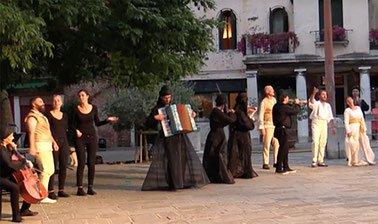
Learn how performance of William Shakespeare’s The Merchant of Venice provides occasions for creative, thoughtful communication across personal, historical, and cultural boundaries on topics including language and theatricality, gender relations, and religious prejudice. William Shakespeare is the most performed playwright on the globe; this course brings his play The Merchant of Venice into the 21st century by comparing multiple recent performances, from film and television stagings to an international production that marked the first performance of the play in the former Jewish Ghetto of Venice, Italy.

Self Paced
Self-Paced
Online Games: Literature, New Media, and Narrative (Coursera) Coursera
Vanderbilt University

Online Games: Literature, New Media, and Narrative (Coursera)

Intended for both newcomers who are curious about video games and experienced gamers who want to reflect on their passion, this course will explore what happens to stories, paintings, and films when they become the basis of massively multiplayer online games. The Lord of the Rings trilogy—the novels, films, and video game—are our central example of how “remediation” transforms familiar stories as they move across media.

Oct 12th 2026
5-12 Weeks
Reasoning Across the Disciplines (Coursera) Coursera
University of North Carolina

Reasoning Across the Disciplines (Coursera)

Critical reasoning skills are a key success factor for students entering their first year of college. They must be able to think logically and form arguments. This course, designed with incoming college freshmen in mind but open to anyone, provides an essential grounding in critical reasoning skills. Faculty from multiple disciplines at the University of North Carolina at Chapel Hill offer guidance on applying critical thinking skills in the context of specific disciplines. By developing these skills, students will learn more, enjoy their courses more, and experience greater academic success.

Oct 5th 2026
5-12 Weeks
Letteratura latina, dalle origini all'età augustea (edX) EdX
University of Naples Federico II,FedericaX

Letteratura latina, dalle origini all'età augustea (edX)

Una panoramica dei generi letterari tra repubblica e primo impero. La nascita e lo sviluppo della letteratura latina furono profondamente condizionati da un lato dall'influenza della cultura greca con la quale i Romani entrarono in contatto a partire dal II sec. a. C. soprattutto per la loro politica espansionistica nel Mediterraneo e poi in Oriente; dall'altro dalle pressioni esercitate dal potere politico che richiedeva al cittadino di prestare la propria attività innanzitutto a favore della res publica.

Self Paced
Self-Paced
Book Sleuthing: The Nineteenth Century (edX) EdX
Harvard University

Book Sleuthing: The Nineteenth Century (edX)

Go behind the scenes at Harvard’s libraries to discover how readers in the first information age interacted with their books. Do you love printed paper and wonder how much longer it will survive in the age of ebooks? Are you curious about how the mass-produced modern book emerged in the first place? Come behind the scenes in Harvard’s libraries to explore the look, feel and even smell of nineteenth-century British and American books in this module of The Book: Histories Across Time and Space.

No sessions available
3 Weeks
ChinaX Book Club: Five Authors, Five Books, Five Views of China (edX) EdX
HarvardX,Harvard University

ChinaX Book Club: Five Authors, Five Books, Five Views of China (edX)

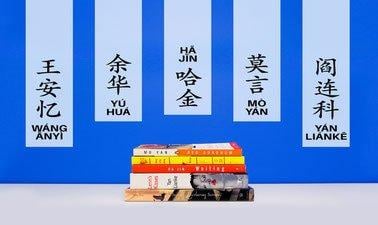
An exploration of the dynamics of contemporary China using the tools of close reading, discussion, and analysis. How can literature and literary analysis allow us to understand the dynamics of contemporary China? China’s historical and cultural transformations, and its imaginary and actual engagements in everyday life are vividly dramatized by five Chinese authors featured in this course.

Self Paced
Self-Paced
Modern Masterpieces of World Literature (edX) EdX
HarvardX,Harvard University

Modern Masterpieces of World Literature (edX)

Examine how great modern writers capture the intricacies of our globalized world and how their works circulate within that world to find their own audiences. Based on the second half of the Masterpieces of World Literature edX MOOC, this short literature course examines how writers reach beyond national and linguistic boundaries as worldly readers and travelers, and how their modern fictions rise to the status of world literature.

Self Paced
Self-Paced
Shakespeare’s Othello: The Moor (edX) EdX
HarvardX,Harvard University

Shakespeare’s Othello: The Moor (edX)

Explore acts of storytelling in Shakespeare's Othello alongside world-class artists who interpret Othello's story in new forms and contexts today. In this course, we'll read William Shakespeare’s Othello and discuss the play from a variety of perspectives. The goal of the course is not to cover everything that has been written on Othello.

Self Paced
Self-Paced
Masterpieces of World Literature (edX) EdX
HarvardX,Harvard University

Masterpieces of World Literature (edX)

Embark on a global journey to explore the past, present, and future of World Literature. This literature course explores how great writers refract their world and how their works are transformed when they intervene in our global cultural landscape today. No national literature has ever grown up in isolation from the cultures around it; from the earliest periods, great works of literature have probed the tensions, conflicts, and connections among neighboring cultures and often more distant regions as well.

Self Paced
Self-Paced
The Spain of Don Quixote (edX) EdX
Universidad Autonoma de Madrid

The Spain of Don Quixote (edX)

An exploration of Spain depicted in Cervante’s historic novel, Don Quixote – a Golden Age in which Spanish arts and literature reached worldwide excellence. This MOOC focuses on Spanish history between the Renaissance and Baroque periods—a time when the Spanish culture set the tone in the Western world.

Self Paced
Self-Paced