EdX

Uncovering the Voices of Japanese Literature (edX)

Offered by Waseda University, WasedaX,
Uncovering the Voices of Japanese Literature (edX)

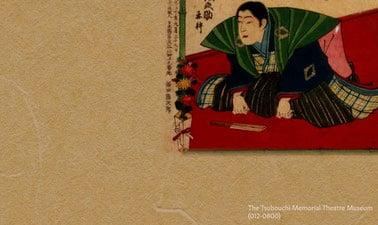
This course explores issues of agency in premodern and modern Japan. Discover many facets of the Japanese literary, theatrical, and intellectual traditions which, although important, are rarely taught around the world. This course will provide you with an introduction and a basis for further study in Japanese history, culture, literature, arts, and other areas which you may intend to explore in the future.

Class Deals by MOOC List - Click here and see EdX's Active Discounts, Deals, and Promo Codes.

Japanese literature has a long and diverse tradition, dating back more than a thousand years. From Murasaki Shikibu's The Tale of Genji to the novels of Murakami Haruki, its many masterpieces are read and loved throughout the world. The historical process of writing, however - who gets to write whose stories, when, and how? - and many of the formal traits of the Japanese literary arts related to agency remain unquestioned. We believe a basic knowledge of how artists developed their sense of autonomy within the strictures of historical society is crucial to understand, appreciate and enjoy this long tradition.
This course will explore a number of writers and works from the ancient times of Japan through to the early modern Edo era and into the twentieth century. Key aspects of the course will include how the historical trajectory of women's experiences were reflected in literary or theatrical genres; the social spaces in which poetry and visual art emerged and became shared; and how Japanese thinkers have envisioned human imagination throughout history. One important concept recurring through the course will be the human "voice." We shall attempt to uncover some of these voices, including but not limited to the voices of women, together with their told and untold experiences.

What you'll learn

  • How diverse voices were recorded and transmitted into popular storytelling, drama, and theater in the premodern era
  • How different Japanese writers used the motif of psychological abnormality as the source for a truly “modern” art
  • Creatively reconsider some aspects of the human imagination from a broadly comparative perspective
Go to Class
MOOC List is learner-supported. When you buy through links on our site, we may earn an affiliate commission.

Related Courses

Shakespeare’s Othello: The Moor (edX) EdX
HarvardX,Harvard University

Shakespeare’s Othello: The Moor (edX)

Explore acts of storytelling in Shakespeare's Othello alongside world-class artists who interpret Othello's story in new forms and contexts today. In this course, we'll read William Shakespeare’s Othello and discuss the play from a variety of perspectives. The goal of the course is not to cover everything that has been written on Othello.

Self Paced
Self-Paced
Masterpieces of World Literature (edX) EdX
HarvardX,Harvard University

Masterpieces of World Literature (edX)

Embark on a global journey to explore the past, present, and future of World Literature. This literature course explores how great writers refract their world and how their works are transformed when they intervene in our global cultural landscape today. No national literature has ever grown up in isolation from the cultures around it; from the earliest periods, great works of literature have probed the tensions, conflicts, and connections among neighboring cultures and often more distant regions as well.

Self Paced
Self-Paced
Oscar Wilde, écrivain et penseur du langage (edX) EdX
Sorbonne University

Oscar Wilde, écrivain et penseur du langage (edX)

Ce MOOC présente l’œuvre entière d’Oscar Wilde: conférences, poésie, contes, roman, théâtre, essais, De profundis. L’accent est mis sur les relations de Wilde avec la France, sa langue et sa littérature, dont l’écrivain avait une connaissance profonde, et la nature innovante de sa relation au langage et à la littérature.

No session available
5-12 Weeks
Shakespeare on the Page and in Performance: Tragic Love (edX) EdX
Wellesley College

Shakespeare on the Page and in Performance: Tragic Love (edX)

Explore Shakespeare's mature plays of tragic love, Othello and King Lear, and learn what makes them so powerful and enduring. This literature and theater course will study two of the most sublime and gut-wrenching plays in the English language: Othello and King Lear. We will try to understand the reasons for their centrality to literary history as well as their continuing power to mesmerize audiences in theatres and cinemas across the world.

No sessions available
4 Weeks
Invitation to The Tale of Genji: The Foundational Elements of Japanese Culture (edX) EdX
Waseda University,WasedaX

Invitation to The Tale of Genji: The Foundational Elements of Japanese Culture (edX)

Explore the world's oldest novel written in the eleventh century and develop the perspective to understand Japanese classical literature and the foundation of Japanese culture. The Tale of Genji (Genji Monogatari) is a long-form narrative composed in Japan at the beginning of the eleventh century. It depicts relationships both harmonious and discordant among a wide cast of the men and women of the Heian court. These revolve around the many love affairs of the main character, the Shining Genji (Hikaru Genji).

Self Paced
Self-Paced
Japanese Business Management (edX) EdX
Waseda University,WasedaX

Japanese Business Management (edX)

Learn about Japanese business management and start down a path to becoming a global leader. The Japanese economy was once described as the “rising sun,” overcoming all odds to become an economic superpower. In the late 1980s and early 1990s, many of the largest companies in the world with the highest capitalization were Japanese. Often, the key to Japan's success was attributed to its unique business model, strategies and practices.

Self Paced
Self-Paced
Visualizing Postwar Tokyo, Part 2 (edX) EdX
The University of Tokyo,UTokyoX

Visualizing Postwar Tokyo, Part 2 (edX)

Identify the geopolitics historically involved in the practice of “visualizing postwar Tokyo.” The history of postwar Tokyo reveals an essential feature of the modern city, i.e., the city as a place of visualities. In postwar Tokyo, countless gazes fell upon others; gazes from and upon Americans and the Emperor, gazes going up skyscrapers or rushing aggressively through the cityscape, and gazes twining and wriggling among classes, genders, and ethnic groups in downtown Tokyo.

Self Paced
Self-Paced