EdX

Shakespeare's Life and Work (edX)

Shakespeare's Life and Work (edX)

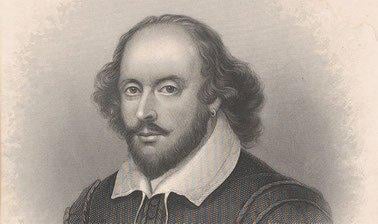
Learn how to read William Shakespeare's plays through his biography, Elizabethan and Jacobean history, and modern performance. How do we read Shakespeare? Do his plays belong to the past, or the present? To a famed dramatic genius or to readers and audiences around the globe? What do his plays really mean?

Class Deals by MOOC List - Click here and see EdX's Active Discounts, Deals, and Promo Codes.

Moving between the world in which Shakespeare lived and the present day, this course will introduce different kinds of literary analysis that you can use when reading Shakespeare. With short videos filmed on location in England and readings covering topics like Shakespeare's contemporaries and the politics of modern performance, you will learn a range of critical tool that you can use to unlock the meaning and relevance of Shakespeare’s plays.
Join us as we visit Stratford-upon-Avon, where Shakespeare was born in 1564; London, the lively city where he began as an actor; and the Globe Theater, where his first plays were performed. This journey through Shakespeare’s life will transport you to another era and will give you a new perspective on his timeless work.
This course is part of the Shakespeare's Life, Work, and Characters XSeries.

What you'll learn

  • The cultural significance of Shakespeare's plays and their performance
  • How Shakespeare’s work was considered in his own time and in the present, in his own country and around the world
  • Different approaches to textual interpretation
  • How to consider authorial intention, historical context, and present relevance
  • How to analyze Shakespeare's plays on the page and in performance
  • Foundational knowledge on Shakespeare that can be applied to his specific works

Syllabus

Part 1: Biographical Interpretation
In this unit, we'll learn more about Shakespeare's life and think about the interpretive possibilities that open up when we read with the author in mind.
By the end of this unit, you will be able to:

  • Describe Shakespeare's childhood, education, and family life, determining how the facts of his life might have informed his playwriting.
  • Evaluate different viewpoints on the "author problem," which relates to how relevant the author and his/her intentions are to interpreting a text.
  • Generate an original interpretation of The Comedy of Errors that relates to Shakespeare's life and/or intentions.

Part 2: Historical Interpretation
In this unit, we’ll focus on historical interpretation by placing Shakespeare’s texts in their historical context.
By the end of this unit, you will be able to:

  • Describe Shakespeare's unlikely entry to the theater world, as well as the facts of London, the Bankside, and the increasingly professionalized theater industry.
  • Assess the viewpoint that Shakespeare's plays are embedded in their time and so require historical analysis to unlock what they "mean".
  • Analyze a Shakespeare play or passage through knowledge of historical context.

Part 3: Presentist Interpretation
In this unit, we’ll cover presentist interpretation--what can we reveal about Shakespeare’s plays by placing them in a modern context?
By the end of this unit, you will be able to:

  • Describe original performance practices, Shakespeare's death, and his legacy.
  • Analyze a Shakespearean scene in performance, contrasting different approaches.
  • Evaluate the viewpoint that Shakespeare's plays belong to the present, and that we should interpret/perform them as they are most "relevant" now.
Go to Class
MOOC List is learner-supported. When you buy through links on our site, we may earn an affiliate commission.

Related Courses

Ancient Masterpieces of World Literature (edX) EdX
HarvardX,Harvard University

Ancient Masterpieces of World Literature (edX)

Examine how cultures of the ancient world defined themselves through literature and how their vision of literature contributes to our understanding of civilization, culture, and literature today. This short literature course, based on the first half of the Masterpieces of World Literature edX MOOC, examines how civilizations and cultures of the ancient world defined themselves through literature and how that literature has continued to contribute to our understanding of those civilizations and cultures today.

Self Paced
Self-Paced
The Spain of Don Quixote (edX) EdX
Universidad Autonoma de Madrid

The Spain of Don Quixote (edX)

An exploration of Spain depicted in Cervante’s historic novel, Don Quixote – a Golden Age in which Spanish arts and literature reached worldwide excellence. This MOOC focuses on Spanish history between the Renaissance and Baroque periods—a time when the Spanish culture set the tone in the Western world.

Self Paced
Self-Paced
Japanese Books: From Manuscript to Print (edX) EdX
HarvardX,Harvard University

Japanese Books: From Manuscript to Print (edX)

This course expands the definition of the “book” to include scrolls and albums, focusing on the reading experience of a variety of formats in Japan. You will begin by examining rare and beautifully preserved manuscripts in the Harvard Art Museums in an introduction exploring the material properties of Japanese books and scrolls, binding techniques, and important terminology.

Self Paced
Self-Paced
Introduction to Academic Writing (Coursera) Coursera
O.P. Jindal Global University

Introduction to Academic Writing (Coursera)

Welcome to the Introduction to Academic Writing course! By the end of this course, you will gain an in-depth understanding of reading and writing as essential skills to conduct robust and critical research. This course introduces you to critical reading and writing skills within the conventions of academic writing.

Oct 12th 2026
4 Weeks
AP® English Literature & Composition – Part 3: Plays (edX) EdX
University of California, Berkeley,BerkeleyX

AP® English Literature & Composition – Part 3: Plays (edX)

Enhance your reading and writing skills as you interpret and learn about plays in preparation for the AP® English Literature & Composition exam. This course prepares you to read more deeply and write more clearly about works of literature. This course will focus on great pieces of drama and how we read and interpret them. We will discuss the works of William Shakespeare and Edmond Rostand. Through an engaging collection of videos, authentic readings, and support material from a variety of sources, you will learn to appreciate literature from different genres.

Self Paced
Self-Paced
Writing and Disseminating Grey Literature (Coursera) Coursera
Indian Institute for Human Settlements

Writing and Disseminating Grey Literature (Coursera)

If you are a researcher, academic, student, development sector professional or a practitioner who is keen to reach the research-based knowledge you have created to a wider audience, this course is for you. Vast amounts of knowledge are produced by educational and research institutions through rigorous research and fieldwork. Yet, there is a dearth of access to this knowledge among non-academic communities (which includes practitioners, policymakers, and citizens) due to the language used. Researchers can bring visibility to grey literature if they engage with alternate public writing forms.

Oct 19th 2026
5-12 Weeks
Masterpieces of World Literature (edX) EdX
HarvardX,Harvard University

Masterpieces of World Literature (edX)

Embark on a global journey to explore the past, present, and future of World Literature. This literature course explores how great writers refract their world and how their works are transformed when they intervene in our global cultural landscape today. No national literature has ever grown up in isolation from the cultures around it; from the earliest periods, great works of literature have probed the tensions, conflicts, and connections among neighboring cultures and often more distant regions as well.

Self Paced
Self-Paced