Wilderness First Aid - Introduction (Coursera)

Wilderness First Aid - Introduction (Coursera)

In this course, students will learn the basics of wilderness medicine, including how it is a unique clinical environment, and concepts of scene safety. They will learn how to perform a basic assessment of a patient, including a physical exam, gather history data using the SAMPLE approach, and how to evaluate a patient for a potential spinal cord injury.

Class Deals by MOOC List - Click here and see Coursera's Active Discounts, Deals, and Promo Codes.

Syllabus

WEEK 1
Introduction to Wilderness First Aid
In this module, you will learn what Wilderness Medicine entails, how this specialty serves as a unique clinical environment, and the importance of scene safety.

WEEK 2
Patient Assessment
In this module, you will learn how to perform a primary and secondary assessment on a patient, take their vitals, and how to perform an interview.

WEEK 3
Management, Assessment, and Planning
In this module, you will learn how to stabilize someone’s spine when there is concern for a spinal injury, how to safely move patients when they are unable to move themselves, and how to assess and plan your care and treatment for a patient.

WEEK 4
Wilderness Medicine in Practice
In this module, you will learn about how wilderness medicine is a unique environment and the special challenges that an austere environment presents that is not seen in urban medicine. You will also watch a case study interview that demonstrates assessment and planning.

Go to Class
MOOC List is learner-supported. When you buy through links on our site, we may earn an affiliate commission.

Related Courses

Clinical Terminology for International and U.S. Students (Coursera) Coursera
University of Pittsburgh

Clinical Terminology for International and U.S. Students (Coursera)

Understanding the clinical terms and abbreviations commonly used in U.S. hospitals is challenging. Adaptation to clinical language can be difficult for U.S. students entering the clinical area and even more so for international students whose primary language is not English. This course is designed to help both groups of students understand the terms and abbreviations commonly encountered during the first three months of clinical work on a U.S. hospital unit.

Aug 31st 2026
5-12 Weeks
Intro to Improving the Patient Experience Through Analytics (Coursera) Coursera
Northeastern University

Intro to Improving the Patient Experience Through Analytics (Coursera)

This course is best suited for individuals currently in the healthcare sector, as a provider, payer, or administrator. Individuals pursuing a career change to the healthcare sector may also be interested in this course. In this course, you will have an opportunity to explore concepts and topics related to improving the patient experience and reducing pain points in healthcare processes through analytic and decision support frameworks.

Aug 24th 2026
4 Weeks
Take the Lead on Healthcare Quality Improvement (Coursera) Coursera
Case Western Reserve University

Take the Lead on Healthcare Quality Improvement (Coursera)

In this course you will learn about the importance of quality in healthcare and how you can contribute by implementing a quality improvement (QI) project to improve processes of care and patient outcomes. You will learn about powerful tools to add to your QI ‘toolbox’ during short lectures and reflective exercises. You will apply these tools to the implementation of a QI project in your own practice setting or an area of personal improvement. At the completion of the course, you will have a storyboard that captures your QI project success to share with others.

Aug 31st 2026
5-12 Weeks
Principles of fMRI 1 (Coursera) Coursera
Johns Hopkins University

Principles of fMRI 1 (Coursera)

Functional Magnetic Resonance Imaging (fMRI) is the most widely used technique for investigating the living, functioning human brain as people perform tasks and experience mental states. It is a convergence point for multidisciplinary work from many disciplines. Psychologists, statisticians, physicists, computer scientists, neuroscientists, medical researchers, behavioral scientists, engineers, public health researchers, biologists, and others are coming together to advance our understanding of the human mind and brain. This course covers the design, acquisition, and analysis of Functional Magnetic Resonance Imaging (fMRI) data, including psychological inference, MR Physics, K Space, experimental design, pre-processing of fMRI data, as well as Generalized Linear Models (GLM’s).

Aug 17th 2026
4 Weeks
Diabetes - a Global Challenge (Coursera) Coursera
University of Copenhagen

Diabetes - a Global Challenge (Coursera)

Diabetes and obesity are growing health problems in rich and poor countries alike. With this course you will get updated on cutting-edge diabetes and obesity research including biological, genetic and clinical aspects as well as prevention and epidemiology of diabetes and obesity. All lectures are provided by high-profile scientists from one the world's leading universities in diabetes research.

Aug 17th 2026
5-12 Weeks
Medical Neuroscience (Coursera) Coursera
Duke University

Medical Neuroscience (Coursera)

Medical Neuroscience explores the functional organization and neurophysiology of the human central nervous system, while providing a neurobiological framework for understanding human behavior. In this course, you will discover the organization of the neural systems in the brain and spinal cord that mediate sensation, motivate bodily action, and integrate sensorimotor signals with memory, emotion and related faculties of cognition. The overall goal of this course is to provide the foundation for understanding the impairments of sensation, action and cognition that accompany injury, disease or dysfunction in the central nervous system. The course will build upon knowledge acquired through prior studies of cell and molecular biology, general physiology and human anatomy, as we focus primarily on the central nervous system.

Aug 17th 2026
13-24 Weeks
The History of Medicine: Philosophy, Science, and Psychology (Coursera) Coursera
University of California, Santa Cruz

The History of Medicine: Philosophy, Science, and Psychology (Coursera)

"History of Medicine" provides an accessible historical and interdisciplinary perspective on medicine, focused primarily upon therapy and practice, to achieve better understanding of the scope, practice, and limits of medicine. Medicine is defined as the treatment of disease. Human attempts to understand and treat disease will be seen as evolving from the spiritual and mystical practices of the distant past, to the rational approach of the Classical World, and finally to the scientific thinking of the Renaissance and beyond.

Aug 31st 2026
5-12 Weeks
Wilderness First Aid - Traumatic Emergencies (Coursera) Coursera
University of Colorado System

Wilderness First Aid - Traumatic Emergencies (Coursera)

In this course, students will learn about common medical conditions that involve the heart, lungs, brain, abdominal and genital organs, how to treat these conditions, and when a condition would require evacuation. Students will also learn prevention measures to reduce the chance of developing diseases in the wilderness setting.

Aug 17th 2026
4 Weeks
Personalised Medicine from a Nordic Perspective (Coursera) Coursera
University of Iceland,University of Copenhagen

Personalised Medicine from a Nordic Perspective (Coursera)

The technical revolution has generated large amounts of data in healthcare and research, and a rapidly increasing knowledge about factors of importance for the individual’s health. This holds great potential to support a change from the one-size-fits-all paradigm to personalised or precision medicine, to guide and thereby improve each health decision of expected benefit for the patient.

Aug 24th 2026
5-12 Weeks
Value-Based Care: Introduction to Value-Based Care and the U.S. Healthcare System (Coursera) Coursera
University of Houston

Value-Based Care: Introduction to Value-Based Care and the U.S. Healthcare System (Coursera)

This course is designed to introduce you to the concept of value-based care (VBC). While the information you will explore is general, it will help you establish a solid foundation for continued learning and future thinking about the concept of VBC. Through a historical lens, you will explore the creation of Medicare and Medicaid and the evolution of commercial insurance, TRICARE, and the Veterans Health Administration. While history is an important filter for understanding healthcare in this country, you will learn how each of these mechanisms emerged, the populations served, and what changes occurred over time, with a focus on funding and expenditures. In addition, this course will help you establish a firm foundation for understanding the development and evolution of quality measures and outcomes in healthcare.

Aug 17th 2026
4 Weeks
Clinical Kidney, Pancreas and Islet Transplantation (Coursera) Coursera
Leiden University,Leiden University Medical Center

Clinical Kidney, Pancreas and Islet Transplantation (Coursera)

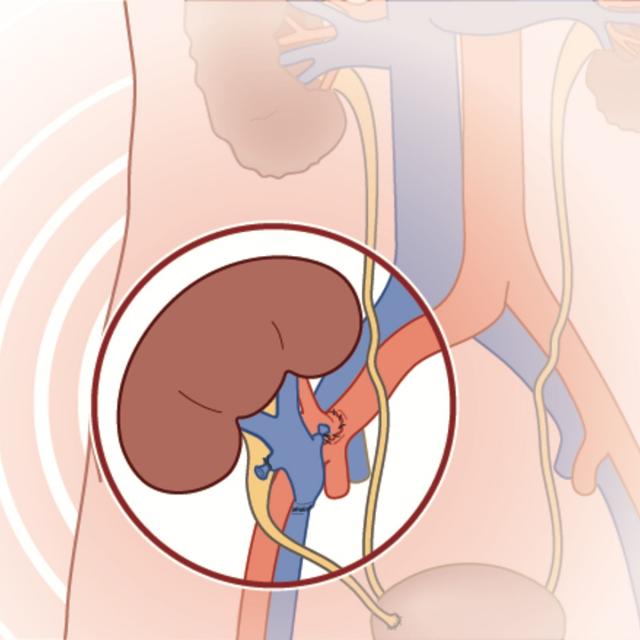
Kidney transplantation is a major advance of modern medicine which provides high-quality of life for patients with end-stage renal disease. What used to be an experimental, risky, and very limited treatment option more than 50 years ago is now routinely performed in many countries worldwide. The number of renal transplants is expected to rise sharply in the next decade since the proportion of patients with end stage renal disease is increasing.

Aug 17th 2026
4 Weeks