Vehicle-to-Grid Charging for Electric Cars (FutureLearn)

Offered by Cenex,
Vehicle-to-Grid Charging for Electric Cars (FutureLearn)

Learn all you need to know about how bi-directional V2G charging works, and why it's important for sustainable energy systems. Explore the functions, applications, and potential of vehicle-to-grid charging.

Class Deals by MOOC List - Click here and see FutureLearn's Active Discounts, Deals, and Promo Codes.

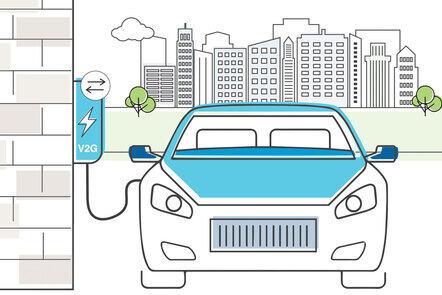
Vehicle-to-grid (V2G) charging technology is gaining a lot of traction in the electric car industry. By allowing the charging and discharging of vehicles, it turns them into mobile energy storage assets. The combination of the changing way electricity is generated and the increasing uptake of electric cars means that V2G charging could significantly reduce both costs and emissions.
With that in mind, understanding how V2G technology works and can be used is simply good business sense. This three-week course, presented by Cenex, gives you the foundation you need to work within this exciting industry.

Get to grips with vehicle-to-grid fundamentals
On this course, you’ll learn V2G charging basics and the different situations where it can be used. You’ll gain a good understanding of why the technology is as important for electric car users as it is for the energy system, and of the industry’s current state of development.

Explore the possibilities of the vehicle-to-grid industry
Once you know how far V2G charging has developed, you’ll delve into how much it can grow. By identifying barriers to adopting V2G charging, where its emerging opportunities are, and when the technology is likely to mature, you’ll gain insights into the industry’s potential. Use these to start making shrewd business decisions, or as a foundation for future learning.

Trust the high quality of this Cenex course
Cenex (the Centre of Excellence for Low Carbon and Fuel Cell Technologies)’s involvement in V2G charging research and demonstration goes back to 2016, from installing the UK’s first V2G charge points to delivering the world’s largest V2G trial in 2021. With over 15 years’ experience in low carbon transport and energy systems projects, the organisation is ideally suited to deliver this course.

Syllabus

Week 1: What is V2G?
Week 2: Why V2G?
Week 3: How to apply V2G

Learning on this course
You can take this self-guided course and learn at your own pace. On every step of the course you can meet other learners, share your ideas and join in with active discussions in the comments.
What will you achieve?
By the end of the course, you‘ll be able to...

  • To explore what V2G charging is and how it works.
  • To identify the different use cases for V2G charging.
  • To evaluate why V2G charging is important for customers and the energy system.
  • To explore the current state of development of V2G charging, including some example case studies.
  • To identify the current barriers to V2G charging, where the emerging opportunities lie and likely timescales for the technology to achieve commercial maturity.

Who is the course for?
This course is designed for anyone looking to understand more about the V2G and electric car industry. Private business owners, public administrators, electric car owners, and those interested in management positions will all find it invaluable.
Go to Class
MOOC List is learner-supported. When you buy through links on our site, we may earn an affiliate commission.

Related Courses

Understanding Modern Physics III: Simplicity and Complexity (Coursera) Coursera
The Hong Kong University of Science and Technology - HKUST

Understanding Modern Physics III: Simplicity and Complexity (Coursera)

The 20th century was known as the century of physics. In the past 120 years, concepts such as space, time, energy, entropy and particles were understood to much deeper levels. New paradigms of thinking such as relativity and quantum mechanics emerged. This course is the third course in the Understanding Modern Physics series, which covers an introduction to action principle, fundamental particle physics, entropy & information and complexity.

Oct 5th 2026
4 Weeks
Thermodynamics in Energy Engineering (FutureLearn) FutureLearn
Hanyang University

Thermodynamics in Energy Engineering (FutureLearn)

Understand the basic thermodynamic principles widely used in many engineering fields: temperature, free energy and entropy. This free online course introduces the basic thermodynamic principles that are widely used in many engineering fields. It will prepare you for degree-level study, by helping you understand and apply thermodynamic fundamentals through real-world, problem-solving exercises.

No sessions available
5-12 Weeks
Transforming Energy Systems: Why Governance Matters (FutureLearn) FutureLearn
University of Exeter

Transforming Energy Systems: Why Governance Matters (FutureLearn)

Tackling climate change demands profound and rapid energy system transformation. Discover how effective governance enables this. Understand the importance of governance for rapid energy system decarbonisation. Energy governance includes the rules, regulations, institutions and politics that affect energy system change. Effective governance is key to the transformation of energy systems in order to tackle climate change with the urgency that’s needed.

Available Now
4 Weeks
Wind resources for renewable energies (Coursera) Coursera
École Polytechnique

Wind resources for renewable energies (Coursera)

The main goal of this course is to get the necessary knowledge on atmospheric and fluid dynamics in order to quantify the wind resource of a local or regional area. We’ll learn about basic meteorology, the specific dynamics of turbulent boundary layers and some standard techniques to estimate wind resources regardless of the type of turbine used or the level of efficiency achieved.

Oct 5th 2026
4 Weeks
Energy, Environment, and Everyday Life (Coursera) Coursera
University of Illinois at Urbana-Champaign

Energy, Environment, and Everyday Life (Coursera)

This course teaches you everything you need to know about energy, the environment, and at least a number of things in everyday life. It starts by talking about energy itself and where it comes from. This includes how much we have, who has it, who uses it, and what that all means. The video clips are produced in a fast-paced multimedia format during which Professor Ruzic throws in fun and demonstrations. There are multiple-choice questions to check your understanding and some more in-depth exercises to guide you deeper into the subject.

Sep 28th 2026
5-12 Weeks
Understanding Biological Energy (FutureLearn) FutureLearn
Royal Holloway, University of London

Understanding Biological Energy (FutureLearn)

Get an introduction to energy and explore how humans and other living things obtain and use their biological energy sources. Discover applications of biological energy, from human energy to photosynthesis. On this course, you’ll learn what energy actually is and how living things acquire and convert it.

Self Paced
4 Weeks
Solving the Energy Puzzle: A Multidisciplinary Approach to Energy Transition (FutureLearn) FutureLearn
University of Groningen

Solving the Energy Puzzle: A Multidisciplinary Approach to Energy Transition (FutureLearn)

Learn how to analyse energy transition cases from technological, legal, economics, spatial, and social perspectives. Since the discovery of fire, mankind has used various energy sources to aid our development. The energy system has been continually changing, as the economy and technology progress. Today, energy systems are confronted with pressing global challenges: climate protection; economic and social development; poverty eradication; adequate food production; health for all; and the conservation of ecosystems, peace and security. A major transformation – an energy transition - is required to address these challenges.

No sessions available
5-12 Weeks
From the Big Bang to Dark Energy (Coursera) Coursera
The University of Tokyo

From the Big Bang to Dark Energy (Coursera)

We have learned a lot recently about how the Universe evolved in 13.7 billion years since the Big Bang. More than 80% of matter in the Universe is mysterious Dark Matter, which made stars and galaxies to form. The newly discovered Higgs-boson became frozen into the Universe a trillionth of a second after the Big Bang and brought order to the Universe.

Oct 5th 2026
4 Weeks
Politics and Economics of International Energy (Coursera) Coursera
Sciences Po

Politics and Economics of International Energy (Coursera)

Energy issues have always been important in international relations, but in recent years may have become even more important than in the past due to the widespread awareness of existing limits to energy sources and negative climate impacts. The course discusses global trends in energy consumption and production, various available scenarios for potential developments in the coming decades, the availability of oil reserves and the evolution of the oil industry.

Oct 5th 2026
5-12 Weeks