Understanding the Music Business: What is Music Worth? (Coursera)

Offered by Vanderbilt University,
Understanding the Music Business: What is Music Worth? (Coursera)

This course will examine the music industry in the United States, with the unique perspective gained by Vanderbilt University’s location in Nashville, TN. Nashville is a major center of music in the United States, and the music created here has a global reach, particularly in the country, rock, pop, singer-songwriter, and Americana genres. However, students will learn that the basic principles of recording, marketing, copyright, licensing, and live performance are the same, regardless of musical style or genre.

Class Deals by MOOC List - Click here and see Coursera's Active Discounts, Deals, and Promo Codes.

The music business is one of the most rapidly changing industries in the US today. It is also an industry filled with contradiction, and media headlines and anecdotal stories often add to the confusion. Here are just a few statements paraphrased from recent news stories:

  • The music business has collapsed
  • Demand for music is expanding at the greatest rate in history
  • Historic recording studios are closing at an alarming rate
  • More people are making recordings than ever before
  • Musicians usually lose money touring
  • Musicians usually make money touring
  • Major artist pulls songs off streaming services because they don’t pay fairly
  • Major artist makes a fortune from streaming services
  • People won’t buy records anymore
  • Vinyl record sales are soaring

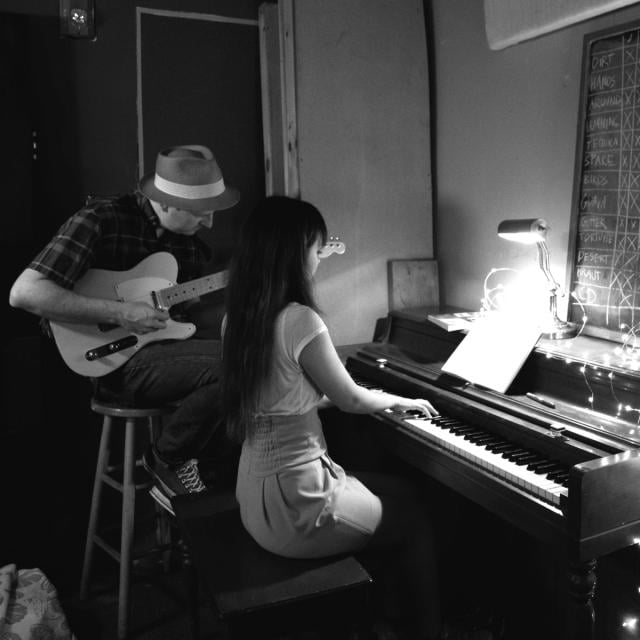
This course will attempt to make sense of these seemingly contradictory trends and data, outline the basic structure and mechanisms of today’s music industry, and encourage students to think critically and entrepreneurially about the future of music. Leaders from various areas of the music business will lend their perspectives through in-depth interviews, and footage from a recording session will give learners a behind the scenes look at how a song goes from the spark of an idea hummed into a cell phone to a finished recording.
Participants will grapple with questions about art and commerce which are both timeless and crucially important today, and will emerge from this course with tools allowing them to make more informed decisions as creators, promoters, and consumers of music.

Syllabus

WEEK 1
Recording & Record Labels, Part 1
Part 1 of this module will cover the basics of audio recording. You’ll learn about the pros and cons of home vs. studio recording, hear perspectives from both home and professional studio owners, and learn about different jobs and roles in recording environments. Finally, you will watch the evolution of the theme song for our course, starting with a rough demo sung into a phone recording app, and following through to the end of the recording session with professional musicians in Nashville.

WEEK 2
Recording & Record Labels, Part 2
Week 2 of the Recording & Record Labels module considers questions about education and the music business (and includes an interview with a music school dean), reviews the history of audio formats with an on-location visit to a popular music archive, and outlines the differences between major and independent record labels. At the end of this module, you will be asked to think about the current state of the recording industry, and consider questions about the value of recorded music in a rapidly shifting environment. What is a recording worth?

WEEK 3
Copyright & Publishing
In this module, learners will wade into the complicated world of music copyright and publishing. Interviews with an executive from a performing rights organization and another music school dean with a background in publishing and intellectual property rights will help to decipher the world of publishing- and sound recording-related royalties and the question of public domain. The question of fair payment to songwriters is one of the most hotly contested issues in the music industry today, and you will think critically about how value is assigned to compositions in different media environments. What is a song worth?

WEEK 4
Media
The subjects in this segment – PR, publicity, marketing, social media, radio, and streaming services – could all come under the heading “Getting The Word Out”, or “Cutting Through The Noise.” You will learn how innovations in technology are changing the means by which audiences connect with music, and you will consider the ways that innovation causes controversy within the music industry, as old boundaries are challenged. You will hear about jobs and roles related to media and music. Interviews with a radio station owner and a communications school dean will highlight the important issues and shifts happening in this field.

WEEK 5
Live Performance
Live performance has become a crucial component of many musicians’ careers in an era when many traditional income streams for musicians are shrinking. This module will take a look at the team of people who work with an artist doing strategy and planning (i.e., managers and agents) and people who travel with the artist on the road. You will also consider live music from the point of view of venue owners, concert promoters, and talent buyers, and interviews with a road manager and a club owner will guide your perspective about the current world of live music. What is a concert ticket worth?

WEEK 6
New Models, Trends & Strategies
Upheaval in many sectors of the music industry – much of it brought by the digital revolution – has led innovative people on both the business and artistic sides of the industry to do business in new ways. You will learn about opportunities for entrepreneurialism that come with technological advances; you will think critically about the controversies that arise when traditional businesses must redefine their relationships with artists; and you will hear from a business owner who has succeeded by questioning old boundaries and focusing on artist services. You will wrap up your engagement with the course by considering some larger ethical questions and asking yourself what you can do to support a healthy music ecosystem.

WEEK 7
Wrapping Up
Wrapping up discussions, quizzes, and final breaking news analysis

Go to Class
MOOC List is learner-supported. When you buy through links on our site, we may earn an affiliate commission.

Related Courses

The Blues: Understanding and Performing an American Art Form (Coursera) Coursera
University of Rochester

The Blues: Understanding and Performing an American Art Form (Coursera)

The blues is an American art form and the most important musical form in jazz. Although there are other formal paradigms of the blues, such as 8-bar or 16-bar, this course focuses on different incarnations of the 12-bar blues. There are considerable differences between Early Jazz blues, Swing blues, Bebop blues, Modal blues, and Post Bop blues.

Aug 10th 2026
5-12 Weeks
Art & Activity: Interactive Strategies for Engaging with Art (Coursera) Coursera
The Museum of Modern Art

Art & Activity: Interactive Strategies for Engaging with Art (Coursera)

Art can be a powerful catalyst for building skills and understanding a range of subjects. Intended for primary and secondary teachers of all disciplines, Art & Activity builds upon the inquiry-based approaches of Art and Inquiry: Museum Teaching Strategies for Your Classroom, while delving into activity-based strategies that will make your students empowered participants.

Aug 3rd 2026
4 Weeks
Jazz Improvisation (Coursera) Coursera
Berklee College of Music

Jazz Improvisation (Coursera)

Learn the basic concepts of improvisation from Gary Burton, one of the most renowned improvisers in the jazz world, including the mental, melodic, and harmonic processes that contribute to the instinctive skills that an improviser puts to use when taking a solo. While many people are fans of jazz and understand that musicians are often “making up” the notes they are playing during a performance, most people—often including musicians, themselves, who are beginning to learn improvising—aren’t clear about what exact processes take place to enable this to happen. The purpose of this course is to introduce the basic concepts of modern improvisation and how to go about mastering the different musical and mental skills involved.

Aug 10th 2026
5-12 Weeks
Music and Social Action (Coursera) Coursera
Yale University

Music and Social Action (Coursera)

What is a musician’s response to the condition of the world? Do musicians have an obligation and an opportunity to serve the needs of the world with their musicianship? At a time of crisis for the classical music profession, with a changing commercial landscape, a shrinking audience base, and a contraction in the number of professional orchestras, how does a young musician construct a career today? Are we looking at a dying art form or a moment of reinvigoration?

Aug 10th 2026
5-12 Weeks
Korean Music, A Philosophical Exploration (Coursera) Coursera
Sungkyunkwan University - SKKU

Korean Music, A Philosophical Exploration (Coursera)

This course introduces Korean philosophy projected into the subject of Korean music, especially K-POP, which is drawing global attention today. We confirm that Korea's unique philosophy was the basis for maintaining originality while being universally accepted by many people, and seek the role of philosophy for the continuous development and spread of Korean music.

Aug 10th 2026
5-12 Weeks
The Modern and the Postmodern (Part 2) (Coursera) Coursera
Wesleyan University

The Modern and the Postmodern (Part 2) (Coursera)

This course examines how the idea of "the modern" develops at the end of the 18th century in European philosophy and literature, and how being modern (or progressive, or hip) became one of the crucial criteria for understanding and evaluating cultural change. Are we still in modernity, or have we moved beyond the modern to the postmodern?

Aug 10th 2026
5-12 Weeks
History of Rock, Part One (Coursera) Coursera
University of Rochester

History of Rock, Part One (Coursera)

This course, part 1 of a 2-course sequence, examines the history of rock, primarily as it unfolded in the United States, from the days before rock (pre-1955) to the end of the 1960s. This course covers the music of Elvis Presley, Chuck Berry, Phil Spector, Bob Dylan, the Beatles, the Rolling Stones, Jimi Hendrix, Cream, and many more artists, with an emphasis both on cultural context and on the music itself. We will also explore how developments in the music business and in technology helped shape the ways in which styles developed.

Aug 3rd 2026
5-12 Weeks
Internet Giants: The Law and Economics of Media Platforms (Coursera) Coursera
University of Chicago

Internet Giants: The Law and Economics of Media Platforms (Coursera)

Law

This seven-week course will explore the relationship between law and technology with a strong focus on the law of the United States with some comparisons to laws around the world, especially in Europe. Tech progress is an important source of economic growth and raises broader questions about the human condition, including how culture evolves and who controls that evolution. Technology also matters in countless other ways as it often establishes the framework in which governments interact with their citizens, both in allowing speech and blocking it and in establishing exactly what the boundaries are between private life and the government. And technology itself is powerfully shaped by the laws that apply in areas as diverse as copyright, antitrust, patents, privacy, speech law and the regulation of networks.

Aug 3rd 2026
5-12 Weeks
Arranging for Songwriters (Coursera) Coursera
Berklee College of Music

Arranging for Songwriters (Coursera)

You've created a song. You wrote the lyrics, decided on the melody, and maybe even recorded a simple demo. Now what? If you have a basic knowledge of how to use a digital audio workstation (DAW) and are passionate about being a songwriter, this course will help you take your song from a simple recording on your phone to a fully arranged song ready for the recording studio.

Aug 10th 2026
4 Weeks
Art & Ideas: Teaching with Themes (Coursera) Coursera
The Museum of Modern Art

Art & Ideas: Teaching with Themes (Coursera)

This course is designed to help build critical skills that support theme-based teaching practices and build confidence in incorporating modern and contemporary art into interdisciplinary lesson plans. By addressing themes and questions that arise in relation to modern and contemporary art, the course will help you to think creatively about links to your curriculum and the ways that you can tap into students’ knowledge and life experience.

Aug 10th 2026
5-12 Weeks
Songwriting: Writing the Lyrics (Coursera) Coursera
Berklee College of Music

Songwriting: Writing the Lyrics (Coursera)

There’s a songwriter lurking somewhere inside you, peeking around corners, wondering if it’s safe to come out. Now it is. This course is an invitation to let your inner songwriter step into the sunlight. All it takes is a simple “yes” and you’ll be climbing that windy hill, marveling at the view. If you haven’t written any or many songs, this course will show you an efficient, effective process for tailoring songs to express your ideas and emotions. If you have, you’ll look at your process differently, taking control of aspects of the process you may have not noticed.

Aug 10th 2026
5-12 Weeks