Sustainable building design for tropical climates: principles and guidelines for EAC (POK)

Offered by Politecnico di Milano,
Sustainable building design for tropical climates: principles and guidelines for EAC (POK)

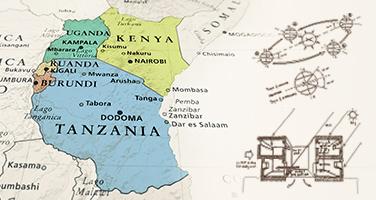
The course provide the basic necessary information for designing climate responsive buildings, aiming to minimise energy demand and to achieve thermal and visual comfort in EAC (East African Community) and other tropical countries with similar climates.
In 2010 the worldwide building sector was responsible for 24% of the total GHG emissions deriving from fossil fuel combustion, second only to the industrial sector, but, if the embodied energy of construction materials is included, the share is far higher and the building sector becomes the prime GHG emitter.
Moreover developing countries are going to play a decisive role in the future world energy scenario, as a consequence of their economic development. Industrial energy consumption will grow, and a dramatic increase in energy consumption for transport can be expected, with the growth in the number of vehicles on the roads – if the currently accepted worldwide approach to mobility does not change.

The increase in energy consumption in the building sector can be expected to be even more dramatic, not only because air conditioning will spread and the number of domestic electric and electronic appliances will grow, but also because of the increase in the number of buildings.
In that respects, the aim of the course is to provide basic necessary information for designing climate responsive buildings in order to minimise energy demand and to achieve thermal and visual comfort in EAC (East African Community) and other tropical countries with similar climates.

Go to Class
MOOC List is learner-supported. When you buy through links on our site, we may earn an affiliate commission.

Related Courses

Engineering Design for a Circular Economy (edX) EdX
Delft University of Technology,DelftX

Engineering Design for a Circular Economy (edX)

Discover and develop sustainable design and engineering methods to improve the reuse, repair, remanufacturing, and recycling of products for a circular economy. Products and equipment all around us are made of materials: look around you and you will see phones, computers, cars, and buildings. We face challenges in securing the supply of materials and the impact this has on the planet. Innovative product design can help us find solutions to these challenges. This course will explore new ways of designing products.

Self Paced
Self-Paced
Share Food, Cut Waste (POK) Polimi OPEN KNOWLEDGE
Politecnico di Milano

Share Food, Cut Waste (POK)

From words to action: surplus food management to tackle food poverty and food waste. This course is addressed to all those who are interested in reducing food waste and enhancing food security for people in need. Producers, food transformers, distributors, HoReCa enterprises and non-profit organizations, as well as consumers and citizens, can get new insights on issues such as the food waste hierarchy, food donation, healthy and responsible patterns of food consumption, food banking.

Available
5-12 Weeks
City Design (Stepic) Other Providers
Stepic

City Design (Stepic)

City Design online course shows the fundamentals of city planning, building and exploitation via funny short video lectures (like the one above) and a variety of brief assignments for self-control. It is ideal for people who want to know about designing the cities before starting professional readings or to draw inspiration.

Mar 1st 2014
5-12 Weeks
Comfort in Buildings (Coursera) Coursera
L&T EduTech

Comfort in Buildings (Coursera)

The course provides a comprehensive overview of sustainability in construction, emphasizing the depletion of natural resources, global energy utilization, and challenges faced. It explores site selection parameters, the impact on the environment, and methods for preserving site resources. The integrated design approach and its benefits are discussed, along with the importance of basic amenities and the urban heat island effect.

Jul 27th 2026
4 Weeks
Net-Zero Building Fundamentals (Coursera) Coursera
Indian Institute for Human Settlements

Net-Zero Building Fundamentals (Coursera)

Interested in decarbonisation, high performance, and climate resilient buildings? Then this course is for you. Our future is low-carbon, net-zero buildings that are super-efficient and self-sufficient in terms of their energy and water use. Decarbonisation, digitisation, and deglobalisation are driving the infrastructure revolution over the next 20 years. This course, offered jointly by the Alliance for an Energy Efficient Economy (AEEE) and the Indian Institute for Human Settlements (IIHS), will enable you to reap the benefits of this revolution and work on climate change.

Aug 3rd 2026
5-12 Weeks
Deep renovation for energy efficient residential buildings (POK) Polimi OPEN KNOWLEDGE
Politecnico di Milano

Deep renovation for energy efficient residential buildings (POK)

As European buildings are responsible for 36% of CO2 emissions, the subject of deep renovation has become central to attain a climate-neutral EU by 2050. Hence, there is a compelling need for a new set of skills and knowledge to deliver deep renovation projects, that this course attempts to offer.

Available
5-12 Weeks
Modelling the Energy Transition: the revolution of open-source software (POK) Polimi OPEN KNOWLEDGE
Politecnico di Milano

Modelling the Energy Transition: the revolution of open-source software (POK)

Deep dive on the energy modelling world to discover available open-source software for the analysis of the current and future Energy Transition. The MOOC aims at providing the attendants with the fundamental knowledge of the main challenges that characterize the Energy Transition at both Global and Regional level, and a set of tools to scientifically support their analysis.

Available
3 Weeks