EdX

Surface Science: Methods of Surface Analysis (edX)

Surface Science: Methods of Surface Analysis (edX)

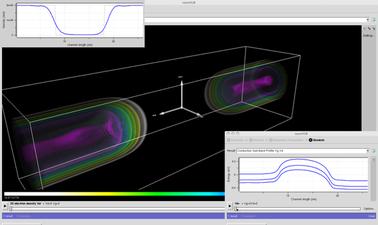
Discover contemporary surface analysis techniques and learn how to choose the right method for your research. There is a vast variety of contemporary surface analysis methods that you can use for your research. If you are not sure which one is right for you, or if you want to obtain the right information about different surface analysis techniques, then this course is for you!

Class Deals by MOOC List - Click here and see EdX's Active Discounts, Deals, and Promo Codes.

This course describes the most widely used analysis methods in contemporary surface science. It presents the strengths and weaknesses of each method so that you can choose the one that provides you with the information you need. It also reviews what each method cannot give to you, as well as how to interpret the results obtained from each method.
This course is filled with examples to help you become familiar with the graphs and figures obtained from common surface analysis methods.
Each method is described in a similar way: basic principle, apparatus scheme, example results, special features, and actual device examples.

What you'll learn

  • The information each method can and cannot give
  • Applications which are best for each method
  • Errors or uncertainties that might arise by using each method
  • Special features of each method
  • Sample preparation procedures required for each method

Syllabus

1. Introduction
• Introduction

2. Corpuscular diagnostics. Secondary–ion mass spectrometry. Rutherford backscattering
2.1. Secondary–ion mass spectrometry
• SIMS – Operating principles, plant layout
• SIMS – Analysis and interpretation of the results, examples
2.2. Rutherford backscattering
• RBS – Principles of operation, the circuit
• RBS – Analysis and interpretation of the results, examples
2.3. Analysis of elastically reflected recoil atoms (ERD)
• ERD – Principles of operation, the circuit
• ERD – Analysis and interpretation of the results, examples
2.4. The method of nuclear reactions (NRA)
• NRA – Principles of operation, the circuit
• NRA – Analysis and interpretation of the results, examples

3. Electronic diagnostics
3.1. Auger spectrometry
• Auger spectrometry – principles of operation, installation scheme
• Auger spectrometry – analysis of the results, examples
3.2. Energy– dispersion spectrometry
• Energy– Dispersion spectrometry – principles of operation, installation scheme
• Energy– Dispersion spectrometry – analysis of the results, examples
3.3. Translucent electron microscopy
• TEM – Principles of operation of the device and circuit
• TEM – Sample images and their interpretation
3.4. Scanning Electron Microscopy
• SEM – Principles and scheme of the device
• SEM – Sample images, their interpretation

4. X–ray diagnostics
4.1. The X–ray photo–electron spectroscopy (XPS)
• XPS – principles of operation of the device and circuit
• XPS – Examples of results, their interpretation

5. Probe microscopes
5.1. Tunneling microscope
• TCM – Working principles of the device circuit
• TCM – Sample images and their interpretation
5.2. The atomic force microscope
• ACM – Working principles of the device circuit
• ACM – Sample images, their interpretation

6. Conclusion
• Conclusion
• Summarizing, for a summary of the methods studied
Go to Class
MOOC List is learner-supported. When you buy through links on our site, we may earn an affiliate commission.

Related Courses

Quantum Mechanics (edX) EdX
Georgetown University,GeorgetownX

Quantum Mechanics (edX)

Learn the quantum mechanics needed to prepare you for the second quantum revolution (focused on quantum sensing). We use a new way to teach quantum for undergraduates by focusing on conceptual ideas and operator manipulations. This allows us to discuss more applications to experiment usually done. You need a background in the full calculus sequence and in math methods. Freshman physics and modern physics is recommended. This course is appropriate for physicists, chemists and engineers.

Aug 21st 2023
13-24 Weeks
The Radio Sky I: Science and Observations (edX) EdX
École Polytechnique Fédérale de Lausanne,EPFLx

The Radio Sky I: Science and Observations (edX)

Be captivated by the exotic objects that populate the Radio Sky and gain a solid understanding of their physics and the fundamental techniques we use to observe them. The serendipitous and unexpected discovery of radio emission from celestial objects opened up the possibility of studying a new and exciting view of the universe beyond the visible spectrum. Astronomers have been studying the cosmos in visible light since ancient Greece, but it is only in comparatively modern times that the universe beyond the visible spectrum has become accessible to us. In this course you will learn about the most important objects that emit in the radio regime, both within and beyond our own galaxy.

Self Paced
Self-Paced
Is this Physics or Magic? Learning Physics through Minds-on Science Demonstration (edX) EdX
National University of Singapore,NUS

Is this Physics or Magic? Learning Physics through Minds-on Science Demonstration (edX)

Is this MOOC an introduction to Physics or Magic? Here's calling all curious minds from every corner of the globe to join us to learn physics via science demonstrations which are exciting, visually appealing and thought provoking. In this MOOC, you'll get to witness how demonstrations can add reality and vividness to the process of concept formation, and pick up one or two scientific nuggets along the way.

Sep 5th 2023
5-12 Weeks
Science & Cooking: From Haute Cuisine to Soft Matter Science (chemistry) (edX) EdX
HarvardX,Harvard University

Science & Cooking: From Haute Cuisine to Soft Matter Science (chemistry) (edX)

Top chefs and Harvard researchers explore how everyday cooking and haute cuisine can illuminate basic principles in chemistry, physics, and engineering. Learn about food molecules and how chemical reactions can affect food texture and flavor. During each module of this course, chefs reveal the secrets behind some of their most famous culinary creations — often right in their own restaurants. Inspired by such cooking mastery, the Harvard team will then explain the science behind the recipe.

Self Paced
Self-Paced
Quantum Mechanics for Scientists and Engineers 1 (edX) EdX
StanfordOnline

Quantum Mechanics for Scientists and Engineers 1 (edX)

This 9 week course aims to teach quantum mechanics to anyone with a reasonable college-level understanding of physical science or engineering. Quantum mechanics was once mostly of interest to physicists, chemists and other basic scientists. Now the concepts and techniques of quantum mechanics are essential in many areas of engineering and science such as materials science, nanotechnology, electronic devices, and photonics.

Self Paced
Self-Paced
Solid State Devices 1 (edX) EdX
Purdue University,PurdueX

Solid State Devices 1 (edX)

Semiconductor are everywhere in human activities, from your credit card to space exploration. This graduate-level introduction brings aspects of physics, chemistry, and engineering together to understand, analyze, and design transistors and solar cells. This course provides the graduate-level introduction to understand, analyze, characterize and design the operation of semiconductor devices such as transistors, diodes, solar cells, light-emitting devices, and more.

Jan 9th 2023
13-24 Weeks
Advanced Transport Phenomena (edX) EdX
Delft University of Technology,DelftX

Advanced Transport Phenomena (edX)

Learn how to tackle complex mass and heat transfer problems and apply the results in your own environment. How can you reduce the energy loss of your home? What is the underlying science of energy loss in pipes? Which heat and mass transfer problems do we have to tackle to make consumer products? In this engineering course, you will learn about the engineering principles that play an important role in all of these and more phenomena. You will learn about microbalances, radiation, convection, diffusion and more and their applications in everyday life.

Self Paced
Self-Paced
Quantum Mechanics for Everyone (edX) EdX
Georgetown University,GeorgetownX

Quantum Mechanics for Everyone (edX)

Learn the fundamental notions of quantum mechanics at a level that is accessible to everyone. Quantum Mechanics for Everyone is a six-week long MOOC that teaches the basic ideas of quantum mechanics with a method that requires no complicated math beyond taking square roots (and you can use a calculator for that).

Jun 8th 2023
5-12 Weeks
The Quantum Internet and Quantum Computers: How Will They Change the World? (edX) EdX
Delft University of Technology,DelftX

The Quantum Internet and Quantum Computers: How Will They Change the World? (edX)

Discover quantum computers and the quantum internet. Learn the principles and promises behind these developments and how they will impact our future. There is no doubt that quantum computers and the quantum internet will have a great impact on our world. But we don’t yet know quite how. As with traditional computers - we will only see the effects in the decades to come.This course will provide you with a basic understanding of quantum computing and the quantum internet. Together, we’ll peek into the fascinating world of quantum phenomena, such as qubits, superposition, and entanglement.

Self Paced
Self-Paced