Speaking to Inspire: Ceremonial and Motivational Speeches (Coursera)

Speaking to Inspire: Ceremonial and Motivational Speeches (Coursera)

The most memorable speeches inspire, entertain, and praise. By blending stories and eloquence, great speeches highlight the core values motivating an audience. You might need to do this in a keynote address, a eulogy, or simply a business meeting. Inspiring audiences is a common, but difficult writing challenge. You want a speech that elevates the topic and the audience.

Class Deals by MOOC List - Click here and see Coursera's Active Discounts, Deals, and Promo Codes.

This course gives you a method for preparing and delivering speeches that inspire and entertain. By the end of this course, you should be able to compose and deliver moving speeches that praise core audience values through evidence, storytelling, and humor. You should be able to write eloquent passages in tones appropriate to the audience and occasion and speak fluidly from either a well-prepared manuscript or from memory. Learners will record speeches, providing and receiving peer feedback.

Course 4 of 4 in the Dynamic Public Speaking Specialization

Syllabus

WEEK 1
Using values and storytelling to develop a great speech
Welcome! We begin this week with an overview of the course: What it is and what we’ll be doing. With a sense for the topic, we can then get to know each other with an introductory speech. It’s a fun and easy speech that allows you to get to know some of your classmates. From there we can start preparing our speeches. We’ll start by finding the core values that will drive the speech. Values that speak to the topic and inspire your audience. We’ll then explore how to discuss those values through evidence and storytelling. By the end of the week, you’ll have a list of values and stories to write a speech. If you want, you can end the week by telling us a story and getting some feedback on it. This is a longer week. The storytelling material goes better in week one than week two. If you feel a bit overwhelmed, just know that this week will have a bit more content than the other weeks.

WEEK 2
Arrangement. Finding the right form for your speech.
Last week, we worked on developing the pieces of our speech (values and support). This week, we’ll take those pieces and build a speech outline. There are a few broad arrangement models that prove helpful in organizing the speech in a compelling and moving way. Having discussed invention and arrangement, we'll watch and evaluate a sample speech. You’ll watch a speech, write up some feedback, and read how others analyzed the speech. Then back to some composition. Once we have the basic structure down, we can look to openers and closers, basically figuring out how to get into and out of the speech. Finally, we’ll look to some of the very specific concerns that emerge when dealing with speeches of introduction, eulogies, and award speeches.

WEEK 3
Getting it just right. Good language, tone, and writing for the delivery
You have your outline, so now let transform that into a manuscript. This week is all about style. We’ll start by thinking about what overall style is most appropriate for your speech. Then we’ll move through a bunch of stylistic devices. These are equations for eloquence. You put your value into these stylistic devices and eloquence pops out the other side. From there, we can talk more about word choice and overall tone. Finally, we’ll talk a little bit about writing for the ear and drafting a speech manuscript (which is different from an essay). The assignment this week is a draft manuscript. This is just a chance to get some feedback from others on an early draft.

WEEK 4
Remembering and delivering a great speech.
You have your manuscript, now let’s perform it. Memory and delivery are clearly linked. We need to decide whether we’ll extemporize the speech, work from a manuscript, or memorize the whole thing. No one approach is inherently better, but should be a good response to the rhetorical situation. We’ll talk about making this decision. We’ll talk about how to format and read from a manuscript. We’ll talk about how to memorize speeches. Now we can finally get into some humor work. Some of this is certainly invention, but a lot of it is delivery. We’ll think about where and how to insert some humor into our speeches. And just as important, what to do when a joke falls flat. We’ll wrap up with some general delivery and performance issues. The honors assignment this week is a speech analysis. You’ll watch a speech, write up some feedback, and read how others analyzed the speech.

WEEK 5
Review and assessment
Thank you for your time in this course. I hope the material has proven helpful in some way. We concluded our discussion of the ceremonial speech last week. I would like to spend a bit of time reflecting on the course. We will end this week with your final speech.


Go to Class
MOOC List is learner-supported. When you buy through links on our site, we may earn an affiliate commission.

Related Courses

Narrative Economics (Coursera) Coursera
Yale University

Narrative Economics (Coursera)

This course, Narrative Economics, is relatively short and proposes a simple concept: we need to incorporate the contagion of narratives into our economic theory. You can think of narratives as stories that shape public beliefs, which in turn influence our decision making. Understanding how people arrived at certain decisions in the past can aid our understanding of the economy today and improve our forecasts of the future.

Oct 5th 2026
4 Weeks
English and Academic Preparation - Pre-Collegiate (Coursera) Coursera
Rice University

English and Academic Preparation - Pre-Collegiate (Coursera)

The English and Academic Preparation - Pre-Collegiate course is for students with a (minimum) high-intermediate level of English. It is designed to help international students develop the academic skills necessary for success in undergraduate studies at an American university while strengthening their English proficiency. Ideally, prospective students have completed or are near completion of a high school diploma in their country and would like to come to the United States to study for a bachelor’s degree.

Oct 5th 2026
4 Weeks
Negotiation Fundamentals (Coursera) Coursera
ESSEC Business School

Negotiation Fundamentals (Coursera)

This course gives you access to negotiation practical tools and best practices gathered by Professor Aurélien Colson & his team from assignments in more than seventy countries and in a wide set of sectors, be they services, industry, high tech, or public organizations. In an interactive manner, this course will help you, among other topics: get prepared for any negotiation; avoid traps; know how to prompt value-creating partnerships; structure an effective negotiation sequence; bargain in an efficient and respectful manner; overcome deadlocks; and much more!

Oct 5th 2026
4 Weeks
The Arts and Science of Relationships: Understanding Human Needs (Coursera) Coursera
University of Toronto

The Arts and Science of Relationships: Understanding Human Needs (Coursera)

This course provides an introduction to: 1- Basic concepts of The Strategies and Skills Learning and Development System (SSLD), their relevance for every day relationships and provide advanced concepts for participants who work in fields of social work and health care. 2- Basic practice principles and methods of SSLD, illustrated by relationship management case studies. 3- The SSLD framework for relationship management assessment; N3C (needs, circumstances, characteristics, capacity) and problem translation. 4- Core competencies in the relationship management application of the SSLD system: Observation learning, simulation, real life implementation, review and monitoring.

Oct 5th 2026
5-12 Weeks
Science of Training Young Athletes Part 2 (Coursera) Coursera
University of Florida

Science of Training Young Athletes Part 2 (Coursera)

In this course you will learn how to design the type of training that takes advantage of the plastic nature of the athlete’s body so you mold the right phenotype for a sport. We explore ways the muscular system can be designed to generate higher force and power and the type of training needed to mold the athlete's physical capacity so it meets the energy and biochemical demands of the sport.

Oct 5th 2026
5-12 Weeks
Designing Engaging Dashboards for Healthcare Analytics (Coursera) Coursera
Northeastern University

Designing Engaging Dashboards for Healthcare Analytics (Coursera)

Introduces processes and design principles for creating meaningful displays of information that support effective business decision-making. Studies how to collect and process data; create visualizations (both static and interactive); and use them to provide insight into a problem, situation, or opportunity. Introduces methods to critique visualizations along with ways to answer the elusive question: “What makes a visualization effective?” Discusses the challenges of making data understandable across a wide range of audiences.

Sep 28th 2026
4 Weeks
Voice Disorders: What Patients and Professionals Need to Know (Coursera) Coursera
Icahn School of Medicine at Mount Sinai

Voice Disorders: What Patients and Professionals Need to Know (Coursera)

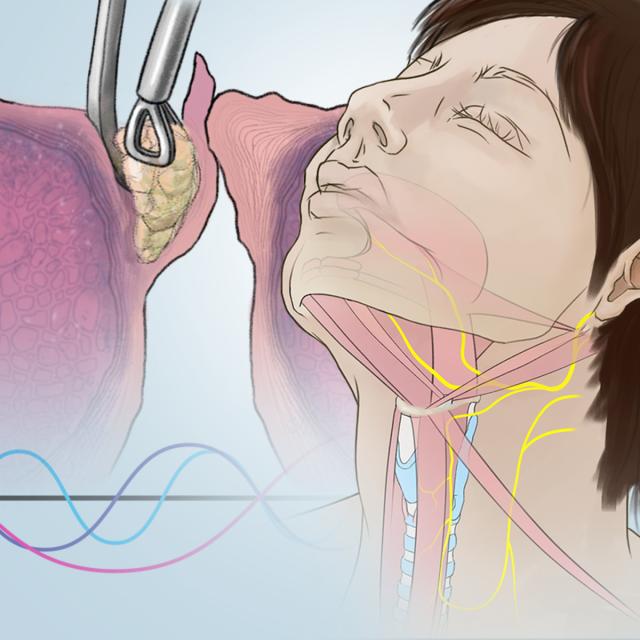
Knowledge regarding vocal production physiology and management options for voice disorders have experienced rapid growth over the past 40 years. This growth has resulted in a knowledge gap amongst patients and practitioners. Entirely new subspecialties of laryngology under otolaryngology and vocology under speech-language pathology have developed in response to this gap. This MOOC (Massive Open Online Course) is designed to educated patients, allied healthcare providers, vocal trainers/coaches, general medical practitioners and otolaryngologists.

Sep 28th 2026
5-12 Weeks
Healthcare Information Design and Visualizations (Coursera) Coursera
Northeastern University

Healthcare Information Design and Visualizations (Coursera)

Introduces processes and design principles for creating meaningful displays of information that support effective business decision-making. Studies how to collect and process data; create visualizations (both static and interactive); and use them to provide insight into a problem, situation, or opportunity. Introduces methods to critique visualizations along with ways to answer the elusive question: “What makes a visualization effective?”

Oct 5th 2026
4 Weeks
Creative Thinking: Techniques and Tools for Success (Coursera) Coursera
Imperial College London

Creative Thinking: Techniques and Tools for Success (Coursera)

In today’s ever-growing and changing world, being able to think creatively and innovatively are essential skills. It can sometimes be challenging to step back and reflect in an environment which is fast paced or when you are required to assimilate large amounts of information. Making sense of or communicating new ideas in an innovative and engaging way, approaching problems from fresh angles, and producing novel solutions are all traits which are highly sought after by employers.

Sep 28th 2026
5-12 Weeks
Foundational Skills for Communicating About Health (Coursera) Coursera
University of Michigan

Foundational Skills for Communicating About Health (Coursera)

Effective communication is a core skill that nearly every health professional will need and use during their careers. Yet, few health professionals receive even basic training in how to design communications to be clear and successful. As “foundational skills,” the content in this course can be applied to both oral and written communication, within and beyond health.

Oct 5th 2026
5-12 Weeks