EdX

Space Mission Design and Operations (edX)

Space Mission Design and Operations (edX)

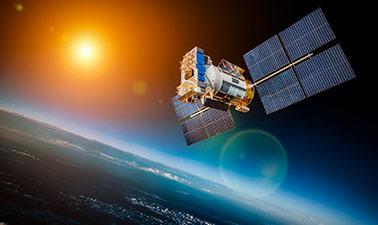
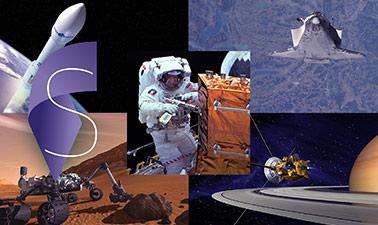
Learn the concepts used in the design of space missions, manned or unmanned and operations, based on the professional experience of the lecturer. This course builds on university level physics and mechanics to introduce and illustrate orbital dynamics as is applied in the design of space missions. Simple tools will be provided to allow planning of missions on orbit around Earth or in the Solar System. You will learn from the experience of Claude Nicollier, one of the first ESA astronauts, specifically through his involvement in the Shuttle project and his role in the maintenance of the Hubble Space Telescope on two occasions.

Class Deals by MOOC List - Click here and see EdX's Active Discounts, Deals, and Promo Codes.

Space exploration is a very exciting subject. Consider the achievements of Sputnik 1, Yuri Gagarin's first flight in space, the Apollo missions to the Moon, followed by the Shuttle program, the Hubble Space Telescope launch and maintenance on orbit, and finally the assembly and exploitation of the International Space Station. These were challenging undertakings involving space agencies and industrial teams of several nations, and private companies as well. Space telescopes are in service, and several components of the solar system have been and are still actively visited by a number of unmanned probes and robots providing us with precious knowledge about our space environment as well as the far away Universe.
The course focuses on conceptual understanding of space mechanics, maneuvers, propulsion and control systems used in all spacecraft. You will gain knowledge of the challenges related to the use of the space environment as a platform for scientific and utilitarian purposes.

What you'll learn:

  • Fundamental laws of mechanics and orbital mechanics
  • Orbital manoeuvers
  • Types of space missions and their objectives
  • Space environment
  • General concepts of space vehicles architecture
  • Propulsion
  • Attitude determination and control
  • On board systems
  • Risk management and reliability
  • Key design elements for successful missions, in particular related to human spaceflight

Syllabus

Unit 0 - Introduction to the Course
Course objectives
Motivation behind space exploration and utilization
The space pioneers, and brief history of human space exploration
The main space agencies in the world
Space utilization and exploration

Unit 1 - Introduction to Space Environment
Review of Laws of Mechanics
Introduction to the space environment including the transition from the atmosphere to space, microgravity, the electrical and thermal environments, orbital lifetime, space debris and asteroids/comets collision threats

Unit 2 – Introduction to Orbital Mechanics (I and II)
Orbital Mechanics I - dynamics of spaceflight; concept of gravitational well; orbital motion; Kepler’s Laws; the case of circular orbits
Orbital Mechanics II - elliptical orbits; reference frames; orbital maneuvers; perturbations of orbital motion; peculiar orbits

Unit 3 - Orbital Mechanics Part III
Rendezvous in Low Earth Orbit (LEO); relative motion of the chaser vs. the target; the case of the Space Shuttle and ESA’s Automatic Transfer Vehicle (ATV)

Unit 4 - Orbital Mechanics Part IV
Interplanetary trajectories; Gravity Assist or Slingshot principle
Propulsion in space - law of propulsion; concept of specific impulse; types of thrusters; electric propulsion; ascent into space; and re-entry

Unit 5 - Introduction to Space Systems and Space Tethers
Attitude measurement and control; attitude change; electrical power generation and distribution (overview); thermal balance (overview)
Space tethers as an alternate method to generate electrical power on orbit; Dynamic applications of Space Tethers, Shuttle-based Tether missions
Reliability; systems redundancy; risk management; safety design for space systems; human rating concept

Unit 6 – The Space Shuttle and the International Space Station (ISS)
Space Shuttle - concept; design; operations; Challenger and Columbia accidents
ISS; Soyuz and Progress; Logistic supply to ISS with ATV, HTV, and commercial vehicles

Unit 7 – Special Subjects on Human Spaceflight, and Future of Space Exploration
Extravehicular Activity (EVA) and space suits, space robotics
Astronaut training • Commercial space – The suborbital segment
Orion and the Space Launch System (SLS)
Future of Space Exploration and Conclusion

Go to Class
MOOC List is learner-supported. When you buy through links on our site, we may earn an affiliate commission.

Related Courses

A Brief History of Human Spaceflight (Coursera) Coursera
University of Houston System

A Brief History of Human Spaceflight (Coursera)

This course provides a view of the history of spaceflight, from early writings telling of human's fascination of space through the early Russian and American space stations. Developed as an interesting and entertaining slice of space history that is accessible to anyone with an interest in human spaceflight

Jul 27th 2026
5-12 Weeks
Explorer l’espace des humains: une introduction à la géographicité (edX) EdX
École Polytechnique Fédérale de Lausanne,EPFLx

Explorer l’espace des humains: une introduction à la géographicité (edX)

Explorer comment la géographie, la cartographie, l’urbanisation et la justice spatiale jouent un rôle dans la compréhension de l’espace des humains et des sociétés. Comment définir et comprendre la notion d’espace? Comment l’urbanisation, la mobilité, Internet et la mondialisation ont-ils influencé notre perception du temps et de l’espace? Ce cours a pour objectif de définir la notion d’espace en apportant des clés de lecture pour comprendre les sociétés qui nous entourent.

Self Paced
Self-Paced
Serverless Data Processing with Dataflow: Operations en Español (Coursera) Coursera
Google Cloud

Serverless Data Processing with Dataflow: Operations en Español (Coursera)

En esta última parte de la serie de cursos de Dataflow, presentaremos los componentes del modelo operativo de Dataflow. Examinaremos las herramientas y técnicas que permiten solucionar problemas y optimizar el rendimiento de las canalizaciones. Luego, revisaremos las prácticas recomendadas de las pruebas, la implementación y la confiabilidad en relación con las canalizaciones de Dataflow.

Jul 27th 2026
2 Weeks
The Conquest of Space: Space Exploration and Rocket Science (edX) EdX
Universidad Carlos III de Madrid - UC3M,UC3Mx

The Conquest of Space: Space Exploration and Rocket Science (edX)

Explore the history of space travel and learn the basics of aerospace engineering. Space exploration plays a major role in the history of humankind. The cultural, political and sociological repercussions are extraordinary, and the amount of resources dedicated to space exploration is enormous. This aerospace course is a first step for those interested in learning more about the history of the space and the impact of space exploration on our daily lives.

Self Paced
Self-Paced
Analyzing the Universe (Coursera) Coursera
Rutgers University

Analyzing the Universe (Coursera)

Using publicly available data from NASA of actual satellite observations of astronomical x-ray sources, we explore some of the mysteries of the cosmos, including neutron stars, black holes, quasars and supernovae. We will analyze energy spectra and time series data to understand how these incredible objects work. We utilize an imaging tool called DS9 to explore the amazing diversity of astronomical observations that have made x-ray astronomy one of the most active and exciting fields of scientific investigation in the past 50 years.

Aug 3rd 2026
5-12 Weeks
Star Trek: Inspiring Culture and Technology III (edX) EdX
Smithsonian,SmithsonianX

Star Trek: Inspiring Culture and Technology III (edX)

Explore how Star Trek inspires reflection on our own history, humanity, and place in the universe. Why has Star Trek , which began as a failed network series, become so influential? Instead of fading away, the Star Trek universe now encompasses feature films, additional television series, and a universe of fan conventions and memorabilia.

Self Paced
Self-Paced
Origens da Vida no Contexto Cósmico (Coursera) Coursera
Universidade de São Paulo, Brasil

Origens da Vida no Contexto Cósmico (Coursera)

Origens da vida no contexto cósmico é um curso desenvolvido no Instituto de Astronomia, Geofísica e Ciências Atmosféricas da Universidade de São Paulo, com o objetivo de apresentar os mais recentes avanços científicos na compreensão deste intrigante assunto. É um curso com formato multidisciplinar que o levará a compreender melhor os aspectos envolvidos no surgimento de vida na Terra e no possível surgimento de vida em outros planetas.

Aug 3rd 2026
4 Weeks
Astrophysics: Cosmology (edX) EdX
Australian National University - ANU,ANUx

Astrophysics: Cosmology (edX)

Exploring the origin, fate and nature of our universe. This course covers cosmology – the study of our entire universe. Where did the universe come from? How will it end? What is the nature of space and time? For the first time in human history, we can give precise, reliable answers to many cosmological questions, thanks to a spectacular series of recent breakthroughs.

Self Paced
Self-Paced
Question Reality! Science, philosophy, and the search for meaning (edX) EdX
DartmouthX

Question Reality! Science, philosophy, and the search for meaning (edX)

What is reality? Explore how physics and philosophy have changed our perspective on the nature of the universe, matter, and mind over time. How much can we know of the physical world? Can we know everything? Or are there fundamental limits to how much we can explain? If there are limits, to what extent can we explain the nature of physical reality? RealityX investigates the limits of knowledge and what we can and cannot know of the world and ourselves.

No session available
5-12 Weeks
Operations Management (Coursera) Coursera
FIA Business School

Operations Management (Coursera)

Participants will learn to optimize operations, enhance productivity, and address real-world challenges through strategic planning and effective implementation. The curriculum combines theoretical knowledge with practical applications to equip learners with the skills needed for successful operations management in various industries.

Jul 27th 2026
5-12 Weeks