Shaping Urban Futures (Coursera)

Shaping Urban Futures (Coursera)

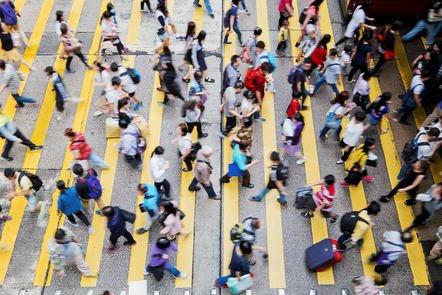
If we are to make sense of the future of humanity, we must understand the future of the city. For some scholars the 21st century globe will see the most significant change of human history - the move of most of the world to live in cities - a planetary urbanism that has changed the way we live globally, the way we organise ourselves economically and the impact humanity has on our environment in an age that we consequently now describe as the Anthropocene.

Class Deals by MOOC List - Click here and see Coursera's Active Discounts, Deals, and Promo Codes.

Most of the urban growth on the planet will be in the global South and this is where we concentrate the attention of this course, drawing on the work of a five-year programme known as PEAK Urban, involving a collaboration of researchers from China, Colombia, India, South Africa and the United Kingdom.

The PEAK Urban programme aims to aid decision-making on urban futures by:
• Generating new research grounded in the logic of urban complexity;
• Fostering the next generation of leaders that draw on different perspectives and backgrounds to address the greatest urban challenges of the 21st century;
• Growing the capacity of cities to understand and plan their own future.

Shaping Urban Futures aims to demonstrate how complementary research projects have applied the PEAK Urban framework – Prediction, Emergence, Adoption and Knowledge – to uncover interrelated issues of health, climate change, migration and informality in places that will face the biggest challenges from rapid unplanned urbanisation.
This course consists of 6 modules, with an Introduction and a Closing module sandwiching 4 core modules. Each module involves around 5-6 hours of learning. To get the best out of the course, learners are encouraged to view all the video lectures and conversations, go through other learning material, work on all the assignments and assessments, and participate in discussions in a constructive and respectful manner.
By the end of this course, you will be able to:
• Recognise the new urban sciences that are driving our understanding of urbanisation across the world
• Examine carefully how we should understand how to trace, examine and explore the ways new social, economic and environmental changes emerge and reshape the working of the city
• Visualise how technological change is adopted, adapted and deployed differently in variable city contexts
• Understand how best to intervene in urban futures through sharing urban experiences and contributing to the coproduction of knowledge to enrich and strengthen knowledge exchange in cities
This course is designed principally for people working in cities who want to make a difference and for all urban scholars, from early career researchers to veteran urbanists and everyone in between. This course will also hopefully inspire workers in local government, community organisations and the private sector as well as urban scholars to build upon the experiences of a global network to develop their own methods and frames to view, interpret and define urban changes in their local geographies and contexts.

Syllabus

WEEK 1
Shaping Urban Futures: An Introduction
Welcome to Shaping Urban Futures. The goal of this course is to help you discuss the importance of cities in the 21st century global context and encourage you to share your understanding of cities and the frameworks and lenses under which they are studied. In this module, you will get an overview of what to expect from this course. You will also meet your instructors and have the opportunity to meet your fellow learners. We hope this module helps you familiarise yourself with the course and its contents so you are prepared to learn most effectively from the subsequent set of core modules.

WEEK 2
How to Know a City: New Urban Sciences

WEEK 3
What to Know in a City: New Urban Formations

WEEK 4
How are Cities Changing: Urban Disruptions

WEEK 5
Transforming the City: Making a Difference on the Ground

WEEK 6
Reflections on the Future City: Conclusion
Go to Class
MOOC List is learner-supported. When you buy through links on our site, we may earn an affiliate commission.

Related Courses

Cómo hacer una tesis (Coursera) Coursera
Universidad Nacional Autónoma de México

Cómo hacer una tesis (Coursera)

Con este curso, ofrecido por la UNAM, el participante en proceso de titulación o que están finalizando estudios universitarios, será capaz de elaborar una tesis en seis meses; por medio de las herramientas adquiridas en cada módulo, a fin de que las conjuguen con los conocimientos, habilidades y aptitudes con que cuentan e impulsando sus capacidades de investigación.

Oct 12th 2026
4 Weeks
Arctic Economy (Coursera) Coursera
University of Alberta,UiT The Arctic University of Norway

Arctic Economy (Coursera)

Arctic communities have diverse histories and roles in local, regional and global economies. However, the scope and scale of globalization has increased so quickly that vulnerable Arctic communities are facing new kinds of challenges to their survival. In this 3-week MOOC, a unique collaboration between the University of Alberta and UiT The Arctic University of Norway, you will investigate the challenges faced by Indigenous, North American, Russian and Nordic Arctic communities in a modern world. So join us as we venture above the 60th parallel North, and explore how these fascinating communities adjust to change while maintaining their ways of life, socio-economic histories, and cultural traditions.

Oct 12th 2026
4 Weeks
Planetary Urbanisation: Global Challenges in a Changing World (FutureLearn) FutureLearn
University College Dublin

Planetary Urbanisation: Global Challenges in a Changing World (FutureLearn)

Understanding the Global Challenges of a Changing World. The nature and form of urbanisation is rapidly changing. New cities form while others decline, urban development enhances economic chances for some but challenges quality of life for others. This course focuses on planetary urbanisation, the idea that whether living in cities or not, most of the world’s 7 billion people are impacted by the processes of urbanisation.

No sessions available
5-12 Weeks
Chemerinsky on Constitutional Law - The Structure of Government (Coursera) Coursera
University of California, Irvine

Chemerinsky on Constitutional Law - The Structure of Government (Coursera)

This course will highlight the construction and interpretation of the U.S. Constitution through the centuries. You'll learn the history behind the Constitution, cases that formed important precedent, and how changes in interpretation have been dependent on shifts in cultural and political climate as well as the composition of the Supreme Court.

Oct 12th 2026
5-12 Weeks
Multimodal Literacies: Communication and Learning in the Era of Digital Media (Coursera) Coursera
University of Illinois at Urbana-Champaign

Multimodal Literacies: Communication and Learning in the Era of Digital Media (Coursera)

Whereas the focus of traditional literacy pedagogy has been the written word in its standard and literary forms, this courser expands the scope of literacy learning to encompass contemporary multimodal texts and the wide range of ways of making meaning that occur in different social and cultural contexts. Another course, "Literacy Teaching and Learning: Aims, Approaches and Pedagogies" addresses pedagogical aspects of literacies. This "Multimodal Literacies" learning module does not require or expect that participants will have already completed the "Literacy Teaching and Learning" module.

Oct 12th 2026
4 Weeks
Introduction to the Orbital Perspective (Coursera) Coursera
University of Florida,University of Arizona,Drexel University

Introduction to the Orbital Perspective (Coursera)

The goals of this course are to develop the student’s critical thinking skills, global awareness, and ability to work as an integral part of a team in an increasingly complex global job market. The course provides a foundation in such skills as team building, collaboration, and elevated empathy using real-world scenarios from some of world’s most effective collaborative projects including the Earthrise-2068 Project.

Oct 12th 2026
5-12 Weeks
Chinese Politics Part 1 - China and Political Science (Coursera) Coursera
The Hong Kong University of Science and Technology - HKUST

Chinese Politics Part 1 - China and Political Science (Coursera)

This course offers a conceptual framework for understanding China that highlights the intersection of politics and economics. It shows that rather than develop into a full blown market economy, state and party officials at all levels of the political system maintain significant influence in economic development. Such a “political” economy has had both positive and negative outcomes, which we will assess in detail.

Oct 12th 2026
5-12 Weeks
Afrique et mondialisation, regards croisés (Coursera) Coursera
Sciences Po

Afrique et mondialisation, regards croisés (Coursera)

Au-delà des relations internationales classiques, le processus de mondialisation mobilise quantité d'acteurs économiques, sociaux et culturels, individuels et collectifs, qui agissent dans l'espace mondial. Nous étudions ensemble, Africains, Latino-américains et Européens, comment il en dérive de nouvelles relations internationales. Ce cours prend sa source dans les approches sociologique et historique françaises des relations internationales, comme celles promues en Afrique et en Amérique latine.

Oct 12th 2026
5-12 Weeks
What future for education? (Coursera) Coursera
University of London,UCL Institute of Education

What future for education? (Coursera)

Through this course you will start to critically examine your own ideas about education, teaching and learning. The critique will be developed through engagement with theories and ideas developed through educational research. You will be encouraged to use these ideas to challenge or support your own ideas about education. Each week we will focus on one key question, using video lectures, key readings and challenges to explore some commonplace notions about education.

Oct 12th 2026
5-12 Weeks