NAU

Ser Cuidador na Pandemia por COVID-19: Cuidados em Contexto Domiciliário (NAU)

Ser Cuidador na Pandemia por COVID-19: Cuidados em Contexto Domiciliário (NAU)

"Ser cuidador na pandemia por COVID-19: cuidados em contexto domiciliário" é um curso que tem por objetivo orientar as pessoas que se tornaram cuidadores dos seus familiares. Venha adquirir conhecimentos e competências para cuidar de uma pessoa dependente e vulnerável.

Ser cuidador não é tarefa fácil, ainda mais no enquadramento da atual pandemia por COVID-19.
Os cuidadores, no atual contexto, necessitam de maior informação sobre como cuidar, com segurança, das pessoas mais vulneráveis em contexto domiciliário, pelo que este curso pretende capacitar os cuidadores a prestar melhores cuidados informais e a prevenir a infeção pelo SARS-CoV-2.

O curso destina-se ao cidadão prestador de cuidados informais e está organizado em módulos, nos quais o cuidador poderá adquirir competências de higienização pessoal e habitacional, de vigilância e de acompanhamento de pessoas dependentes e vulneráveis.
Descubra, neste curso, as medidas de prevenção e acompanhamento de pessoas dependentes, participando no curso “Ser cuidador na pandemia por COVID-19: cuidados em contexto domiciliário".

Objetivos de Aprendizagem
Com vista à prevenção da transmissão da COVID-19, em pessoas dependentes a viver em contexto domiciliário, pretende-se:

  • Contribuir para a prevenção da transmissão da COVID-19;
  • Compreender as medidas básicas de prevenção: higiene das mãos, etiqueta respiratória e distanciamento social;
  • Conhecer as medidas a adotar com a higiene habitacional;
  • Reconhecer as medidas de vigilância das pessoas dependentes mais vulneráveis;
  • Reconhecer a importância das atividades de autocuidado a realizar à pessoa dependente e vulnerável.

Programa do Curso

  • Medidas de prevenção da COVID-19;
  • Alimentação à pessoa dependente/vulnerável;
  • Posicionar a pessoa dependente/vulnerável;
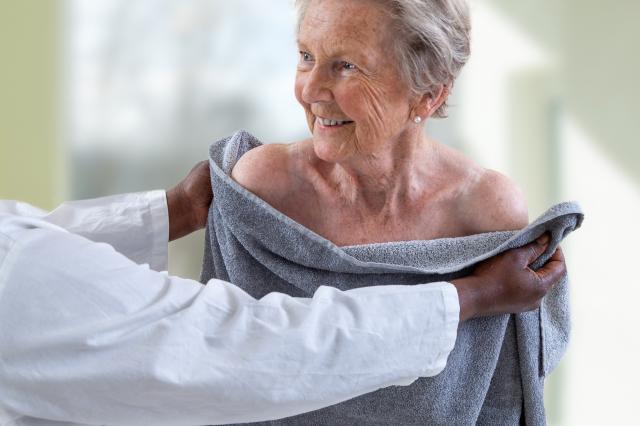
  • Cuidados de higiene à pessoa dependente/vulnerável;
  • Transferir a pessoa dependente/vulnerável;
  • Prevenção de úlceras por pressão dependente/vulnerável;
  • Prevenção de quedas no domicílio;
  • Gerir o regime medicamentoso da pessoa dependente/vulnerável.

O curso tem uma carga total de 1,5 horas.

Go to Class
MOOC List is learner-supported. When you buy through links on our site, we may earn an affiliate commission.

Related Courses

Health Coaching Conversations (Coursera) Coursera
Imperial College London

Health Coaching Conversations (Coursera)

Are you a healthcare practitioner or student in a healthcare field? Do you want to learn how to have more empowering conversations with your patients and support them to take control of their own health and wellbeing? Are you looking for a course to start learning these skills that also fits with your busy life? If so, this is the course for you!

Jun 3rd 2026
4 Weeks
Understanding the Brain: The Neurobiology of Everyday Life (Coursera) Coursera
University of Chicago

Understanding the Brain: The Neurobiology of Everyday Life (Coursera)

Learn how the nervous system produces behavior, how we use our brain every day, and how neuroscience can explain the common problems afflicting people today. We will study functional human neuroanatomy and neuronal communication, and then use this information to understand how we perceive the outside world, move our bodies voluntarily, stay alive, and play well with others.

Jun 1st 2026
5-12 Weeks
Clinical Epidemiology (Coursera) Coursera
Universiteit Utrecht

Clinical Epidemiology (Coursera)

Evidence forms the basis of modern medicine. Clinical research provides us with this evidence, guiding health professionals towards solutions to problems that they face in daily practice. Transferring existing problems in medical practice to a research setting is a challenging process that requires careful consideration. The practice of clinical epidemiology aims to address this through the application of established approaches for research in human populations, while at all times focussing on the problem at hand from a clinical perspective.

Jun 2nd 2026
5-12 Weeks
Antimicrobial resistance - theory and methods (Coursera) Coursera
Technical University of Denmark - DTU

Antimicrobial resistance - theory and methods (Coursera)

The course will cover the topics related to antimicrobial resistance with basic definitions and overview on antimicrobials their use and the emergence and spread of resistance. The course will guide you through the concepts and the importance of resistance spread and dissemination and how that happens. It will show you how bacteria become resistant and which mechanisms they might use for this. And as part of the course you will also receive some training in methods for antimicrobial susceptibility testing (AST) and detection of specific resistance in the microbiological laboratories with the basic methods available and with focus on the obtention of good quality results which can be interpreted and used for different purposes.

Jun 1st 2026
5-12 Weeks
Ebola: Essential knowledge for health professionals (Coursera) Coursera
University of Amsterdam,Universiteit Utrecht

Ebola: Essential knowledge for health professionals (Coursera)

March 2014 marked the starting point of the largest outbreak of Ebola virus disease in history. Although the disease seems to be on a decrease, we are not there yet and new outbreaks will surely emerge. New efforts to combat the outbreak are necessary. This is why we developed this online course about Ebola, targeted at health professionals across the world. In this course you will cover the fundamental knowledge any health professional should have with expected or confirmed cases or a general interest in the Ebola disease.

Jun 1st 2026
5-12 Weeks
COVID-19 e Medidas de Isolamento no Domicílio (NAU) NAU
Direcção-Geral da Saúde - DGS

COVID-19 e Medidas de Isolamento no Domicílio (NAU)

O curso COVID-19 e Medidas de Isolamento no Domicílio vai ajudar a protegê-lo a si e à sua família. COVID-19 e Medidas de Isolamento no Domicílio é um curso onde será abordado as medidas de prevenção gerais para a população e dicas práticas para quem tem de estar em isolamento ou isolamento profilático no domicílio, assim como agir se for cuidador de alguém em isolamento.

Self Paced
Self-Paced
Critérios de Elegibilidade para Pessoas Candidatas à Dádiva de Sangue (NAU) NAU
IPST-Instituto Português do Sangue e da Transplantação

Critérios de Elegibilidade para Pessoas Candidatas à Dádiva de Sangue (NAU)

Encontre neste curso o Como e o Porquê de ser dador de sangue. Não fique com dúvidas! Ser dador de sangue é muito mais do que dar sangue. É uma dádiva de vida! São muitas as questões que se colocam à população. Todas as pessoas podem dar sangue? Quais as condições para o fazer? Quais os seus direitos e deveres enquanto dador de sangue? Porque não podem dar sangue quando tomam antibióticos?

Self Paced
Self-Paced
Higiene das Mãos na Prevenção de Infeções (NAU) NAU
Direção-Geral da Educação - DGE

Higiene das Mãos na Prevenção de Infeções (NAU)

Sabia que as nossas mãos constituem uma das principais vias de transmissão de infeções? Descubra como proteger a sua saúde e a de todos aqueles que o rodeiam. O curso “Higiene das Mãos na Prevenção de Infeções” tem como principal finalidade promover a capacitação e literacia na higiene das mãos e a adoção de comportamentos responsáveis na prevenção de infeções.

Self Paced
Self-Paced
Positive Psychology: Martin E. P. Seligman’s Visionary Science (Coursera) Coursera
University of Pennsylvania

Positive Psychology: Martin E. P. Seligman’s Visionary Science (Coursera)

Dr. Martin E.P. Seligman—renowned worldwide as the “father of Positive Psychology”—has led visionary leaps in the scientific research, empirical data and personal understandings of human flourishing. This course explores the past, present and future of positive psychology as a journey through the key scientific leaps led by Dr. Seligman and his colleagues at the University of Pennsylvania's Positive Psychology Center and Master of Applied Positive Psychology program.

Jun 1st 2026
4 Weeks
Guided Imagery (Coursera) Coursera
University of Minnesota

Guided Imagery (Coursera)

In this course, you will learn how you can use imagery and imagery interventions to help with symptom management and healing, as well as to enhance overall health and wellbeing. You will experience a variety of imagery interventions and evaluate how they might be helpful in providing relief or enhancing quality of life.

Jun 3rd 2026
5-12 Weeks