Sensori di immagini e misure senza contatto (POK)

Offered by Politecnico di Milano,
Sensori di immagini e misure senza contatto (POK)

Il corso offre una panoramica dei principali concetti legati alla fotografia digitale, focalizzandosi sulle applicazioni in ambito astronomico per lo studio di oggetti celesti.

L’osservazione del cielo notturno ha da sempre affascinato l’essere umano, anche ai giorni nostri, la visione di un cielo stellato suscita in noi meraviglia. Oggi disponiamo di strumenti che ci permettono di andare oltre la mera osservazione a occhio nudo e scrutare così in profondità gli oggetti celesti: il telescopio e la fotocamera digitale. In questo corso ne analizzeremo il funzionamento: vedremo come, grazie al telescopio, siamo in grado di catturare la luce di oggetti celesti estremamente deboli e, tramite la fotocamera, possiamo imprimere questa luce nei pixel che compongono un’immagine digitale.

Ci accorgeremo che un’immagine così ottenuta necessita di una fase di post-elaborazione, al fine di risaltare al meglio i dettagli del soggetto ripreso: vedremo come ciò sia possibile tramite un processo che prende il nome di calibrazione dell’immagine.
Infine, scopriremo come questi scatti possano essere utilizzati nell’ambito scientifico delle misure, per studiare il moto degli oggetti celesti, la loro luminosità e il loro spettro elettromagnetico.
Il corso è strutturato in tre week, o settimane, che non corrispondono necessariamente a settimane di apprendimento, ma piuttosto a blocchi logici.
Week 1 – Introduzione
Week 2 – Acquisizione ed elaborazione d'immagini
Week 3 – Misure
La prima week, introduttiva, si compone di un’unica lezione, nella quale si discuterà della visione diurna e notturna. Analizzeremo da vicino la struttura dell’occhio umano con particolare attenzione alle cellule fotoricettrici: i coni e i bastoncelli.
La seconda week si compone di due moduli. Nel primo ci addentreremo all’interno di una moderna fotocamera digitale per capirne il funzionamento, iniziando dallo studio dell’effetto fotoelettrico, alla base del funzionamento del sensore. Scopriremo che vi sono due tipologie differenti di sensori: i CCD e i CMOS, che confronteremo per risaltarne vantaggi e svantaggi. Vedremo quindi in che modo la luce incidente viene trasformata in immagine digitale; parleremo di conversione analogico-digitale del segnale elettrico; scala di luminosità dei pixel e istogramma di esposizione dell’immagine. Scopriremo poi come sia possibile ottenere immagini a colori, grazie all’utilizzo di filtri e alle tecniche di tricromia.
Il secondo modulo è incentrato sulla fotografia astronomica: si discuterà del processo di calibrazione delle immagini per ottenere scatti di qualità di oggetti celesti. Verranno introdotti i dark e i bias frame, utilizzati per sottrarre alla nostra immagine grezza il segnale termico (dato dal riscaldamento del sensore) e il segnale di lettura (dato dalla componente elettronica), per poi passare al flat frame, utile per correggere il fixed pattern e ottenere così un campo uniformemente illuminato. Tratteremo quindi la media delle immagini al fine di attenuare il rumore casuale.
Nella terza week si parlerà di applicazioni delle immagini nell’ambito delle misure. Scopriremo come, grazie all’astrometria, possiamo studiare il moto dei corpi celesti; con la fotometria la loro intensità luminosa e, tramite la spettroscopia, analizzarne lo spettro elettromagnetico.

Go to Class
MOOC List is learner-supported. When you buy through links on our site, we may earn an affiliate commission.

Related Courses

AstroTech: The Science and Technology behind Astronomical Discovery (Coursera) Coursera
University of Edinburgh

AstroTech: The Science and Technology behind Astronomical Discovery (Coursera)

Modern astronomy has made some astonishing discoveries - how stars burn and how black holes form; galaxies from the edge of the universe and killer rocks right next door; where the elements come from and how the expanding universe is accelerating. But how do we know all that? The truth is that astronomy would be impossible without technology, and every advance in astronomy is really an advance in technology. But the technology by itself is not enough. We have to apply it critically with a knowledge of physics to unlock the secrets of the Universe.

Jul 27th 2026
5-12 Weeks
Understanding Einstein: The Special Theory of Relativity (Coursera) Coursera
Stanford University

Understanding Einstein: The Special Theory of Relativity (Coursera)

In this course we will seek to “understand Einstein,” especially focusing on the special theory of relativity that Albert Einstein, as a twenty-six year old patent clerk, introduced in his “miracle year” of 1905. Our goal will be to go behind the myth-making and beyond the popularized presentations of relativity in order to gain a deeper understanding of both Einstein the person and the concepts, predictions, and strange paradoxes of his theory.

Aug 10th 2026
5-12 Weeks
GIS Image Analysis in ArcGIS Pro (edX) EdX
University of Alaska Fairbanks,AlaskaX

GIS Image Analysis in ArcGIS Pro (edX)

Learn fundamentals of remote sensing, image analysis, image processing and its application on real-world problems such as vegetation health, wildfire severity, and flooding. Image analysis is extraction of meaningful information from an image to accomplish a simple task like understanding the landscape or to solve a complex problem like face recognition.

Self Paced
Self-Paced
Super-Earths And Life (edX) EdX
HarvardX,Harvard University

Super-Earths And Life (edX)

Learn about the Earth, life, and how we can search for life elsewhere in the universe. Are we alone in this universe? What new information and observations on exoplanets have we discovered? In the past decade, astronomers have made incredible advances in the discovery of planets outside our solar system. Thirty years ago, we knew only of the planets in our own solar system. Now we know of thousands circling nearby stars.

Self Paced
Self-Paced
The Discovery of the Higgs Boson (FutureLearn) FutureLearn
University of Edinburgh

The Discovery of the Higgs Boson (FutureLearn)

Should we be excited about the Higgs boson? Find out more about particle physics and understanding the universe. The discovery of a new fundamental particle at the Large Hadron Collider (LHC), CERN is the latest step in a long quest seeking to answer one of physics’ most enduring questions: why do particles have mass? The experiments’ much anticipated success confirms predictions made decades earlier by Peter Higgs and others, and offers a glimpse into a universe of physics beyond the Standard Model.

Self Paced
5-12 Weeks
Archaeoastronomy (POK) Polimi OPEN KNOWLEDGE
Politecnico di Milano

Archaeoastronomy (POK)

The science of stars and stones. Archaeoastronomy is the “science of stars and stones”: it studies the relationships between the ancient monuments and the sky, in order to gain a better understanding of the ideas of the architects of the past and of their religious and symbolic world. The course provides the first complete, easy introduction to this fascinating discipline.

Available
5-12 Weeks
La legge di gravitazione universale (POK) Polimi OPEN KNOWLEDGE
Politecnico di Milano

La legge di gravitazione universale (POK)

Indaghiamo assieme una delle leggi fisiche più belle dell’Universo, ma non solo! Sveliamo i concetti fondamentali della meccanica orbitale, del volo e della propulsione aerospaziale. La forza di gravità è ciò che dà la forma ad ogni oggetto e corpo presente nell’Universo. I pianeti stessi e le loro orbite sono soggetti a questa forza tanto potente quanto misteriosa, come scoprirete seguendo queste lezioni.

Available
2 Weeks
The Sun and the Total Eclipse of August 2017 (Coursera) Coursera
University of Colorado Boulder

The Sun and the Total Eclipse of August 2017 (Coursera)

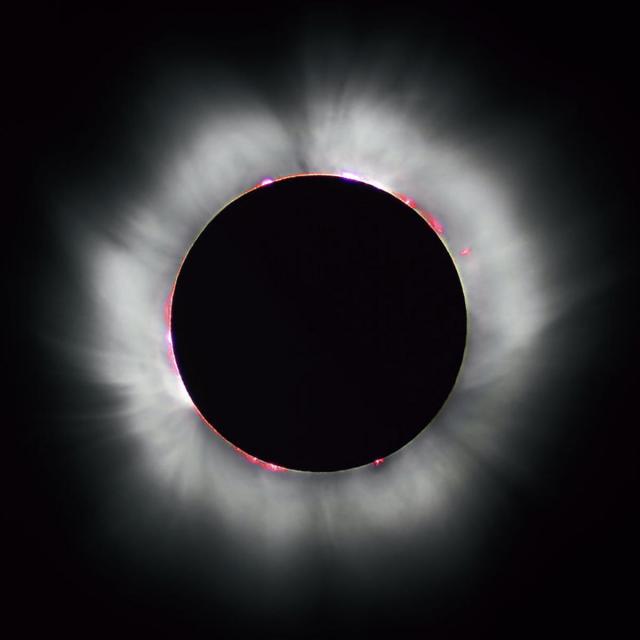
A total eclipse is one of the most spectacular sights you can ever see! It looks like the end of the world may be at hand. There is a black hole in the sky where the sun should be. Pink flames of solar prominences and long silver streamers of the sun's corona stretch across the sky. It gets cold, and animals do strange things. People scream and shout and cheer, and remember the experience their whole life. But total eclipses are important scientifically as well.

Aug 3rd 2026
5-12 Weeks
Introduction to Image Processing (Coursera) Coursera
MathWorks

Introduction to Image Processing (Coursera)

In this introduction to image processing, you'll take your first steps in accessing and adjusting digital images for analysis and processing. You will load, save, and adjust image size and orientation while also understanding how digital images are recognized. You will then perform basic segmentation and quantitative analysis. Lastly, you will enhance the contrast of images to make objects of interest easier to identify.

Aug 3rd 2026
4 Weeks
Origens da Vida no Contexto Cósmico (Coursera) Coursera
Universidade de São Paulo, Brasil

Origens da Vida no Contexto Cósmico (Coursera)

Origens da vida no contexto cósmico é um curso desenvolvido no Instituto de Astronomia, Geofísica e Ciências Atmosféricas da Universidade de São Paulo, com o objetivo de apresentar os mais recentes avanços científicos na compreensão deste intrigante assunto. É um curso com formato multidisciplinar que o levará a compreender melhor os aspectos envolvidos no surgimento de vida na Terra e no possível surgimento de vida em outros planetas.

Aug 3rd 2026
4 Weeks