Seismology to Earthquake Engineering (Coursera)

Offered by École Polytechnique,
Seismology to Earthquake Engineering (Coursera)

This course ranges from the earth structure, the generation of earthquakes and seismic waves by faults to the seismic response of soils, foundations and structures as well as seismic risk. It is consequently aimed at undergraduates, graduates and professionals interested in engineering seismology, earthquake engineering or seismic risk. It investigates various technical fields: rock mechanics, soil dynamics, structural dynamics and dynamic soil-structure interaction.

Class Deals by MOOC List - Click here and see Coursera's Active Discounts, Deals, and Promo Codes.

Various types of sessions are proposed: regular sessions describing a phenomenon or explaining its basic principles, lab sessions illustrating concepts through simple experiments (fault motion, liquefaction, resonant column tests, shaking table tests) and research topics focusing on advanced topics from various research fields (e.g. magnet-Earth, seismicity of Mars, seismic sensors, probabilistic approaches). Several quizzes, as well as 3 mini-projects, will allow you to check your knowledge and assess your understanding of the various topics.
What You Will Learn

  • How seismic waves propagate
  • How earthquakes are generated
  • How structures withstand seismic shaking

Syllabus

WEEK 1
Introduction
Week 1 - Seismicity and faults
The first week allows to discover the Earth structure, the plate tectonics, the behaviour of faults in the crust and the radiation of seismic waves. The seismicity of the Earth is studied and that of Mars is shown as well! The control of faults and the magnetic properties of the Earth are finally explained.

WEEK 2
Week 2 - Seismic waves and ground motion
Various types of seismic waves are presented through both actual observations and theoretical interpretation. Their propagation and amplification in heterogeneous geological structures are discussed (soil layers, alluvial basins). The application to site characterization is finally proposed.

WEEK 3
Week 3 - Seismic response of soil and structures
The seismic soil response is analyzed first. The simplified soil response is then converted into a so-called response spectrum for sake of seismic design. The seismic response of structures is discussed through eigenmodes, modal superposition and modal recombination. Seismic isolation and in situ dynamic characterization of structures is also presented.

WEEK 4
Week 4 - Complex structures and non linearities
Dynamic Soil-Structure Interaction and Soil-Foundation-Structure Interaction are presented first. Typical nonlinear behaviours of structures are then analyzed. The seismic response of structures is finally discussed through simplified (e.g. push-over) and time history nonlinear analyses.

WEEK 5
Week 5 - Seismic risk
Vulnerability and damage assessment are introduced first. They are illustrated for masonry structures in the field and concrete structures on shaking tables. The effect of uncertainties is then discussed in order to derive fragility curves. Finally catastrophe and loss models are explained.
Go to Class
MOOC List is learner-supported. When you buy through links on our site, we may earn an affiliate commission.

Related Courses

Tsunamis and Storm Surges: Introduction to Coastal Disasters (edX) EdX
Waseda University,WasedaX

Tsunamis and Storm Surges: Introduction to Coastal Disasters (edX)

Learn about natural coastal disasters and how you can help improve global disaster management. In 2011, a magnitude 9.0 earthquake triggered a major tsunami that devastated northeast Japan, killing more than 15,000 people and crippling a nuclear power plant. Natural disasters like this one can be seen throughout our Earth’s history. They will continue to prey on all regions, bringing devastation when they strike. But are we so powerless? What if we could improve preparedness over the world and limit the devastation caused by coastal disasters?

Self Paced
Self-Paced
Material Behavior (Coursera) Coursera
Georgia Institute of Technology

Material Behavior (Coursera)

Have you ever wondered why ceramics are hard and brittle while metals tend to be ductile? Why some materials conduct heat or electricity while others are insulators? Why adding just a small amount of carbon to iron results in an alloy that is so much stronger than the base metal? In this course, you will learn how a material’s properties are determined by the microstructure of the material, which is in turn determined by composition and the processing that the material has undergone.

Oct 5th 2026
5-12 Weeks
Wood Science: Beyond Building (Coursera) Coursera
West Virginia University

Wood Science: Beyond Building (Coursera)

The central question of this course: “why study wood?” If “why study wood” is the question, one answer would be that it is the only raw material available to us that is truly renewable in human life span terms. Wood is as important to society today as it ever was, despite the development of many man-made substitute materials, changing resource availability, and the changing needs of society.

Oct 5th 2026
4 Weeks
Be Ready: Staying Safe During Disasters (FutureLearn) FutureLearn
International Federation of Red Cross and Red Crescent Societies

Be Ready: Staying Safe During Disasters (FutureLearn)

Learn about the key preparedness actions you can take to stay safe during various disasters and extreme weather events. Discover what to do when disaster strikes. As extreme weather events continue to affect the lives of millions of people across the globe, it’s never been more important to know how to stay safe when disaster strikes. On this course, you’ll find out about the key actions you can take to reduce the risks associated with disasters and extreme weather events.

No sessions available
2 Weeks
Análisis de Sistemas de Transporte (Coursera) Coursera
Pontificia Universidad Católica de Chile

Análisis de Sistemas de Transporte (Coursera)

Este curso es una introducción a las metodologías fundamentales para la gestión, planificación y evaluación de sistemas de transporte de pasajeros. Se aprenderán técnicas usadas en la práctica para estimar la demanda, modelar la operación y realizar análisis económicos de proyectos de transporte.

Oct 5th 2026
5-12 Weeks
Nanotechnology and Nanosensors, Part 1 (Coursera) Coursera
Technion - Israel Institute of Technology

Nanotechnology and Nanosensors, Part 1 (Coursera)

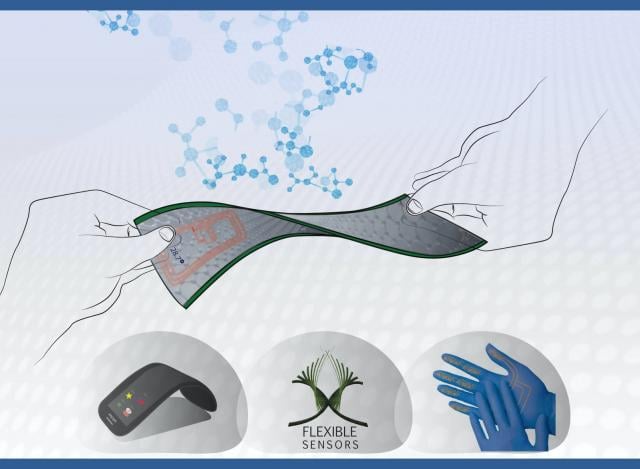
Nanotechnology and nanosensors are broad, interdisciplinary areas that encompass (bio)chemistry, physics, biology, materials science, electrical engineering and more. The present course will provide a survey on some of the fundamental principles behind nanotechnology and nanomaterials and their vital role in novel sensing properties and applications. The course will discuss interesting interdisciplinary scientific and engineering knowledge at the nanoscale to understand fundamental physical differences at the nanosensors.

Oct 5th 2026
5-12 Weeks
Mécanique Lagrangienne (Coursera) Coursera
École Polytechnique Fédérale de Lausanne

Mécanique Lagrangienne (Coursera)

Le formalisme de Lagrange permet une résolution efficace de problèmes complexes de mécanique. Il permet aussi d'apporter un éclairage plus fondamental sur les lois de conservation (théorème de Noether). A titre d'illustration de la méthode de Lagrange, on traitera le problème très important des oscillateurs harmoniques couplés, exprimé comme un problème de valeurs propres et de vecteurs propres. On termine avec un formalisme permettant d'analyser les résonances paramétriques, notion illustrée par l'expérience montrant la stabilité d'un pendule inversé forcé.

Oct 5th 2026
5-12 Weeks
Las estaciones del año y el clima (Coursera) Coursera
Universidad Nacional Autónoma de México

Las estaciones del año y el clima (Coursera)

¿Sabes por qué hay animales que migran cada año? ¿Cómo saben los campesinos cuando sembrar y cuando cosechar? ¿Sabes qué gobierna el ciclo anual de frio y calor y de lluvias y secas? Las estaciones del año son el fenómeno climático más perceptible por el ser humano y se manifiestan de diferente forma en distintas regiones; por ejemplo cuando es invierno en la mitad del mundo, es verano en la otra mitad. Entender el mecanismo de las estaciones es el primer paso para entender el clima, que afecta a casi todas las actividades humanas.

Oct 5th 2026
4 Weeks
The Dynamic Earth: A Course for Educators (Coursera) Coursera
American Museum of Natural History

The Dynamic Earth: A Course for Educators (Coursera)

The AMNH course The Dynamic Earth: A Course for Educators provides students with an overview of the origin and evolution of the Earth. Informed by the recently released Next Generation Science Standards, this course examines geological time scales, radiometric dating, and how scientists “read the rocks.” We will explore dramatic changes in the Earth over the last 4 billion years, including how the evolution of life on Earth has affected its atmosphere. In addition to looking at geology on a global scale, participants will take to their own backyards to explore and share their local geologic history.

Sep 21st 2026
4 Weeks
Global Warming II: Create Your Own Models in Python (Coursera) Coursera
University of Chicago

Global Warming II: Create Your Own Models in Python (Coursera)

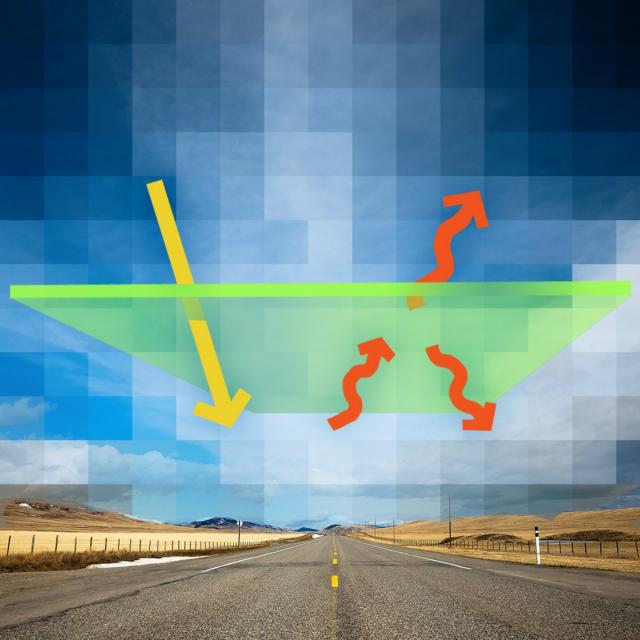
This class provides a series of Python programming exercises intended to explore the use of numerical modeling in the Earth system and climate sciences. The scientific background for these models is presented in a companion class, Global Warming I: The Science and Modeling of Climate Change. This class assumes that you are new to Python programming (and this is indeed a great way to learn Python!), but that you will be able to pick up an elementary knowledge of Python syntax from another class or from on-line tutorials.

Oct 5th 2026
5-12 Weeks