EdX

Revenue Forecasting and Analysis (edX)

Revenue Forecasting and Analysis (edX)

Presented by the IMF Fiscal Affairs Department, the course offers hands-on learning that will help students build foundational knowledge on the different quantitative models and techniques that can be used to forecast revenues and undertake tax policy analysis, while also exploring related issues such as the features of a sound institutional framework and the key principles of tax policymaking.

Class Deals by MOOC List - Click here and see EdX's Active Discounts, Deals, and Promo Codes.

Revenue forecasting refers to the use of analytical techniques to produce estimates of future financial inflows for the government. It is of crucial importance to policymakers, as it helps them devise sound public polices and plan spending programs based on these projected revenues. While governments derive revenues from various sources, taxes typically are the main funding mechanism. Therefore, this course focuses on the forecasting and analysis of tax revenue.
We first pinpoint places where data can be accessed and guide you on how to assess the quality of your data. We then move to general forecasting techniques. We apply these techniques to forecast major tax revenue items such as: value added taxes, import duties, excises, personal income tax and corporate income tax. The course also provides an introduction to techniques that can be used to estimate the revenue effects of policy changes and their distributional impact.

What you'll learn
Upon completion of this course, participants should be able to:

  1. Analyze fundamental principles and trends in tax revenue analysis.
  2. Explain the key features of an effective institutional framework for revenue forecasting.
  3. Identify data requirements and recognize potential data issues.
  4. Produce revenue forecasts using different methods.
  5. Recognize the strengths and limitations of different forecasting methods.
  6. Quantify the revenue impact of tax policy changes, using input-output tables and micro-simulation models.

Go to Class
MOOC List is learner-supported. When you buy through links on our site, we may earn an affiliate commission.

Related Courses

Flood Risk Management (edX) EdX
RWTH Aachen,Technische Universität München - TUM,RWTHx,TUMx

Flood Risk Management (edX)

Understand the fundamentals of flood risk management and forecasting and learn how to implement ideas and measures to prevent damage. In the last decades, the reported damages caused by natural hazards increased tremendously. Flood risk management aims to prevent the loss of properties, assets and life caused by floods. The MOOCs focus is on aspects of flood risk management, forecasting and protection measures.

No sessions available
5-12 Weeks
Predictive Analytics (edX) EdX
Indian Institute of Management, Bangalore,IIMBx

Predictive Analytics (edX)

Master the tools of predictive analytics in this statistics based analytics course. Decision makers often struggle with questions such as: What should be the right price for a product? Which customer is likely to default in his/her loan repayment? Which products should be recommended to an existing customer? Finding right answers to these questions can be challenging yet rewarding.

This course is archived
5-12 Weeks
Time Series Mastery: Forecasting with ETS, ARIMA, Python (Coursera) Coursera
Coursera Instructor Network

Time Series Mastery: Forecasting with ETS, ARIMA, Python (Coursera)

In today's data-driven world, the ability to accurately forecast and predict future trends is crucial for businesses to stay ahead of the competition. Time series analysis is a powerful tool that allows organizations to unravel patterns and make informed decisions. This course, Time Series Mastery: Unravelling Patterns with ETS, ARIMA, and Advanced Forecasting Techniques, provides a comprehensive introduction to time series analysis and forecasting.

Jun 8th 2026
1 Week
Effective Inventory Management and Optimization (Coursera) Coursera
Starweaver

Effective Inventory Management and Optimization (Coursera)

In today's competitive business landscape, efficient inventory management is a critical factor for the success of any organization. Businesses face challenges in maintaining the right balance between having enough inventory to meet customer demands and avoiding excess stock that ties up capital and increases storage costs. This course, titled "Effective Inventory Management and Optimization," addresses a need for professionals to understand the intricacies of inventory control and optimization.

Jun 8th 2026
1 Week
Statistics for Business Analytics: Modelling and Forecasting (edX) EdX
University of Queensland,UQx

Statistics for Business Analytics: Modelling and Forecasting (edX)

This is a great course for anyone who wants to gain foundational and critical analysis and statistics skills with no prior background. In this course, we explore statistical methods for examining the relationships between variables. We also consider how data from the past can be used to make forecasts about likely future trends.

Apr 7th 2023
4 Weeks
Predicción de Ventas Pronosticando Tendencias (Coursera) Coursera
Coursera Project Network

Predicción de Ventas Pronosticando Tendencias (Coursera)

En este curso basado en un proyecto y de 2 horas de duración, aprenderás a realizar pronósticos de tendencia y a entender cómo los pronósticos apoyan la toma de decisiones. Aprenderás a utilizar hojas de cálculo para visualizar y realizar un examen estadístico de datos analizando la pendiente de la línea de regresión y creando una gráfica de línea. Al final del curso entenderás cómo evaluar los modelos y cuándo utilizar técnicas de ingeniería para mejorar la exactitud de la previsión.

Jun 8th 2026
Self-Paced
Big Data Science with the BD2K-LINCS Data Coordination and Integration Center (Coursera) Coursera
Icahn School of Medicine at Mount Sinai

Big Data Science with the BD2K-LINCS Data Coordination and Integration Center (Coursera)

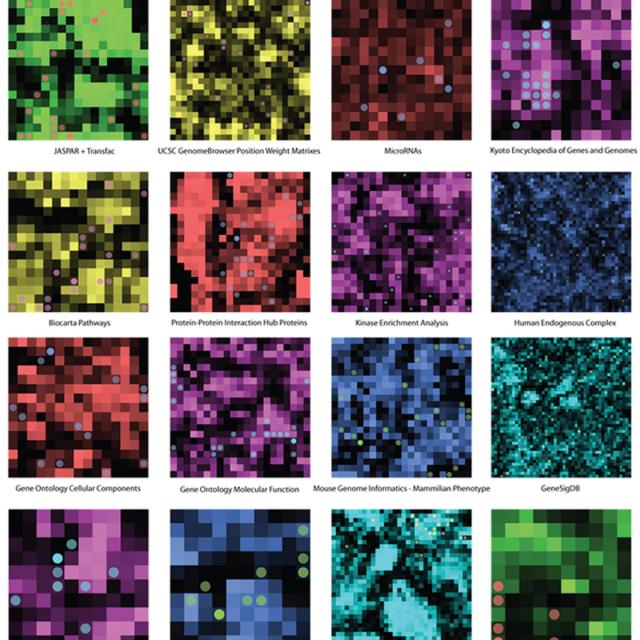
In this course we briefly introduce the DCIC and the various Centers that collect data for LINCS. We then cover metadata and how metadata is linked to ontologies. We then present data processing and normalization methods to clean and harmonize LINCS data. This follow discussions about how data is served as RESTful APIs. Most importantly, the course covers computational methods including: data clustering, gene-set enrichment analysis, interactive data visualization, and supervised learning. Finally, we introduce crowdsourcing/citizen-science projects where students can work together in teams to extract expression signatures from public databases and then query such collections of signatures against LINCS data for predicting small molecules as potential therapeutics.

Jun 1st 2026
5-12 Weeks