Quality Improvement in Healthcare Organizations (Coursera)

Offered by Rutgers University,
Quality Improvement in Healthcare Organizations (Coursera)

Have you ever though that healthcare quality could be improved - either where you get health care treatment or where you delivery health care? Have you ever thought that there should be a way for you to determine the relative quality of your choices? Have you found yourself thinking that there should be a way for you to provide your view and input on the quality of healthcare organization? Or do you work in a healthcare organization and find yourself thinking that there must be better ways to continuously and systematically improve the quality of your healthcare organization? If you have, this course is for you.

Class Deals by MOOC List - Click here and see Coursera's Active Discounts, Deals, and Promo Codes.

Course content includes an overview of quality and quality improvement programs, measures, and data in healthcare organizations. The course provides links to external sites to connect you to the larger "real world" of healthcare organization quality and quality improvement. The links also serve as resources you can take with you after you complete the course experience. And because everyone loves a road trip/field trip, there are also "virtual field trips" to the often hidden places of interest on the web.
The course format is readings, videos, quizzes, and a project. The project requires you to synthesize course material to design a quality improvement program for a healthcare organization the way you would have things run in the best of all worlds. The design (submitted as an electronic spreadsheet) is an artifact of the course which you can circulate to colleagues or use as the basis for talks or presentations.
Course 4 of 4 in the Healthcare Organization Operations Specialization.

Syllabus

WEEK 1
Lesson One: Definition of Quality and Quality Improvement in Healthcare Organizations
This lesson provides an overview of the course as well as an overview of quality and quality improvement in healthcare organizations.

WEEK 2
Lesson Two: Quality and Quality Improvement Measures in Healthcare Organizations
This lesson provides an overview of quality and quality improvement measures in healthcare organizations.

WEEK 3
Lesson Three: Data Collection and Analysis Methodologies for Quality and Quality Improvement Measures in Healthcare Organizations
This lesson provides an overview of data collection and analysis methodologies for quality and quality improvement measures in healthcare organizations

WEEK 4
Lesson Four: Design a Healthcare Organization Quality Improvement Program
This lesson is a synthesis of the course material to design a quality improvement program in a healthcare organization the way you would have things run in the best of all worlds.
Go to Class
MOOC List is learner-supported. When you buy through links on our site, we may earn an affiliate commission.

Related Courses

Public Health Perspectives on Sustainable Diets (Coursera) Coursera
Johns Hopkins University

Public Health Perspectives on Sustainable Diets (Coursera)

What we eat and how we produce that food have significant effects on human health and the sustainability of our planet. But what is a ‘sustainable’ diet? A sustainable diet, as defined by the FAO, promotes health and well-being and provides food security for the present population while sustaining human and natural resources for future generations. This short course looks at the urgent need to address the sustainability of our food systems, including better understanding the complex relationship between diet and climate change. We’ll explore current research on dietary shifts needed in high, middle, and low-income countries to achieve both sustainability and food security goals and discuss evidence-based strategies to promote sustainable diets.

Oct 5th 2026
3 Weeks
Tobacco & Nicotine: Public Health, Science, Policy, and Law (Coursera) Coursera
University of Michigan

Tobacco & Nicotine: Public Health, Science, Policy, and Law (Coursera)

This course provides a strong foundation in the history of smoking and other tobacco and nicotine use; the individual and public health impact; tobacco use prevalence trends in adults, youth and key subpopulations; and how cigarette smoking came to be, and remains to this day, the leading preventable cause of death in the U.S. and globally, despite the fact that tobacco control efforts have collectively constituted one of the most successful public health endeavors in our history.

Oct 5th 2026
5-12 Weeks
Data and Health Indicators in Public Health Practice (Coursera) Coursera
Johns Hopkins University

Data and Health Indicators in Public Health Practice (Coursera)

Epidemiology is often described as the cornerstone science in public health. Epidemiology in public health practice uses study design and analyses to identify causes in an outbreak situation, guides interventions to improve population health, and evaluates programs and policies. In this course, we'll define the role of the professional epidemiologist as it relates to public health services, functions, and competencies. With that foundation in mind, we'll introduce you to the problem solving methodology and demonstrate how it can be used in a wide variety of settings to identify problems, propose solutions, and evaluate interventions.

Oct 5th 2026
4 Weeks
Communicating During Global Emergencies (Coursera) Coursera
Emory University

Communicating During Global Emergencies (Coursera)

In collaboration with the Rollins School of Public Health and the CDC's Division of Global Health Protection, Emergency Response, and Recovery Branch, this course introduces basic concepts and principles of communicating during a global crisis or emergency. It explores why communication during an emergency is different and the importance of adapting emergency messages to the needs of affected populations.

Oct 5th 2026
3 Weeks
The Oral Cavity: Portal to Health and Disease (Coursera) Coursera
University of Pennsylvania

The Oral Cavity: Portal to Health and Disease (Coursera)

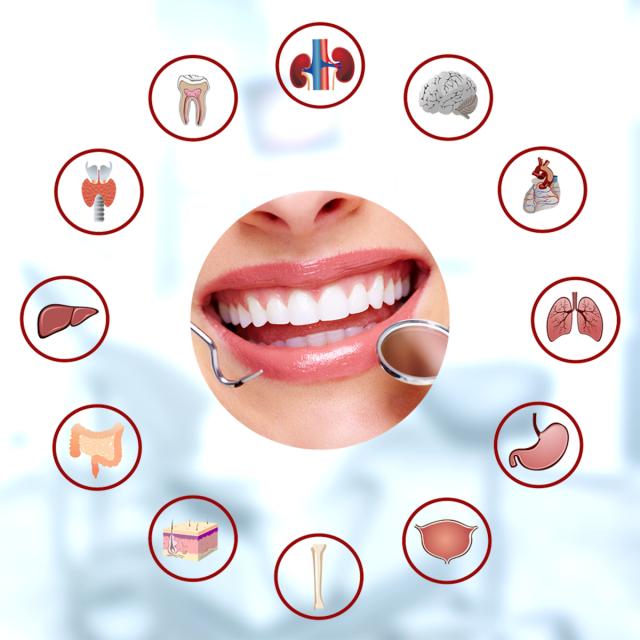
This course will focus on the interprofessional realtionship of dentistry and medicine. For each session, the medical specialist will present a broad overview of specific disease entity which will be followed by a dental educator discussing the relevant oral manifestations and implications. The final module of each session will be devoted to the interaction between the dental and other health care professionals.

Oct 5th 2026
5-12 Weeks
Everyday Chinese Medicine 2 (Coursera) Coursera
The Chinese University of Hong Kong

Everyday Chinese Medicine 2 (Coursera)

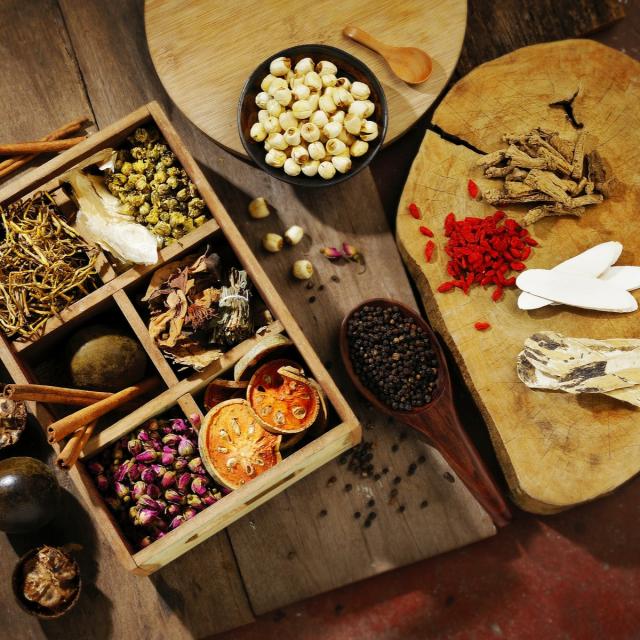
This course, Everyday Chinese Medicine II offered by the Chinese University of Hong Kong, aims to show to the public, as well as the healthcare professionals about the basic principles of Chinese medicine. Our primary goal is to empower healthcare choices by promoting awareness and practical application on Chinese medicine diagnostic and therapeutic approaches, and to facilitate interprofessional education between Chinese and conventional clinicians.

Oct 5th 2026
5-12 Weeks
The New Nordic Diet - from Gastronomy to Health (Coursera) Coursera
University of Copenhagen

The New Nordic Diet - from Gastronomy to Health (Coursera)

The New Nordic Diet is a new food culture developed in 2009-13 with key emphasis on gastronomy, health, and environment. Major research in its effect on acceptability, behaviour and learning skills, and disease prevention have been conducted by the OPUS centre at the University of Copenhagen and the people behind the award-winning restaurant Noma in Copenhagen. This course will give the participants the opportunity to experience a healthy and palatable new food and eating concept diet “The New Nordic Diet” and an understanding of how food and diets can affect mental and physical health and ensure the foundation for a healthier life style for future generations with a regional based diet and food culture.

Sep 28th 2026
5-12 Weeks
Navigating Healthcare Supply Chain Operations (Coursera) Coursera
Northeastern University

Navigating Healthcare Supply Chain Operations (Coursera)

This course is the continuation of "Introduction to Healthcare Supply Chain Operations". If you have not visited the first part yet, please check it out before starting this course. If you have finished the first part of this series: Introduction to Healthcare Supply Chain Operations, you will be able to apply what you learned to your own career. The foundational knowledge and project plan from the introduction are carried through in this deeper dive into healthcare supply chain operations.

Oct 5th 2026
4 Weeks
Foundations of Healthcare Systems Engineering (Coursera) Coursera
Johns Hopkins University

Foundations of Healthcare Systems Engineering (Coursera)

Through dynamic video lectures and practical application questions, you will learn about the Foundations of Healthcare Systems Engineering. In this course you will learn about the current lack of synchronized, efficient, and integrated healthcare systems, which are some of the drivers for improvements to healthcare delivery.

Oct 5th 2026
4 Weeks
Global Health Policy (Coursera) Coursera
The University of Tokyo

Global Health Policy (Coursera)

In this course, learners will become familiar with principles and theories of global health problems, and major challenges and controversies in improving global population health as well as practical applications of quantitative methods to analyze and interpret issues and challenges for policy. Topics will include health and foreign policy, health governance, acute disease surveillance, non-communicable diseases, burden of disease, universal health coverage, health systems strengthening, health financing, and human resources for health and ageing.

Oct 5th 2026
4 Weeks