Planning Your Scientific Journey (iBiology)

Offered by iBiology,
Planning Your Scientific Journey (iBiology)

This course will equip you with concrete tools and practical advice to navigate the most challenging aspects of developing and planning a research project. Our innovative curriculum is unlike any other online science course. Instruction is led by a diverse group of leading scientists, such as Nobel Laureates, accomplished faculty, and junior scientists, who think deeply about mentorship and scientific training.

Being successful as a science graduate student or postdoc involves more than acquiring knowledge, reading the literature, and doing experiments. It also requires important skills in picking a good question, planning a strategy to answer the question, seeking advice, and communicating your results. Unfortunately, many of these skills are not formally taught in universities, and you have to learn them “on the job.” At iBiology, we thought that it is important to address all of these topics in a series of courses which we will roll out sequentially. The first course, “Planning Your Scientific Journey,” addresses how to ask a scientific question and plan your research project. It is aimed primarily at biology graduate and undergraduate students but is also useful for postdocs, staff scientists, faculty, and anyone else who could benefit from reviewing these topics.

By the end of the course, you will have:

  1. Criteria to evaluate a research question.
  2. A plan for how to approach your scientific question and other research goals.
  3. An agenda for a meeting with your mentor to get feedback on your plan.
Go to Class
MOOC List is learner-supported. When you buy through links on our site, we may earn an affiliate commission.

Related Courses

Introduction to Genomic Technologies (Coursera) Coursera
Johns Hopkins University

Introduction to Genomic Technologies (Coursera)

This course introduces you to the basic biology of modern genomics and the experimental tools that we use to measure it. We'll introduce the Central Dogma of Molecular Biology and cover how next-generation sequencing can be used to measure DNA, RNA, and epigenetic patterns. You'll also get an introduction to the key concepts in computing and data science that you'll need to understand how data from next-generation sequencing experiments are generated and analyzed.

Oct 12th 2026
4 Weeks
Try RRI! A guide for Responsible Research and Innovation (Coursera) Coursera
University of Amsterdam

Try RRI! A guide for Responsible Research and Innovation (Coursera)

In this online course you will learn how to apply Responsible Research and Innovation (RRI) in your own work. First by understanding why it is important to act responsibly in your research and innovation processes at all. In a second step, you will get introduced to several tools that will help make your own work in research and/or innovation more aware by introducing concepts of RRI.

Oct 12th 2026
3 Weeks
Business Concepts for Life Scientists (iBiology) Other Providers
iBiology

Business Concepts for Life Scientists (iBiology)

The purpose of the Business Concepts for Life Scientists course is to enhance PhD scientists’ understanding of foundational business concepts. This business coursework is unique because it is designed to prepare scientists for career transitions into both academic and non-academic settings. The course comprises a series of three modules - Business Strategy, Finance and Business Development.

Self Paced
Self-Paced
Principles in Organizational Consulting (CDI) Other Providers
Consultants Development Institute

Principles in Organizational Consulting (CDI)

This Series provides easy-to-understand explanations and downloadable tools to build your acumen in business and guiding successful change. The Series provides clear and concise descriptions to help you understand the “big picture” of organizations, including the various activities within them and how they all work together, whether in for-profits, nonprofits or government. This Series is relevant to advisors, trainers, facilitators, coaches, mentors, leaders and staff roles working in organizations or independently.

Self Paced
Self-Paced
Nanotechnology and Nanosensors, Part 1 (Coursera) Coursera
Technion - Israel Institute of Technology

Nanotechnology and Nanosensors, Part 1 (Coursera)

Nanotechnology and nanosensors are broad, interdisciplinary areas that encompass (bio)chemistry, physics, biology, materials science, electrical engineering and more. The present course will provide a survey on some of the fundamental principles behind nanotechnology and nanomaterials and their vital role in novel sensing properties and applications. The course will discuss interesting interdisciplinary scientific and engineering knowledge at the nanoscale to understand fundamental physical differences at the nanosensors.

Oct 5th 2026
5-12 Weeks
OKR Certification: Leadership and Goal Setting (Coursera) Coursera
Measure What Matters

OKR Certification: Leadership and Goal Setting (Coursera)

“Ideas are easy. Execution is everything.” -John Doerr. In this one-of-a-kind OKR Certification, John Doerr builds on his New York Times best-selling book, Measure What Matters. The chairman of the venture capital firm Kleiner Perkins, Doerr reveals how the goal-setting system of Objectives and Key Results (OKRs) can lead to exponential growth.

Oct 12th 2026
4 Weeks
The Science of Stem Cells (Coursera) Coursera
American Museum of Natural History

The Science of Stem Cells (Coursera)

What promise do stem cells hold for the treatment of medical conditions? In this five-part online course you will explore the history and basic biology of stem cells, learn about new research techniques, and find out how stem cells could lead to cures for diseases and to individualized medicine.

Oct 5th 2026
5-12 Weeks
Nanotechnology and Nanosensors, Part 2 (Coursera) Coursera
Technion - Israel Institute of Technology

Nanotechnology and Nanosensors, Part 2 (Coursera)

Learn about novel sensing tools that make use of nanotechnology to screen, detect and monitor various events in personal or professional life. Together, we will lay the groundwork for infinite innovative applications, starting from diagnosis and treatments of diseases, continuing with quality control of goods and environmental aspects, and ending with monitoring security issues.

Oct 5th 2026
5-12 Weeks
Análisis de Sistemas de Transporte (Coursera) Coursera
Pontificia Universidad Católica de Chile

Análisis de Sistemas de Transporte (Coursera)

Este curso es una introducción a las metodologías fundamentales para la gestión, planificación y evaluación de sistemas de transporte de pasajeros. Se aprenderán técnicas usadas en la práctica para estimar la demanda, modelar la operación y realizar análisis económicos de proyectos de transporte.

Oct 5th 2026
5-12 Weeks
Whole genome sequencing of bacterial genomes - tools and applications (Coursera) Coursera
Technical University of Denmark - DTU

Whole genome sequencing of bacterial genomes - tools and applications (Coursera)

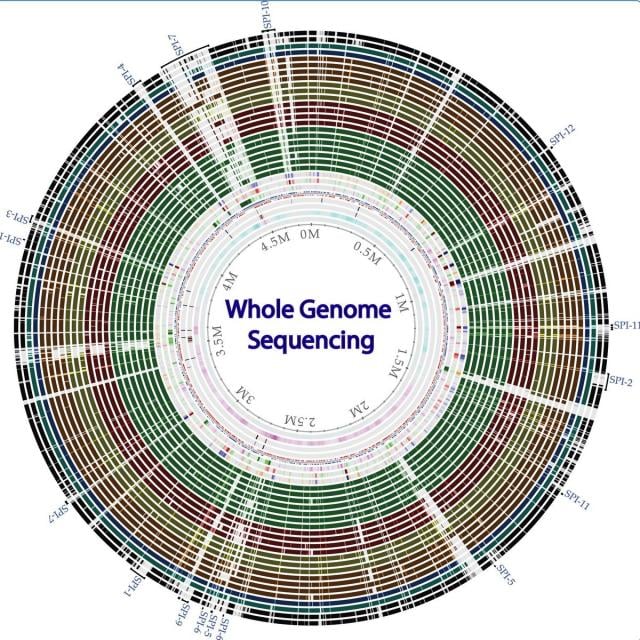
This course will cover the topic of Whole genome sequencing (WGS) of bacterial genomes which is becoming more and more relevant for the medical sector. WGS technology and applications are high on international political agenda, as the classical methods are being replaced by WGS technology and therefore bioinformatic tools are extremely important for allowing the people working in this sector to be able to analyze the data and obtain results that can be interpreted and used for different purposes.

Oct 5th 2026
5-12 Weeks