Neurolinguistics (Coursera)

Neurolinguistics (Coursera)

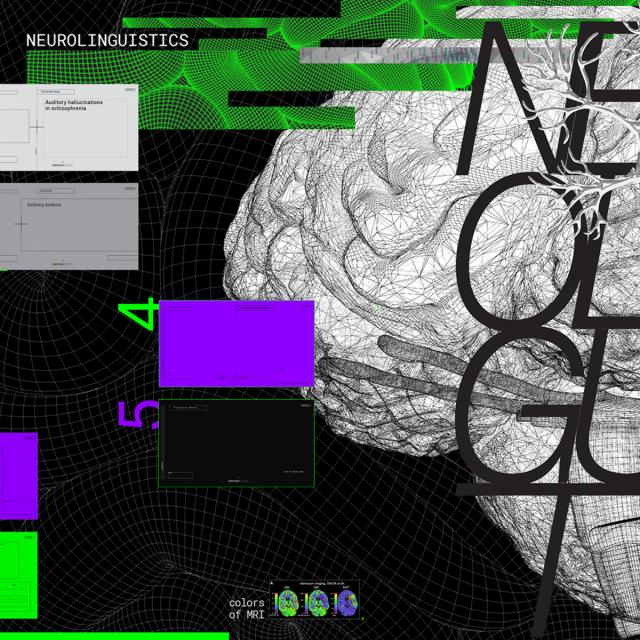
This course introduces the key principles and goals of modern neurolinguistics. Neurolinguistics is a science that incorporates methods and paradigms of linguistics and neuroscience. This course discusses the main units and organizational principles of the human nervous system that underlie our language capacity. You will learn about the neurophysiological aspects of first and second language learning, discover clinical research in speech, reading and writing disorders, and also find out about speech disorders accompanying various psychiatric conditions.

Class Deals by MOOC List - Click here and see Coursera's Active Discounts, Deals, and Promo Codes.

The course includes information on the history of neurolinguistics, modern techniques and methods of neurolinguistic research, and also provides detailed examples of several recent studies in the field.

Syllabus

WEEK 1
Introduction. Language and the brain
Module 1 introduces the main ideas and the history of neurolinguistics. In this module you will learn how the human brain is organized and which cortical areas provide the basis for our language capacity. It also touches upon neuroevolution and the differences between the human brain and the brains of other mammals.

WEEK 2
Modern methods of neurolinguistic research, part I
In Module 2 you will learn about modern methods and techniques of neurolinguistic research, such as EEG, MEG, intracranial EEG, evoked and induced potentials.

WEEK 3
Modern methods of neurolinguistic research, part II
Module 3 continues the discussion of neurolinguistic research methods, introducing you to the fMRI method. It also provides examples of three recent neurolinguistic studies, detailing every stage: how the experiments were planned and conducted, and how the data was analysed.

WEEK 4
First and second language acquisition
Module 4 discusses how children learn their first and second languages. It also touches upon differences in the ways monolinguals and bilinguals process linguistic information.

WEEK 5
Clinical research in neurolinguistics, part I
Modules 5 and 6 deal with clinical research in neurolinguistics. In Module 5 you will learn about aphasia. We will discuss the underlying causes of this disorder, its main types and different approaches to their classification and assessment. You will also learn about linguistic models based on aphasia data.

WEEK 6
Clinical research in neurolinguistics, part II
Module 6 continues the topic of clinical research in neurolinguistics. In this module you will learn about auditory hallucinations in schizophrenia, their causes and treatment. This module also discusses brain asymmetry with regards to language and dichotic listening as a means of studying brain asymmetry.

WEEK 7
Speech and writing disorders
Module 7 is devoted to dyslexia and its comorbidities. This module will introduce you to four different approaches to dyslexia. You will also learn what longitudinal studies can tell us about dyslexia.
Go to Class
MOOC List is learner-supported. When you buy through links on our site, we may earn an affiliate commission.

Related Courses

Psychological First Aid (Coursera) Coursera
Johns Hopkins University

Psychological First Aid (Coursera)

Learn to provide psychological first aid to people in an emergency by employing the RAPID model: Reflective listening, Assessment of needs, Prioritization, Intervention, and Disposition. Utilizing the RAPID model (Reflective listening, Assessment of needs, Prioritization, Intervention, and Disposition), this specialized course provides perspectives on injuries and trauma that are beyond those physical in nature. The RAPID model is readily applicable to public health settings, the workplace, the military, faith-based organizations, mass disaster venues, and even the demands of more commonplace critical events, e.g., dealing with the psychological aftermath of accidents, robberies, suicide, homicide, or community violence.

Oct 5th 2026
5-12 Weeks
The Arts and Science of Relationships: Understanding Human Needs (Coursera) Coursera
University of Toronto

The Arts and Science of Relationships: Understanding Human Needs (Coursera)

This course provides an introduction to: 1- Basic concepts of The Strategies and Skills Learning and Development System (SSLD), their relevance for every day relationships and provide advanced concepts for participants who work in fields of social work and health care. 2- Basic practice principles and methods of SSLD, illustrated by relationship management case studies. 3- The SSLD framework for relationship management assessment; N3C (needs, circumstances, characteristics, capacity) and problem translation. 4- Core competencies in the relationship management application of the SSLD system: Observation learning, simulation, real life implementation, review and monitoring.

Oct 5th 2026
5-12 Weeks
Understanding Clinical Research: Behind the Statistics (Coursera) Coursera
University of Cape Town

Understanding Clinical Research: Behind the Statistics (Coursera)

If you’ve ever skipped over`the results section of a medical paper because terms like “confidence interval” or “p-value” go over your head, then you’re in the right place. You may be a clinical practitioner reading research articles to keep up-to-date with developments in your field or a medical student wondering how to approach your own research. Greater confidence in understanding statistical analysis and the results can benefit both working professionals and those undertaking research themselves.

Sep 28th 2026
5-12 Weeks
Gamification (Coursera) Coursera
University of Pennsylvania

Gamification (Coursera)

Gamification is the application of game elements and digital game design techniques to non-game problems, such as business and social impact challenges. This course will teach you the mechanisms of gamification, why it has such tremendous potential, and how to use it effectively.

Sep 28th 2026
5-12 Weeks
Introduction to Virtual Reality (Coursera) Coursera
University of London,Goldsmiths, University of London

Introduction to Virtual Reality (Coursera)

This course will introduce you to Virtual Reality (VR). The course will teach you everything from the basics of VR- the hardware and the history of VR- to different applications of VR, the psychology of Virtual Reality, and the challenges of the medium. The course is designed for people who are new to VR as a medium. You may have experienced some virtual reality before, and may have some hardware- but this course is suitable to individuals who have never experienced VR and those who do not have much hardware- we will explain Mobile VR as well as devices such as the Oculus Rift and HTC Vive.

Sep 28th 2026
4 Weeks
The Psychology of Thrill Seekers (Coursera) Coursera
Emory University

The Psychology of Thrill Seekers (Coursera)

Sensation seeking is a trait we all have and includes the search for complex and new experiences. Thrill Seekers, people with high-sensation seeking personalities, crave exotic and intense experiences even when physical or social risks are involved. This course helps learners examine the remarkable world of the high-sensation seeking personality and explores the lifestyle, psychology, and neuroscience behind thrill seekers.

Oct 12th 2026
5-12 Weeks
Positive Psychology: Resilience Skills (Coursera) Coursera
University of Pennsylvania

Positive Psychology: Resilience Skills (Coursera)

Learn how to incorporate resilience interventions into your personal and professional life with Dr. Karen Reivich. In this course, you are exposed to the foundational research in resilience, including protective factors such as mental agility and optimism. Several types of resilience interventions are explored including cognitive strategies; strategies to manage anxiety and increase positive emotions such as gratitude; and a critical relationship enhancement skill.

Sep 28th 2026
4 Weeks
Children Acquiring Literacy Naturally (Coursera) Coursera
University of California, Santa Cruz

Children Acquiring Literacy Naturally (Coursera)

In this short course you will explore the possibility that children might acquire written language in a way that is similar to how they acquire spoken language—without instruction. You will encounter various aspects of behavioral science and technology that are relevant to this proposition. You will have the opportunity to learn the the perceptual, cognitive, and neurological capacities of children during their first years of life. You will advance your understanding of children and how they learn language. You will also be more attuned to current advances in the technology of human machine interactions, and what these phenomena imply for learning to read at an early age.

Sep 28th 2026
3 Weeks
Principles of fMRI 1 (Coursera) Coursera
Johns Hopkins University

Principles of fMRI 1 (Coursera)

Functional Magnetic Resonance Imaging (fMRI) is the most widely used technique for investigating the living, functioning human brain as people perform tasks and experience mental states. It is a convergence point for multidisciplinary work from many disciplines. Psychologists, statisticians, physicists, computer scientists, neuroscientists, medical researchers, behavioral scientists, engineers, public health researchers, biologists, and others are coming together to advance our understanding of the human mind and brain. This course covers the design, acquisition, and analysis of Functional Magnetic Resonance Imaging (fMRI) data, including psychological inference, MR Physics, K Space, experimental design, pre-processing of fMRI data, as well as Generalized Linear Models (GLM’s).

Oct 12th 2026
4 Weeks
Leadership for Cancer Informatics Research (Coursera) Coursera
Johns Hopkins University

Leadership for Cancer Informatics Research (Coursera)

Informatics research often requires multidisciplinary teams. This requires more flexibility to communicate with team members with distinct backgrounds. Furthermore, team members often have different research and career goals. This can present unique challenges in making sure that everyone is on the same page and cohesively working together. This course aims to provide research leaders with guidance about: How to effectively lead and support team members on informatics projects; How to perform informatics projects well; How to support informatics collaborators, mentees, and employees; How to better support diversity within your team; Tools that can help you perform informatics projects well

Oct 5th 2026
4 Weeks
Data Management for Clinical Research (Coursera) Coursera
Vanderbilt University

Data Management for Clinical Research (Coursera)

This course presents critical concepts and practical methods to support planning, collection, storage, and dissemination of data in clinical research. Understanding and implementing solid data management principles is critical for any scientific domain. Regardless of your current (or anticipated) role in the research enterprise, a strong working knowledge and skill set in data management principles and practice will increase your productivity and improve your science. Our goal is to use these modules to help you learn and practice this skill set.

Oct 12th 2026
5-12 Weeks
The Brain and Space (Coursera) Coursera
Duke University

The Brain and Space (Coursera)

This course is about how the brain creates our sense of spatial location from a variety of sensory and motor sources, and how this spatial sense in turn shapes our cognitive abilities. Knowing where things are is effortless. But “under the hood,” your brain must figure out even the simplest of details about the world around you and your position in it.

Oct 12th 2026
5-12 Weeks