Neurobiology (saylor.org)

Offered by Saylor.org,
Neurobiology (saylor.org)

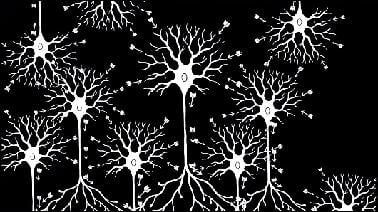
Neurobiology is all about the biology of our nervous system, from the spinal cord to the brain—and everything in between. This course is designed to provide you with an overview of the most important areas of neurobiological study.

Neurobiology is all about the biology of our nervous system, from the spinal cord to the brain—and everything in between. The nervous system allows us to have conscious thoughts, enables us to learn, and gives us voluntary control of our muscles.

Our understanding of neuroscience begins with the ancient Egyptians, who practiced surgical drilling to treat certain neurological disorders. The earliest philosophers believed that the heart (not the brain) was the center of consciousness and intelligence. As scientific knowledge matured and developed, philosophers disproved that belief but discovered that there is much more to neurobiology than “the brain.” Researchers found that there are literally hundreds of billions of nerves and other cells that cooperate and share information to make the nervous system work. Accordingly, neurobiology is an extremely complex field of study.

This course is designed to provide you with an overview of the most important areas of neurobiological study. We will not pay much attention to those aspects of the nervous system that continue to baffle scientists today (and there are many!). After a general introduction and review of pertinent scientific concepts, we will take a look at cellular signaling (the way in which nerve cells communicate with one another). Next, you will learn about neuron development and plasticity, or the ways in which neurons adapt and shape their connections throughout our lifetimes. Lastly, we examine the larger systems of neurobiology, such as the sensory and motor systems, and take a look at the complex phenomena of memory and emotion.

Upon successful completion of this course, the student will be able to:

Demonstrate an understanding of the basic biochemical concepts pertinent to cell biology.
Identify the basic structure of the nerve cell, the various functions of different components of the nerve cells, and different types of nerve cells.
Describe various different nervous systems.
Describe the structure and function of the nervous systems.
Explain how nerve cells propagate and transmit nervous impulses.
Describe select diseases caused by malfunctioning or nerve cell death in parts of the nervous system.
Explain how the nervous system responds to nerve damage or death and therapeutic measures.
Describe how the nervous system is formed in the embryo and identify the role of various genes and hormonal regulators in that development process.
Describe the structure and function of the brain and spinal cord.
Describe the structure and function of the somatic sensory system and the motor system.

Go to Class
MOOC List is learner-supported. When you buy through links on our site, we may earn an affiliate commission.

Related Courses

Introduction to Neurohacking In R (Coursera) Coursera
Johns Hopkins University

Introduction to Neurohacking In R (Coursera)

Neurohacking describes how to use the R programming language and its associated package to perform manipulation, processing, and analysis of neuroimaging data. We focus on publicly-available structural magnetic resonance imaging (MRI). We discuss concepts such as inhomogeneity correction, image registration, and image visualization.

Oct 5th 2026
4 Weeks
Advanced Neurobiology II (Coursera) Coursera
Peking University

Advanced Neurobiology II (Coursera)

Hello everyone! Welcome to advanced neurobiology! Neuroscience is a wonderful branch of science on how our brain perceives the external world, how our brain thinks, how our brain responds to the outside of the world, and how during disease or aging the neuronal connections deteriorate. We’re trying to understand the molecular, cellular nature and the circuitry arrangement of how nervous system works.

Oct 5th 2026
5-12 Weeks
The Biology of Bugs, Brains, and Beasts (FutureLearn) FutureLearn
University of York

The Biology of Bugs, Brains, and Beasts (FutureLearn)

Improve your understanding of some of the key concepts in A level biology and discover what's involved in higher level study. Prepare for university study with this online biology course. Are you a student in sixth form and thinking of studying at university? On this course, you will use innovative research to enhance your understanding of basic biological concepts taught in A level biology.

Self Paced
3 Weeks
Fundamentals of Neuroscience, Part 2: Neurons and Networks (edX) EdX
HarvardX,Harvard University

Fundamentals of Neuroscience, Part 2: Neurons and Networks (edX)

Discover what makes your brain tick in this second part of a four-part introductory series in Neuroscience. Neurons in isolation are fascinating and complicated, but the real magic of neuroscience happens in the interaction between neurons. In this course, we examine how neurons pass signals to one another and how complex dynamics can result from just a few neurons arranged in relatively simple circuits.

Self Paced
Self-Paced
Fundamentals of Neuroscience, Part 3: The Brain (edX) EdX
HarvardX,Harvard University

Fundamentals of Neuroscience, Part 3: The Brain (edX)

Discover what makes your brain tick in this third part of a four-part introductory series in Neuroscience. The human brain is a fantastically complex system, capable of transforming a torrent of incoming information into thought and action. In this course, we will look at how the various subsystems of the brain work together to enable us to survive and thrive in a changing world.

Self Paced
Self-Paced
Neuropsychology (saylor.org) Saylor Academy
Saylor.org

Neuropsychology (saylor.org)

How does the brain function? How does it interact with the body in order to control and mediate behaviors and actions? Though psychologists have long studied these questions, the workings of the brain remain, in large part, a mystery. In this course, we will explore the field of psychology devoted to the pursuit of these questions: neuropsychology or the study of the structure and function of the brain as it relates to psychological processes.

Legacy Course
Self-Paced
The Many Faces of Dementia (FutureLearn) FutureLearn
University College London

The Many Faces of Dementia (FutureLearn)

Gain a unique insight into dementia through the stories, symptoms and science behind four less common diagnoses. Explore key issues in dementia care and research, through four less common forms. Dementia is one of the foremost priorities in global health and is estimated to affect over 44 million people worldwide.

Self Paced
4 Weeks
Myocardial Infarction (Coursera) Coursera
University of Zurich

Myocardial Infarction (Coursera)

Cardiovascular diseases are – according to the (World Health Organization (WHO) – the number one cause of death globally. Myocardial infarction (heart attack) is the most prominent under the Cardiovascular diseases. In Switzerland alone, the risk to develop a coronary heart disease during life time is around 25% for men and 18% for women. Most cardiovascular diseases can be prevented by addressing behavioral risk factors, the understanding of these risk factors, their mechanisms and impact on the cardiovascular system.

Sep 14th 2026
5-12 Weeks
The Brain and Space (Coursera) Coursera
Duke University

The Brain and Space (Coursera)

This course is about how the brain creates our sense of spatial location from a variety of sensory and motor sources, and how this spatial sense in turn shapes our cognitive abilities. Knowing where things are is effortless. But “under the hood,” your brain must figure out even the simplest of details about the world around you and your position in it.

Sep 14th 2026
5-12 Weeks
Music as Biology: What We Like to Hear and Why (Coursera) Coursera
Duke University

Music as Biology: What We Like to Hear and Why (Coursera)

The course will explore the tone combinations that humans consider consonant or dissonant, the scales we use, and the emotions music elicits, all of which provide a rich set of data for exploring music and auditory aesthetics in a biological framework. Analyses of speech and musical databases are consistent with the idea that the chromatic scale (the set of tones used by humans to create music), consonance and dissonance, worldwide preferences for a few dozen scales from the billions that are possible, and the emotions elicited by music in different cultures all stem from the relative similarity of musical tonalities and the characteristics of voiced (tonal) speech.

Sep 21st 2026
5-12 Weeks
Introduction to Sensory Science (Coursera) Coursera
University of California, Davis

Introduction to Sensory Science (Coursera)

Did you know there's a science behind the flavors, textures, and aromas of the foods we eat, and why our favorite products look, feel, and smell the way that they do? In this course, we will provide a broad overview of the field of sensory science - its history, definition, and applications in academic research and in the consumer-packaged goods industry. We’ll also discuss how sensory science impacts other industries, including the medical sciences and information processing.

Sep 21st 2026
4 Weeks
Movements Are Controlled By Muscle Forces (Coursera) Coursera
University of Colorado Boulder

Movements Are Controlled By Muscle Forces (Coursera)

Movements Are Controlled By Muscle Forces is the first course of the specialization "Science of Movement". In this course, we will delve into the mechanisms by which our nervous system communicates with our muscles, allowing us to perform a wide range of coordinated movements with precision. Whether you are a fitness enthusiast, a sports coach, a medical student, or simply curious about the inner workings of your body, this course will provide you with a comprehensive understanding of how the nervous system plays a vital role in enabling our muscles to produce movements.

Sep 21st 2026
4 Weeks