Multiple Regression Analysis in Public Health (Coursera)

Multiple Regression Analysis in Public Health (Coursera)

Biostatistics is the application of statistical reasoning to the life sciences, and it's the key to unlocking the data gathered by researchers and the evidence presented in the scientific public health literature. In this course, you'll extend simple regression to the prediction of a single outcome of interest on the basis of multiple variables.

Class Deals by MOOC List - Click here and see Coursera's Active Discounts, Deals, and Promo Codes.

Along the way, you'll be introduced to a variety of methods, and you'll practice interpreting data and performing calculations on real data from published studies. Topics include multiple logistic regression, the Spline approach, confidence intervals, p-values, multiple Cox regression, adjustment, and effect modification.
What You Will Learn

  • Practice multiple regression methods to determine relationships between an outcome and multiple predictors
  • Use the Spline approach for non-linear relationships with continuous predictors
  • Perform calculations with multiple predictor variables

Course 4 of 4 in the Biostatistics in Public Health Specialization.

Syllabus

WEEK 1
An Overview of Multiple Regression for Estimation, Adjustment, and Basic Prediction, and Multiple Linear Regression
Within this module, an overview of multiple regression will be provided. Additionally, examples and applications will be examined. A practice quiz is provided to test your knowledge before completing the graded quiz.

WEEK 2
Multiple Logistic Regression
Module two covers examples of multiple logistic regression, basics of model estimates, and a discussion of effect modification. In addition to lectures, you will also be completing a practice quiz and graded quiz.

WEEK 3
Multiple Cox Regression
The last module for this class focuses on multiple Cox regression, the “Linearity” assumption, examples, and applications. You will complete a practice quiz, graded quiz, and project.

WEEK 4
Course Project
During this module, you get the chance to demonstrate what you've learned by putting yourself in the shoes of biostatistical consultant on two different studies, one about self-administration of injectable contraception and one about medical appointment scheduling in Brazil. The two research teams have asked you to help them interpret previously published results in order to inform the planning of their own studies. If you've already taken other courses in this specialization, then this scenario will be familiar.


Go to Class
MOOC List is learner-supported. When you buy through links on our site, we may earn an affiliate commission.

Related Courses

Introduction to Machine Learning (Coursera) Coursera
Duke University

Introduction to Machine Learning (Coursera)

This course will provide you a foundational understanding of machine learning models (logistic regression, multilayer perceptrons, convolutional neural networks, natural language processing, etc.) as well as demonstrate how these models can solve complex problems in a variety of industries, from medical diagnostics to image recognition to text prediction.

Jun 5th 2026
5-12 Weeks
Foundations of Public Health Practice: Behaviour & Behaviour Change (Coursera) Coursera
Imperial College London

Foundations of Public Health Practice: Behaviour & Behaviour Change (Coursera)

The Health Protection course is the third instalment of the wider Foundations of Public Health Practice specialisation from Imperial College London's Global Master of Public Health (MPH). The scope and content of this course has been developed from the ground up by a combined team of academics and practitioners drawing on decades of real-world public health experience as well as deep academic knowledge. Through short video lectures, practitioner interviews and a wide range of interactive activities, learners will be immersed in the world of public health practice.

Jun 1st 2026
4 Weeks
Systems Science and Obesity (Coursera) Coursera
Johns Hopkins University

Systems Science and Obesity (Coursera)

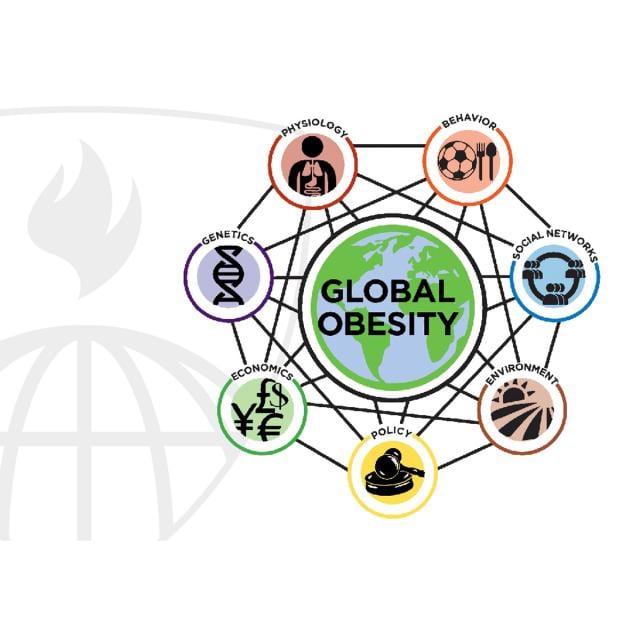
Systems science has been instrumental in breaking new scientific ground in diverse fields such as meteorology, engineering and decision analysis. However, it is just beginning to impact public health. This seminar is designed to introduce students to basic tools of theory building and data analysis in systems science and to apply those tools to better understand the obesity epidemic in human populations.

Jun 1st 2026
4 Weeks
Machine Learning: Regression (Coursera) Coursera
University of Washington

Machine Learning: Regression (Coursera)

Case Study - Predicting Housing Prices. In our first case study, predicting house prices, you will create models that predict a continuous value (price) from input features (square footage, number of bedrooms and bathrooms,...). This is just one of the many places where regression can be applied. Other applications range from predicting health outcomes in medicine, stock prices in finance, and power usage in high-performance computing, to analyzing which regulators are important for gene expression.

Jun 1st 2026
5-12 Weeks
Global Health Diplomacy (Coursera) Coursera
The State University of New York

Global Health Diplomacy (Coursera)

The field of global health is often thought of purely in medical or public health terms, but there are important geopolitical and policy dimensions of global health that underlie programmatic responses to global health challenges. By completing this course, learners will be able to explain the specific institutions and initiatives that are fundamental to current global health diplomacy activities and functions, and how these influence global health outcomes. Learners will further be able to summarize real-world examples where global health diplomacy either helped or limited global health outcomes, and explain the reasons for those outcomes.

Jun 1st 2026
5-12 Weeks
Logistic Regression in R for Public Health (Coursera) Coursera
Imperial College London

Logistic Regression in R for Public Health (Coursera)

Why logistic regression for public health rather than just logistic regression? Well, there are some particular considerations for every data set, and public health data sets have particular features that need special attention. In a word, they're messy. Like the others in the series, this is a hands-on course, giving you plenty of practice with R on real-life, messy data, with predicting who has diabetes from a set of patient characteristics as the worked example for this course.

Jun 1st 2026
4 Weeks
Survival Analysis in R for Public Health (Coursera) Coursera
Imperial College London

Survival Analysis in R for Public Health (Coursera)

The three earlier courses in this series covered statistical thinking, correlation, linear regression and logistic regression. This one will show you how to run survival – or “time to event” – analysis, explaining what’s meant by familiar-sounding but deceptive terms like hazard and censoring, which have specific meanings in this context. Using the popular and completely free software R, you’ll learn how to take a data set from scratch, import it into R, run essential descriptive analyses to get to know the data’s features and quirks, and progress from Kaplan-Meier plots through to multiple Cox regression.

Jun 1st 2026
4 Weeks
Demand Analytics (Coursera) Coursera
Rutgers University

Demand Analytics (Coursera)

Welcome to Demand Analytics - one of the most sought-after skills in supply chain management and marketing! Through the real-life story and data of a leading cookware manufacturer in North America, you will learn the data analytics skills for demand planning and forecasting.

Jun 1st 2026
4 Weeks
Science of Exercise (Coursera) Coursera
University of Colorado Boulder

Science of Exercise (Coursera)

Learners who complete Science of Exercise will have an improved physiological understanding of how your body responds to exercise, and will be able to identify behaviors, choices, and environments that impact your health and training. You will explore a number of significant adjustments required by your body in order to properly respond to the physical stress of exercise, including changes in carbohydrate, fat and protein metabolism, nutritional considerations, causes of muscle soreness & fatigue, and the effectiveness and dangers of performance enhancing drugs.

Jun 1st 2026
4 Weeks
Interventions and Calibration (Coursera) Coursera
Imperial College London

Interventions and Calibration (Coursera)

This course covers approaches for modelling treatment of infectious disease, as well as for modelling vaccination. Building on the SIR model, you will learn how to incorporate additional compartments to represent the effects of interventions, such the effect of vaccination in reducing susceptibility. You will learn about ‘leaky’ vaccines and how to model them, as well as different types of vaccine and treatment effects.

Jun 1st 2026
4 Weeks
Developing the SIR Model (Coursera) Coursera
Imperial College London

Developing the SIR Model (Coursera)

Compartmental modelling is a cornerstone of mathematical modelling of infectious diseases and this course will introduce some of the basic concepts in building compartmental models, including how to interpret and represent rates, durations and proportions. You'll learn to place the mathematics to one side and concentrate on gaining intuition into the behaviour of a simple epidemic, and be introduced to further basic concepts of infectious disease epidemiology, such as the basic reproduction number (R0) and its implications for infectious disease dynamics.

Jun 1st 2026
4 Weeks
Regression Modeling in Practice (Coursera) Coursera
Wesleyan University

Regression Modeling in Practice (Coursera)

This course focuses on one of the most important tools in your data analysis arsenal: regression analysis. Using either SAS or Python, you will begin with linear regression and then learn how to adapt when two variables do not present a clear linear relationship. You will examine multiple predictors of your outcome and be able to identify confounding variables, which can tell a more compelling story about your results. You will learn the assumptions underlying regression analysis, how to interpret regression coefficients, and how to use regression diagnostic plots and other tools to evaluate the quality of your regression model. Throughout the course, you will share with others the regression models you have developed and the stories they tell you.

Jun 5th 2026
4 Weeks