The Modern Genius: Art and Culture in the 19th Century (kadenze)

The Modern Genius: Art and Culture in the 19th Century (kadenze)

This Art History course investigates the role of the French avant-garde in developing and showcasing new modern forms and approaches to art and visual culture in the 19th century. The material addresses the most critical issues of modernity from Realism through Post-Impressionism. We will cover the stylistic changes that challenged academic art, the new subjects that confounded modern audiences, and the new roles and authority of the modern artist.

To do this, we will focus on the European world through a series of video podcasts and online readings over five weeks. By the end of the course, you will understand the issues of modernity and the way that art and art-making addressed these issues as well as recognize the profound impact that 19th century Europe had in shaping our contemporary ideas of being “modern.”

SCHEDULE

Session 1: Modernity And Realism
Becoming Modern
Session 2: The Visual Culture Of Modern Europe: New Technologies, New Venues, New Ideas
Century Photography & Manet: Realism beyond Courbet
Session 3: Impressionism: Problems And Issues Then And Now
Impressionism: The Heroization of Modern Life, Complications with Painting and Envisioning Modern Sculpture
Session 4: Post-Impressionism And Artistic Genius
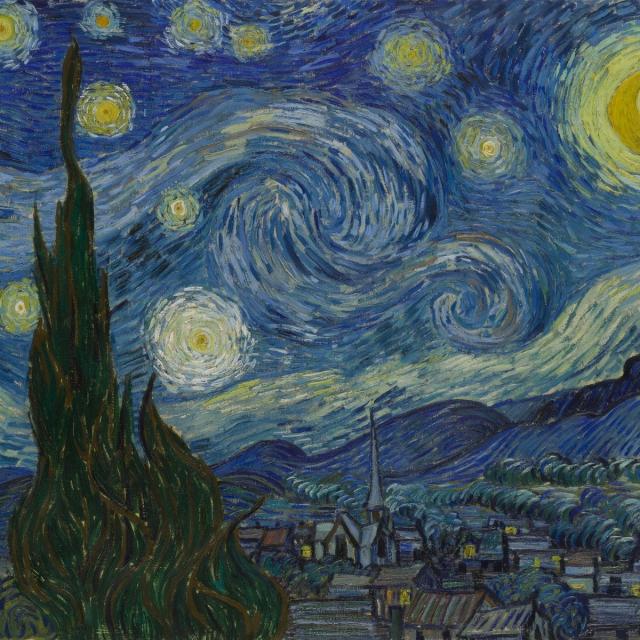
Post Impressionism: Cezanne’s Critique, Beyond Cezanne: George Seurat, Gaugin and Myth and Primitivism and Van Gogh – Beyond the Myth of Artistic Genius
Session 5: Edges And Resistance
The Arts and Crafts Movement and Art Nouveau
Note: This course is currently not available.

Related Courses

Terrorism and Counterterrorism: Comparing Theory and Practice (Coursera) Coursera
Leiden University

Terrorism and Counterterrorism: Comparing Theory and Practice (Coursera)

Terrorism has arguably been one of the defining factors of our age. It frequently makes headlines, threatening or attacking governments, private business and ordinary citizens. And in many parts of the world, it has been one of the most important threats to peace, security and stability. But what does this exactly mean? What is the nature of this threat? Who or what is threatened, how, by whom and why? What can be done about it or how can we at least limit the impact of terrorism and make sure that terrorists do not make headlines and manage to scare us? These are just a handful of questions that will be addressed in this course that consists of three parts.

Aug 10th 2026
5-12 Weeks
A Journey through Western Christianity: from Persecuted Faith to Global Religion (200 - 1650) (Coursera) Coursera
Yale University

A Journey through Western Christianity: from Persecuted Faith to Global Religion (200 - 1650) (Coursera)

This course follows the extraordinary development of Western Christianity from its early persecution under the Roman Empire in the third century to its global expansion with the Jesuits of the early modern world. We explore the dynamic and diverse character of a religion with an enormous cast characters. We will meet men and women who tell stories of faith as well as of violence, suppression, and division.

Aug 10th 2026
5-12 Weeks
Historia del Arte: Del Barroco al Arte Posmoderno (Coursera) Coursera
Universidad de Palermo

Historia del Arte: Del Barroco al Arte Posmoderno (Coursera)

El arte deriva de un deseo de la persona para comunicarse con otros” (Edvard Munch). Y es desde la prehistoria que el humano ha dejado impresas sus huellas a través del arte. ¿Qué características tienen esas huellas artísticas? ¿Qué nos comunican sobre el periodo de tiempo al que pertenecen? Sumergite en la historia del arte recorriendo este curso, partiendo desde la construcción del Arte Moderno y realizando un camino por los diferentes sistemas de representación dominantes de distintos períodos hasta llegar a la Muerte del Arte.

Aug 10th 2026
4 Weeks
Age of Cathedrals (Coursera) Coursera
Yale University

Age of Cathedrals (Coursera)

An introduction to some of the most astonishing architectural monuments the world has ever known—Gothic cathedrals. We shall study the art, literature, intellectual life, economics, and new social arrangements that arose in the shadow of the cathedrals and that were such an important part of the revival of cities in the twelfth and thirteenth centuries. The goal of the course is a better appreciation of the High Middle Ages, a world that is still recognizably our own.

Aug 3rd 2026
5-12 Weeks
Activism in Sports and Culture (Coursera) Coursera
Morehouse College

Activism in Sports and Culture (Coursera)

Sports have become an ever-present reflection of American culture, and an important symbol of the divisions and alliances in our society. Sports and political change walk hand in hand in America. The way that athletes and institutions deal with questions of race, economic hardship, nationalism, and political ties have become central to the way that we understand ourselves and our society. And yet, there are those who would prefer their sports free of controversy and opinion.

Aug 3rd 2026
4 Weeks
Global Diplomacy – Diplomacy in the Modern World (Coursera) Coursera
University of London,SOAS University of London

Global Diplomacy – Diplomacy in the Modern World (Coursera)

The Global Diplomacy course is a unique offering to the MOOC environment. Bringing together cutting edge research in the broad fields of Diplomatic and International Studies, award winning distance learning delivery and the instructors previous experience of delivering a successful MOOC. Please see the volume Global Diplomacy: Theories, Types and Models authored with Dr Alison Holmes, (Westview, 2016), and the Understanding Research Methods MOOC from Coursera.

Aug 10th 2026
5-12 Weeks
Intellectual Change in Early China: Warring States and Han (Coursera) Coursera
The Chinese University of Hong Kong

Intellectual Change in Early China: Warring States and Han (Coursera)

This sequence of four courses will propose a multi-disciplinary approach to the study of Chinese cultural history conceived of as a succession of modes of rationality (philosophical, bureaucratic, and economic). The focus will be on the moments of paradigm shift from one mode of rationality to another. For each of these moments, cultural facts and artifacts—thought, literature, ritual—will be examined in relationship to changing social, political, and economic systems.

Aug 10th 2026
5-12 Weeks
Introduction to Korean Philosophy and Culture (Coursera) Coursera
Sungkyunkwan University - SKKU

Introduction to Korean Philosophy and Culture (Coursera)

This course will give you the cultural and historical background to begin your journey into Korean philosophy, and there is no prerequisite knowledge on philosophy required. Anybody who either has an interest in Korean culture, maybe through K-Dramas or K-pop, or an interest in philosophy from a cross-cultural perspective, are all welcome.

Aug 3rd 2026
4 Weeks
Reputation Crisis? Facebook meets Cambridge Analytica (Coursera) Coursera
Erasmus University Rotterdam

Reputation Crisis? Facebook meets Cambridge Analytica (Coursera)

Do you remember when you first created your Facebook account? Do you know what happens to the data and stories you share on Facebook? Are you aware of the Facebook – Cambridge Analytica crisis and its ramifications? In this course, you will take a deep dive into reputation management by tackling a case study on the crisis, the effects of which are still unravelling for Facebook, the tech industry, and society at large. You will explore the concept of corporate reputation, and touch upon topics such as data privacy implications for the big tech or the importance of leadership and culture, and how Mark Zuckerberg’s leadership might have affected Facebook in particular. In the final project, you will be asked to link theory and practice to provide an analysis of events and make recommendations for Facebook, going forward.

Aug 3rd 2026
5-12 Weeks