Mobile Game Development with Game Salad (OpenLearning)

Offered by Taylor's University,
Mobile Game Development with Game Salad (OpenLearning)

In this course you'll learn the basics of gamification using Gamesalad Creator. The main purpose of this course is not show you how easy it is to create your very own game with a game creation tool like GameSalad Creator.

From week-1 to week-3, we will cover topics from installation to game development. There will be also tips for you to develop a good mobile game. If you encounter problem at any point of the development, do feel free to raise your questions in the forum. In week-4, it will be an online discussion session that helps you to complete the final product for the competition.

Go to Class
MOOC List is learner-supported. When you buy through links on our site, we may earn an affiliate commission.

Related Courses

Programming Languages, Part A (Coursera) Coursera
University of Washington

Programming Languages, Part A (Coursera)

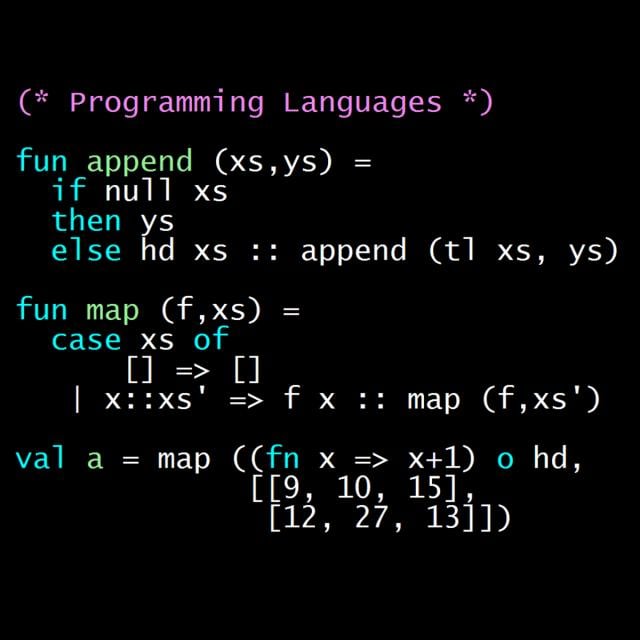
This course is an introduction to the basic concepts of programming languages, with a strong emphasis on functional programming. The course uses the languages ML, Racket, and Ruby as vehicles for teaching the concepts, but the real intent is to teach enough about how any language “fits together” to make you more effective programming in any language -- and in learning new ones.

Oct 5th 2026
5-12 Weeks
Problem Solving Using Computational Thinking (Coursera) Coursera
University of Michigan

Problem Solving Using Computational Thinking (Coursera)

Have you ever heard that computers "think"? Believe it or not, computers really do not think. Instead, they do exactly what we tell them to do. Programming is, "telling the computer what to do and how to do it." Before you can think about programming a computer, you need to work out exactly what it is you want to tell the computer to do. Thinking through problems this way is Computational Thinking. Computational Thinking allows us to take complex problems, understand what the problem is, and develop solutions. We can present these solutions in a way that both computers and people can understand.

Oct 12th 2026
5-12 Weeks
Games in Education: Gamification (OpenLearning) OpenLearning
Other Entities

Games in Education: Gamification (OpenLearning)

The principles in this course did not originate in a computer lab but, rather, from the acute neurological and psychiatric care wards of large hospitals. Thus this course presents general principles of gamification that can be applied to the full range of the learning spectrum, ranging from people with severe disabilities through to post-graduate and professional development applications.

Self Paced
Self-Paced
Learn JavaScript (Coursera) Coursera
Scrimba

Learn JavaScript (Coursera)

This is perhaps the most interactive JavaScript course ever recorded. It contains 140+ coding challenges, meaning that you will finally build that ever-so-important JavaScript muscle memory. You will solve the challenges directly in the browser thanks to Scrimba's interactive video technology, so there's not setup needed. Say goodbye to "tutorial hell" and get ready to start feeling your JavaScript superpowers grow exponentially.

Oct 12th 2026
4 Weeks
Uso de bases de datos con Python (Coursera) Coursera
University of Michigan

Uso de bases de datos con Python (Coursera)

Este curso presentará a los estudiantes los conceptos básicos del lenguaje de consulta estructurado (Structured Query Language, SQL), así como el diseño básico de bases de datos para almacenar datos como parte de una iniciativa de varios pasos para recopilar, analizar y procesar datos. El curso utilizará SQLite3 como base de datos. También crearemos rastreadores web y procesos de visualización y recopilación de datos de varios pasos. Utilizaremos la biblioteca D3.js para realizar la visualización básica de datos.

Oct 12th 2026
5-12 Weeks
Applied Text Mining in Python (Coursera) Coursera
University of Michigan

Applied Text Mining in Python (Coursera)

This course will introduce the learner to text mining and text manipulation basics. The course begins with an understanding of how text is handled by python, the structure of text both to the machine and to humans, and an overview of the nltk framework for manipulating text. The second week focuses on common manipulation needs, including regular expressions (searching for text), cleaning text, and preparing text for use by machine learning processes. The third week will apply basic natural language processing methods to text, and demonstrate how text classification is accomplished. The final week will explore more advanced methods for detecting the topics in documents and grouping them by similarity (topic modelling).

Oct 12th 2026
4 Weeks
Introducción a la programación en Python I: Aprendiendo a programar con Python (Coursera) Coursera
Pontificia Universidad Católica de Chile

Introducción a la programación en Python I: Aprendiendo a programar con Python (Coursera)

Decía Steve Jobs que “todo el mundo debería aprender a programar un ordenador porque esto te ayuda a pensar”. Hoy en día la programación es una herramienta fundamental para el desarrollo de la tecnología moderna. Este curso te introduce en el mundo de la programación en el lenguaje Python.

Oct 5th 2026
5-12 Weeks
An Introduction to Interactive Programming in Python (Part 2) (Coursera) Coursera
Rice University

An Introduction to Interactive Programming in Python (Part 2) (Coursera)

This two-part course is designed to help students with very little or no computing background learn the basics of building simple interactive applications. Our language of choice, Python, is an easy-to learn, high-level computer language that is used in many of the computational courses offered on Coursera. To make learning Python easy, we have developed a new browser-based programming environment that makes developing interactive applications in Python simple.

Oct 5th 2026
4 Weeks
Principles of Computing (Part 2) (Coursera) Coursera
Rice University

Principles of Computing (Part 2) (Coursera)

This two-part course introduces the basic mathematical and programming principles that underlie much of Computer Science. Understanding these principles is crucial to the process of creating efficient and well-structured solutions for computational problems. To get hands-on experience working with these concepts, we will use the Python programming language. The main focus of the class will be weekly mini-projects that build upon the mathematical and programming principles that are taught in the class.

Oct 5th 2026
4 Weeks