EdX

Mining and Materials for Sustainable Development Transformations (edX)

Offered by SDGAcademyX, SDG Academy,
Mining and Materials for Sustainable Development Transformations (edX)

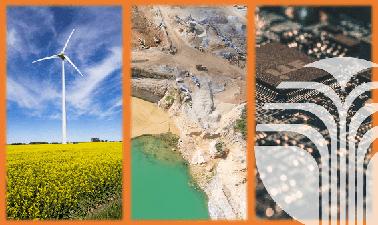
Learn about the role of mining and materials at the heart of the transformations needed to achieve climate change objectives, a just energy transition, and the Sustainable Development Goals.

Class Deals by MOOC List - Click here and see EdX's Active Discounts, Deals, and Promo Codes.

The Paris Agreement on Climate Change and the Agenda 2030 outline a global consensus on the interlinked needs to curb human-induced climate change and achieve sustainable development. The underlying transformations needed to achieve climate goals and other Sustainable Development Goals (SDGs) include the rapid decarbonization of our global energy systems and economies, and a scale-up of new technologies to meet the needs of a growing population. Mining and materials are at the heart of these sustainable development transformations and present both challenges and opportunities. Despite the important implications for mining investments and mineral-rich governments, the world still lacks a coherent vision to guide global actors in shifting the course of mining projects and mining companies in a way that leads to deep decarbonization; protects and preserves our fragile ecosystems; addresses the development needs of resource-dependent, low-income countries; and respects the rights and interests of impacted communities.
This course examines these challenges and opportunities and how we can pursue all these transformations in a manner consistent with human rights, poverty elimination, social inclusion, protection and preservation of ecosystems, and economic development.
This course is for:

  • Mid- to senior-level government officials; members of parliament; and parliamentary staffers
  • Civil society leaders with a track record of analysis, oversight, and policy advocacy related to mining, the environment, climate action, or a just energy transition
  • Professors, researchers, graduate students, and other academics undertaking applied research or teaching on mining, the environment, climate action, or a just energy transition
  • Professionals from development agencies, including aid agencies and international financial institutions
  • Representatives from extractive industry or renewable energy companies and associations such as chambers of energy and minerals or industry think tanks
  • Anyone interested in the role of extractive industries in the energy transition

What you'll learn
In this course, you will learn from leading experts in various areas of knowledge and with diverse viewpoints. Key topics covered include:

  • The relevance of the energy and technological transformations to mining and materials value chains and their stakeholders, including governments, international organizations, companies, financiers, civil society, local communities, and the general public
  • The roles and responsibilities of mining and materials stakeholders in the sustainable development transformations, including climate change mitigation, adaptation, and resilience
  • The sustainable development challenges of renewable energy systems and an increasingly urbanized and digital economy
  • Security of supply of critical minerals
  • The environmental, climate, social, human rights, and economic impacts of mining and materials value chains
  • The role of national plans, strategies, laws, and policies in addressing these challenges

Syllabus

Module 1: Contextualizing the scale and urgency of the energy and technological transitions that underpin the Sustainable Development Goals
Module 2: How the world is making, measuring, and monitoring progress toward global goals
Module 3: Decarbonization pathways and implications for mining and materials value chains
Module 4: Implications of sustainable development transformations for governments of mineral-rich countries
Module 5: Mining and materials value chains and the circular economy
Module 6: Going up and down mining and materials value chains
Module 7: Implications of sustainable development transformations for communities, workers, and suppliers in mineral-rich countries
Module 8: Implications of sustainable development transformations for national planning processes
Go to Class
MOOC List is learner-supported. When you buy through links on our site, we may earn an affiliate commission.

Related Courses

Sustainable Urban Development (edX) EdX
Wageningen University,Delft University of Technology,DelftX,WageningenX

Sustainable Urban Development (edX)

Learn why cities are key in resolving global urbanization and sustainability challenges and how you can engineer tomorrow’s cities today. Did you know that cities take up less than 3% of the earth’s land surface, but more than 50% of the world’s population live in them? And, cities generate more than 70% of the global emissions? Large cities and their hinterlands (jointly called metropolitan regions) greatly contribute to global urbanization and sustainability challenges, yet are also key to resolving these same challenges.

Self Paced
Self-Paced
Natural Resources for Sustainable Development (edX) EdX
SDGAcademyX,SDG Academy

Natural Resources for Sustainable Development (edX)

Explore the sustainable development opportunities and challenges in using oil, gas and minerals. Natural resources represent a potentially transformational opportunity to support development but are ultimately finite How do we make the most of them without destroying the planet? In this 12-week course, produced by the Natural Resource Governance Institute, the Columbia Center on Sustainable Investment and the World Bank, learn about efforts to sustainably manage extractive industry investments.

Self Paced
Self-Paced
Water Works: Activating Heritage for Sustainable Development (edX) EdX
Delft University of Technology,DelftX

Water Works: Activating Heritage for Sustainable Development (edX)

Address contemporary challenges from a socio-spatial and cultural perspective, and activate water heritage for decision-making in water management. Water has served and sustained societies throughout history. Understanding the complex and diverse water systems of the past is key to devising sustainable development for the future with regard to socioeconomic structures, policies, and cultures. Today, past systems form the framework for preservation and reuse as well as for new proposals.

Self Paced
Self-Paced
Discovering Corporate Social Responsibility (CSR) (edX) EdX
LouvainX,Université Catholique de Louvain - UCL

Discovering Corporate Social Responsibility (CSR) (edX)

Revisit the purpose of companies and explore with us what their Corporate Social Responsibility is. Move on to responsible leadership! Learn how to implement a credible CSR strategy in a company, no matter its size. Driven by global crises in financial, economic, and governance systems, companies all over the world devote massive resources to their corporate social responsibility (CSR). But what is CSR? What does it mean, and what does it involve? Do stakeholders really care, and if they do, how to implement a credible CSR strategy? In uncertain modern climates, CSR is a crucial driving force of a (r)evolution in business.

Self Paced
Self-Paced
Globalization: Past and Future (edX) EdX
SDGAcademyX,SDG Academy

Globalization: Past and Future (edX)

Is globalization a new phenomenon or a cyclical pattern throughout human history? In this four-part mini-course, Professor Jeffrey Sachs argues that we have always lived in a global world. He takes students on a historical and anthropological tour of six distinct waves of globalization and outlines the key factors that drove innovation, technology dispersal and development during these epochs.

Self Paced
Self-Paced
Climate Change Science and Negotiations (edX) EdX
SDGAcademyX,SDG Academy

Climate Change Science and Negotiations (edX)

Humanity is up against a tight timeline to address climate change. Learn how we can deeply decarbonize the global energy systems, and put the world on a 2°C pathway. In this course, learn solutions to mitigate the effects of the global greenhouse gas emissions causing temperature rise, and how to apply these solutions in different national contexts improvements.

Self Paced
Self-Paced
Feeding a Hungry Planet: Agriculture, Nutrition and Sustainability (edX) EdX
SDGAcademyX,SDG Academy

Feeding a Hungry Planet: Agriculture, Nutrition and Sustainability (edX)

How do we create a healthy and sustainable diet for the growing world population? Agriculture is more than waving fields of wheat; our ability to grow food from existing natural resources – and without decimating those resources – is key to sustainably feeding the world. In this course, learn about food security worldwide, the effects of malnutrition, how we manage ecosystems that provide food resources and more.

Self Paced
Self-Paced
Arctic Security Fundamentals (edX) EdX
University of Alaska Fairbanks,AlaskaX

Arctic Security Fundamentals (edX)

This course explores the present-day security situation of the Arctic through a focus on the key stakeholders responsible for diplomacy and defense. The Arctic: a region of frigid waters, tundra, and prolonged periods of light and darkness. While it may seem desolate, the Circumpolar North holds a wealth of resources and opportunities for nations and the Indigenous peoples who live there.

Self Paced
Self-Paced
Escuela de trabajo decente (edX) EdX
Universidad Carlos III de Madrid - UC3M,UC3Mx

Escuela de trabajo decente (edX)

Contribuye a incrementar productividad y satisfacción en el empleo a través de herramientas que fomenten el trabajo decente en la empresa. La “Agenda 2030 para el Desarrollo sostenible” es un plan de acción universal para la consecución de 17 objetivos, los llamados “Objetivos de Desarrollo Sostenible” o, simplemente, “ODS”.

Self Paced
Self-Paced
SDG: Moving Towards Sustainable Work (edX) EdX
Universidad Carlos III de Madrid - UC3M,UC3Mx

SDG: Moving Towards Sustainable Work (edX)

Decent work is thecritical engine of sustainable development. This course explores the United Nations' Sustainable Development Goals and mechanisms for developing decent and sustainable work. The United Nations' Sustainable Development 2030 Agenda gives us the opportunity to change and improve the lives of millions of people. These widespread efforts won't juststem from organizations in the formal public or private sectors (governments, corporations, trade unions, etc.) but will also require participation from ordinary people and civil society as a whole.

Self Paced
Self-Paced