EdX

Metabolomics in Life Sciences (edX)

Offered by Osaka University, OsakaUx,
Metabolomics in Life Sciences (edX)

Learn about metabolomics principles and their applications in life sciences. This course is an introduction to metabolomics principles and their applications in various fields of life sciences.

Class Deals by MOOC List - Click here and see EdX's Active Discounts, Deals, and Promo Codes.

We will provide a summary of all steps in metabolomics research; from experimental design, sample preparation, analytical procedures, to data analysis. The course also provides case studies of various kinds of research samples to attract students that are not familiar with metabolomics, providing them enough explanation to utilize metabolomics technology for their respective research fields.
Several examples of metabolomics applications will be introduced throughout the lectures. These include examples within food science and technology, metabolic engineering, basic biology, introduction to imaging mass spectrometry, and application in medical science.

No previous knowledge on metabolomics is needed but we recommend that students have an undergraduate-level understanding of Biochemistry, Analytical Chemistry, and Biostatistics, and that they learn about basic principles of multivariable analysis prior to taking this course.

What you'll learn

  • The basic principles of metabolomics
  • Workflow of metabolomics research from design of experiment to data interpretation
  • Applications of metabolomics in various fields of life sciences

Syllabus

Week 1: What is Metabolomics?
Week 2: Application of Metabolic Fingerprinting for Food Quality Assessments
Week 3: Metabolomics: A Powerful Tool for Phenotype Improvement
Week 4: Basics of Mass Spectrometry and Imaging Mass Spectrometry
Go to Class
MOOC List is learner-supported. When you buy through links on our site, we may earn an affiliate commission.

Related Courses

Irrigation Efficiency: more food with less water (edX) EdX
KU Leuven University,KULeuvenX

Irrigation Efficiency: more food with less water (edX)

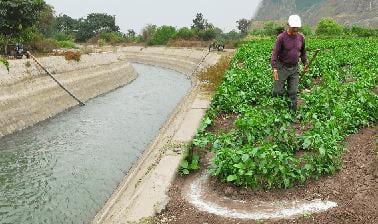
Learn to improve the efficiency of different irrigation system components over varying scales in order to extract less water from our resources while producing more food. How can we meet the demands of our ever hungrier and thirstier world? Irrigation water uses 70% of the fresh water extraction worldwide to produce 40% of the food.

Self Paced
Self-Paced
Introduction to Biology - The Secret of Life (edX) EdX
MIT,MITx

Introduction to Biology - The Secret of Life (edX)

Explore the secret of life through the basics of biochemistry, genetics, molecular biology, recombinant DNA, genomics and rational medicine. 7.00x is an introductory level biology course hosted by professor Eric Lander, who was one of the leaders of the Human Genome Project. The course content reflects the topics taught in the MIT introductory biology courses and many biology courses across the world.

Mar 12th 2024
13-24 Weeks
Pathways to Public Health (edX) EdX
George Washington University

Pathways to Public Health (edX)

Pathways to Public Health provides learners with a working knowledge of the issues public health professionals are striving to address every day. You will meet public health specialists who focus on dimensions of health relating to: the environment, family and community, personal behaviors and decision making, health services delivery and access, and utilizing data to both identify the underlying causes of disease, and to track and control the spread of disease.

Self Paced
Self-Paced
Fundamentals of Neuroscience, Part 2: Neurons and Networks (edX) EdX
HarvardX,Harvard University

Fundamentals of Neuroscience, Part 2: Neurons and Networks (edX)

Discover what makes your brain tick in this second part of a four-part introductory series in Neuroscience. Neurons in isolation are fascinating and complicated, but the real magic of neuroscience happens in the interaction between neurons. In this course, we examine how neurons pass signals to one another and how complex dynamics can result from just a few neurons arranged in relatively simple circuits.

Self Paced
Self-Paced
Salmon, People, and Place (edX) EdX
University of Alaska Fairbanks,AlaskaX

Salmon, People, and Place (edX)

This course explores the relationships between salmon and people with an emphasis on the special ties of salmon to Indigenous peoples and to Alaska Natives in particular. No wild animal has more profoundly influenced the cultures and well-being of societies in North America than salmon. Salmon and people have been entwined in a relationship for millennia. This six-week course is an exploration and celebration of this relationship, as well as an examination of the current major issues, including habitat alterations, climate change, and management actions currently straining the relationship between salmon and salmon-dependent people.

Self Paced
Self-Paced
Industrial Fermentation (edX) EdX
Delft University of Technology,DelftX

Industrial Fermentation (edX)

Get introduced to the essentials of industrial fermentation processes, which convert renewable feedstocks into biomaterials, chemicals, nutrition products and biofuels with the help of microorganisms. Industrial fermentation is the central operation in a broad, sustainable value chain, also involving the upstream generation and supply of renewable feedstocks, and downstream purification of the products formed.

Self Paced
Self-Paced
Algorithms and Data Structures Capstone (edX) EdX
University of California, San Diego,UC San DiegoX

Algorithms and Data Structures Capstone (edX)

Synthesize your knowledge of algorithms and biology to build your own software for solving a biological challenge. Building a fully-fledged algorithm to assemble genomes from DNA fragments on a real dataset is an enormous challenge with major demand in the multi-billion dollar biotech industry. In this capstone project, we will take the training wheels off and let you design your own optimized software program for genome sequencing.

Self Paced
Self-Paced
BioStatistics (edX) EdX
DoaneX,Doane University

BioStatistics (edX)

This college-level, credit-eligible Biostatistics course will teach you the skills required for success in future analytical studies in biology. In this undergraduate-level biostatistics course, the learners will be introduced to the use of statistics and study designs in biology. Upon successful completion of this course, learners will be able to design experimental, quasi-experimental and observational studies that will meet regulatory guidelines; collect, analyze, and interpret data using appropriate statistical tools.

Self Paced
Self-Paced
Innovate & Regulate: Drug Research, Costs, Clinical Trials & Approval (edX) EdX
Davidson College,DavidsonX

Innovate & Regulate: Drug Research, Costs, Clinical Trials & Approval (edX)

At some point in their life, essentially everyone needs to use medication for some type of disease treatment or cure. While medications offer great benefits, the cost of drugs, especially new drugs, and the lack of treatment for some diseases can raise questions about business activity behind the creation of new drugs. Better understanding of how drugs are discovered and developed as well as the legal and regulatory factors that affect the industry can help one better recognize both the shortcomings and opportunities faced by the drug industry at large.

Self Paced
Self-Paced
Super-Earths And Life (edX) EdX
HarvardX,Harvard University

Super-Earths And Life (edX)

Learn about the Earth, life, and how we can search for life elsewhere in the universe. Are we alone in this universe? What new information and observations on exoplanets have we discovered? In the past decade, astronomers have made incredible advances in the discovery of planets outside our solar system. Thirty years ago, we knew only of the planets in our own solar system. Now we know of thousands circling nearby stars.

Self Paced
Self-Paced
Principles of Biochemistry (edX) EdX
HarvardX,Harvard University

Principles of Biochemistry (edX)

This introduction to biochemistry explores the molecules of life, starting at simple building blocks and culminating in complex metabolism. Principles of Biochemistry integrates an introduction to the structure of macromolecules and a biochemical approach to cellular function. Topics addressing protein function will include enzyme kinetics, the characterization of major metabolic pathways and their interconnection into tightly regulated networks, and the manipulation of enzymes and pathways with mutations or drugs.

Self Paced
Self-Paced