EdX

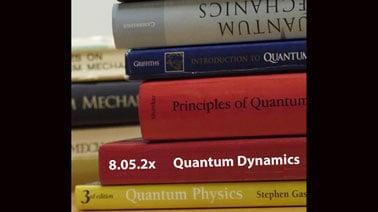
Mastering Quantum Mechanics Part 2: Quantum Dynamics (edX)

Offered by MIT,
Mastering Quantum Mechanics Part 2: Quantum Dynamics (edX)

Learn about the Heisenberg uncertainty principle, quantum dynamics and two-state systems including applications to NMR and masers.

Class Deals by MOOC List - Click here and see EdX's Active Discounts, Deals, and Promo Codes.

This physics course covers Heisenberg’s uncertainty principle and the concept of compatible operators. You will also learn about the Schrödinger and Heisenberg pictures of quantum mechanics and the coherent and squeezed states of the harmonic oscillator. The course concludes with two state systems and their applications to NMR and masers.

This is the second of three courses offering a sophisticated view of quantum mechanics and its proper mathematical foundation.
Part 1: Wave Mechanics
Part 2: Quantum Dynamics
Part 3: Entanglement and Angular Momentum
To understand the material in this course you should have taken Mastering Quantum Mechanics Part 1: Wave Mechanics.
Completing the 3-part Quantum Mechanics series will give you the necessary foundation to pursue advanced study or research at the graduate level in areas related to quantum mechanics
What you'll learn:

  • Heisenberg Uncertainty Principle and compatible operators.
  • The Schrödinger and Heisenberg pictures of quantum mechanics.
  • Coherent and Squeezed States.
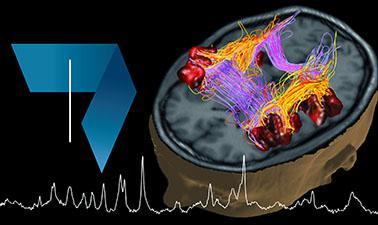
  • Two state systems and applications to NMR and MRI.

Syllabus

Week 1: The uncertainty principle and compatible operators.
Week 2: The harmonic oscillator, Schrodinger equation as unitary time evolution, The Heisenberg picture of quantum mechanics.
Week 3: Coherent and squeezed states of the harmonic oscillator.
Week 4: Coherent photon states. Two state systems, Nuclear Magnetic Resonance (NMR), and the ammonia maser.
Week 5: The setup for NMR (Nuclear Magnetic Resonance) and basic MRI (Magnetic Resonance Imaging).
Final assessment

Go to Class
MOOC List is learner-supported. When you buy through links on our site, we may earn an affiliate commission.

Related Courses

Cement Chemistry and Sustainable Cementitious Materials (edX) EdX
École Polytechnique Fédérale de Lausanne,EPFLx

Cement Chemistry and Sustainable Cementitious Materials (edX)

Learn the basics of cement chemistry and laboratory best practices for assessment of its key properties. Every day, we see concrete used all around us – to build our houses, offices, schools, bridges, and infrastructure. But few people actually understand what gives concrete its strength, resistance, and utility. The aim of this course is to offer basic cement chemistry to practitioners, as well as new students in the fields of chemistry and engineering.

Self Paced
Self-Paced
The Einstein Revolution (edX) EdX
HarvardX,Harvard University

The Einstein Revolution (edX)

Traces Albert Einstein’s engagement with relativity, quantum mechanics, Nazism, nuclear weapons, philosophy, the arts, and technology. Albert Einstein has become the icon of modern science. Following his scientific, cultural, philosophical, and political trajectory, this course aims to track the changing role of physics in the 20th and 21st centuries.

Self Paced
Self-Paced
Introduction to Quantum Science & Technology (edX) EdX
Purdue University,PurdueX

Introduction to Quantum Science & Technology (edX)

Learn about fundamental concepts and engineering challenges of quantum technologies. Emerging quantum systems are disruptive technologies redefining computing and communication. Teaching quantum physics to engineers and educating scientists on engineering solutions are critical to address fundamental and engineering challenges of the quantum technologies.

Aug 21st 2023
13-24 Weeks
Cavity Quantum Optomechanics (edX) EdX
École Polytechnique Fédérale de Lausanne,EPFLx

Cavity Quantum Optomechanics (edX)

Fundamentals of optomechanics. Basic principles, recent developments and applications. Optomechanics is the study of the interaction between light and mechanical systems which can result in the manipulation of the state of both light and the mechanics. The nature of this interaction gives rise to a wide range of applications in both fundamental physics and technological advancements. In this course, you will learn the concepts and tools required for conducting research in the field of cavity optomechanics.

Self Paced
Self-Paced
Introduction to Quantum Transport (edX) EdX
Purdue University,PurdueX

Introduction to Quantum Transport (edX)

This course introduces the non-equilibrium Green’s function (NEGF) method widely used to describe quantum effects in nanoscale devices, along with its applications to spintronic devices. This course introduces the Schrödinger equation, using the tight-binding method to discuss the concept of bandstructure and E(k) relations, followed by an introduction to the NEGF method with simple illustrative examples. Concept of spinors is introduced along with the application of the NEGF method to spintronic devices.

Feb 12th 2024
5-12 Weeks
Advanced Transport Phenomena (edX) EdX
Delft University of Technology,DelftX

Advanced Transport Phenomena (edX)

Learn how to tackle complex mass and heat transfer problems and apply the results in your own environment. How can you reduce the energy loss of your home? What is the underlying science of energy loss in pipes? Which heat and mass transfer problems do we have to tackle to make consumer products? In this engineering course, you will learn about the engineering principles that play an important role in all of these and more phenomena. You will learn about microbalances, radiation, convection, diffusion and more and their applications in everyday life.

Self Paced
Self-Paced
Advanced statistical physics (edX) EdX
École Polytechnique Fédérale de Lausanne,EPFLx

Advanced statistical physics (edX)

We explore statistical physics in both classical and open quantum systems. Additionally, we will cover probabilistic data analysis that is extremely useful in many applications. This course covers non-equilibrium statistical processes and the treatment of fluctuation dissipation relations by Einstein, Boltzmann and Kubo. Moreover, the fundamentals of Markov processes, stochastic differential and Fokker Planck equations, mesoscopic master equation, etc will be treated in detail. Prior knowledge of statistical physics is highly recommended but not required.

Self Paced
Self-Paced