EdX

Magnetic Materials and Devices (edX)

Offered by MIT, MITx,
Magnetic Materials and Devices (edX)

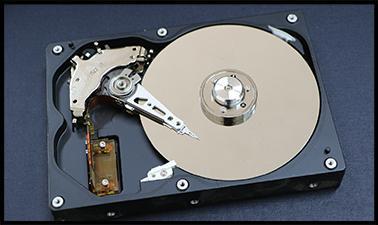
Learn how magnetic devices, such as hard drives and magneto-optical disks, are designed to exploit the magnetic properties of materials. In this engineering course, you will learn about magnetic materials and devices. Applications presented include magnetic data storage, motors, transformers, and spintronics.

Class Deals by MOOC List - Click here and see EdX's Active Discounts, Deals, and Promo Codes.

This course is part of a three-part series, which explains the basis of electrical, optical, and magnetic properties of materials including semiconductors, metals, organics, and insulators. We will show how devices are built to take advantage of these properties. This is illustrated with a wide range of devices, placing a strong emphasis on new and emerging technologies.
Part 1 - Electronic Materials and Devices
Part 2 - Optical Materials and Devices

What you'll learn:

  • Fundamentals of magnetism
  • The role anisotropy plays in the magnetic behavior of materials
  • The operating principles of transformers and DC motors
  • How data is stored on hard disks
  • Principles of optical and magnetooptical storage

Go to Class
MOOC List is learner-supported. When you buy through links on our site, we may earn an affiliate commission.

Related Courses

Quantum Mechanics for Scientists and Engineers 2 (edX) EdX
StanfordOnline

Quantum Mechanics for Scientists and Engineers 2 (edX)

This course covers key topics in the use of quantum mechanics in many modern applications in science and technology, introduces core advanced concepts such as spin, identical particles, the quantum mechanics of light, the basics of quantum information, and the interpretation of quantum mechanics, and covers the major ways in which quantum mechanics is written and used in modern practice.

Self Paced
Self-Paced
Manufacturing Process Control II (edX) EdX
MIT,MITx

Manufacturing Process Control II (edX)

Learn how to control process variation, including methods to design experiments that capture process behavior and understand means to control variability. As part of the Principles of Manufacturing MicroMasters program, this course will build on statistical process control foundations to add process modeling and optimization.Building on formal methods of designed experiments, the course develops highly applicable methods for creating robust processes with optimal quality.

Oct 13th 2026
5-12 Weeks
Introduction to Electromagnetism (saylor.org) Saylor Academy
Saylor.org

Introduction to Electromagnetism (saylor.org)

The physics of the universe appears to be dominated by the effects of four fundamental forces: gravity, electromagnetism, weak nuclear forces, and strong nuclear forces. These forces control how matter, energy, space, and time interact to produce our physical world. All other forces, such as the force you exert in standing up, are ultimately derived from these fundamental forces.

Self Paced
Self-Paced
Physics 102 - Magnetic Fields and Faraday's Law (Coursera) Coursera
Rice University

Physics 102 - Magnetic Fields and Faraday's Law (Coursera)

This course serves as an introduction to the physics of electricity and magnetism. Upon completion, learners will have an understanding of how the forces between electric charges are described by fields, and how these fields are related to electrical circuits. They will gain experience in solving physics problems with tools such as graphical analysis, algebra, vector analysis, and calculus. The course follows the typical progression of topics of a first-semester university physics course: charges, electric forces, electric fields potential, magnetic fields, currents, magnetic moments, electromagnetic induction, and circuits.

Sep 14th 2026
4 Weeks
Electrodynamics: In-depth Solutions for Maxwell’s Equations (Coursera) Coursera
Korea Advanced Institute of Science and Technology - KAIST

Electrodynamics: In-depth Solutions for Maxwell’s Equations (Coursera)

This course is the fourth course in the Electrodynamics series, and is directly proceeded by Electrodynamics: Electric and Magnetic Fields. Previously, we have learned about visualization of fields and solutions which were not time dependent. Here, we will return to Maxwell's Equations and use them to produce wave equations which can be used to analyze complex systems, such as oscillating dipoles. We will also introduce AC circuits, and how they can be simplified, solved, and applied.

Sep 14th 2026
5-12 Weeks
Electrotechnique I (edX) EdX
École Polytechnique Fédérale de Lausanne,EPFLx

Electrotechnique I (edX)

Découvrez les circuits électriques linéaires. Apprenez à les maîtriser et à les résoudre, dans un premier temps en régime continu puis en régime alternatif. Ce cours définit les notions de base des circuits électriques composés des trois éléments passifs (résistance, inductance et condensateur), linéaires et des sources de tension et de courant.

Self Paced
Self-Paced
The Basics of Transport Phenomena (edX) EdX
Delft University of Technology,DelftX

The Basics of Transport Phenomena (edX)

Learn the basic framework to work on a broad spectrum of engineering problems concerning transfer of heat, mass and momentum. Learn through examples of everyday processes at home, in the lab and in industry. Have you ever wondered why ventilation helps to cool down your hot chocolate? Do you know why a surfing suit keeps you warm? Why iron feels cold, while wood feels warm at room temperature? Or how air is transferred into aqueous liquids in a water treatment plant? How can we sterilize milk with the least amount of energy? How does medicine spread in our tissue? Or how do we design a new cooling tower of a power plant? All these are phenomena that involve heat transfer, mass transfer or fluid flow.

Self Paced
Self-Paced
The Engineering of Structures Around Us (edX) EdX
DartmouthX,Dartmouth College

The Engineering of Structures Around Us (edX)

Explore how engineers design bridges and buildings in our communities and iconic structures around the world. In this introductory course, you’ll learn some engineering principles that can be applied to structural systems everywhere: in nature, in furniture, in mechanical and aerospace systems, and in any solid object that resists a load. Together we’ll explore how structures work, why they were designed the way they were designed, how they support loads, and where forces flow through them.

Self Paced
Self-Paced
Geology and Engineering Geology | 工程地质学 (edX) EdX
Tsinghua University,TsinghuaX

Geology and Engineering Geology | 工程地质学 (edX)

Learn the basics of geology and geological engineering as we explore ways to both protect and properly utilize the earth’s resources today and in the future. The earth is our home. The development of human civilization as we know it goes hand in hand with how we have used and continue to reshape the planet. This course will introduce the basic knowledge of geology and methods of engineering geology to help people protect and utilize our earth more effectively.

Self Paced
Self-Paced
A System View of Communications: From Signals to Packets (Part 1) (edX) EdX
The Hong Kong University of Science and Technology - HKUST,HKUSTx

A System View of Communications: From Signals to Packets (Part 1) (edX)

Explore the tradeoffs in designing communication systems like mobile phones, and the engineering tools to handle them. Have you ever wondered how information is transmitted using your mobile phone or a WiFi hotspot? This introductory course seeks to enable you to understand the basic engineering tools used and tradeoffs encountered in the design of these systems.

Self Paced
Self-Paced
Hardware and Operating Systems (edX) EdX
IBM

Hardware and Operating Systems (edX)

This course will help you develop the skills to install and set up an operating system and gain expertise on hardware components, including motherboard, CPU, hard drives and more. If you’re ready to enter the world of Information Technology (IT), you need job-ready skills. Understanding the fundamentals of computer hardware and operating systems is critical to any technology related job role like Technical Support or Software Development.

Self Paced
Self-Paced
Introduction to Water and Climate (edX) EdX
Delft University of Technology,DelftX

Introduction to Water and Climate (edX)

Water is a crucial element in climate and for society. Find out about the latest engineering interventions for water management in rivers, coasts and the urban environment. Water is essential for life on Earth and of crucial importance for society. Water also plays a major role in affecting climate. Its natural cycle, from ocean to atmosphere by evaporation, then by precipitation back to land returning via rivers and aquifers to the oceans, has a decisive impact on regional and global climate patterns.

Self Paced
Self-Paced