FUN

Le paludisme (FUN)

Le paludisme (FUN)

Le but de ce cours est de répondre à toutes les interrogations que soulèvent le paludisme. Il s’agit de faire un véritable état des lieux sur la maladie, le parasite, les moustiques, les traitements existants, les moyens de luttes, les précautions à prendre avant de voyager en zone d’endémie, mais aussi sur les avancées de la recherche et sur les vaccins.

Ce MOOC est organisé en 6 semaines. Pour les apprenants, le temps de travail hebdomadaire est de une heure. Outre les vidéos qui composent le cours, les étudiants auront à disposition des documents supplémentaires (textes du cours en français et en anglais, tableaux, shémas, cartes, vidéos annexes).

Plan du cours

Semaine 1. Introduction - Les Anophèles
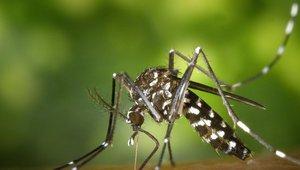
Un module vidéo introductif afin de vous présenter la globalité du MOOC mais aussi le lien historique étroit entre la ville de Marseille et les maladies infectieuse. S'en suit un second module pour découvrir les Anophèles, moustiques vecteurs du paludisme.

Semaine 2. Les parasites et le cycle parasitaire - La maladie en zone endémique - Répartition géographique du paludisme
Une présentation des principaux parasites responsables du paludisme ainsi que leurs modes de développement chez l'Homme et le moustique. Qu'en est il du paludisme dans les régions du globe sévèrement frappées par ce fléau? Enfin, un point complet sur la présence et le développement de la maladie sur la planète.

Semaine 3. Le diagnostic biologique (Partie I et II) - Le traitement du paludisme
Deux modules pour présenter les différents outils de diagnostic allant des méthodes conventionnelles aux techniques innovantes, dont nous disposons au laboratoire et sur le terrain pour identifier le plasmodium, parasite responsable du paludisme. Enfin, un tour d'horizon des divers traitements existants à ce jour.

Semaine 4. La résistance aux antipaludiques - la lutte en zone tropicale
Si les traitements de la maladie connaissent des évolutions constantes, les parasites témoignent de surprenantes facultés d'adaptation. Comment s'organise la lutte contre le paludisme dans les pays gravement touchés?

Semaine 5. Le paludisme d'importation - La prévention du paludisme chez les voyageurs
Le paludisme peut atteindre les voyageurs, touristes, businessman, ou militaires qui se sont rendus là où sévit le paludisme. Deux modules vidéos pour vous permettre de reconnaître et de traiter le paludisme d'importation mais aussi ce qu'il faut comprendre et savoir mettre en œuvre pour se protéger efficacement contre les piqûres de moustiques et le paludisme au cours d’un voyage en zone à risque.

Semaine 6. Actualité sur les vaccins contre le paludisme - Les acteurs de la lutte contre le paludisme - La surveillance et la recherche: l'exemple de l'IRD au Sénégal
Où en est la recherche sur les vaccins contre le paludisme? Quelles sont les organisations qui planifient la lutte contre la maladie, comment sont elles organisées. Et pour finir, au coeur de l'IRD à Dakar, découvrez un exemple concret de ce qu'il se passe au niveau de la recherche sur le paludisme et de la surveillance de la maladie.
Go to Class
MOOC List is learner-supported. When you buy through links on our site, we may earn an affiliate commission.

Related Courses

COVID-19: Understanding the Research Behind the Pandemic (FutureLearn) FutureLearn
University of Leeds,National Institute for Health Research - NIHR

COVID-19: Understanding the Research Behind the Pandemic (FutureLearn)

Discover how scientists responded to the pandemic and how they conduct innovative research to develop treatments and vaccines. Explore the critical role of research in responding to the COVID-19 pandemic. The outbreak of the COVID-19 pandemic took the world by surprise, causing a global health crisis. Reducing the spread of the disease and treating patients relied on how rapidly we could harness our research capabilities. This has led to developments that will change how we conduct future research.

Oct 4th 2021
2 Weeks
Epidemics - the Dynamics of Infectious Diseases (Coursera) Coursera
Pennsylvania State University

Epidemics - the Dynamics of Infectious Diseases (Coursera)

Not so long ago, it was almost guaranteed that you would die of an infectious disease. In fact, had you been born just 150 years ago, your chances of dying of an infectious disease before you've reached the tender age of 5 would have been extremely high. Since then, science has come a long way in understanding infectious diseases - what they are, how they spread, and how they can be prevented. But diseases like HIV/AIDS, Malaria, Tuberculosis, or the flu are still major killers worldwide, and novel emerging diseases are a constant threat to public health. In addition, the bugs are evolving. Antibiotics, our most potent weapon against bacterial infections, are losing their power because the bacteria are becoming resistant. In this course, we'll explore the major themes of infectious diseases dynamics.

Jun 22nd 2026
5-12 Weeks
Immunology: Immune System and Infectious Diseases (Coursera) Coursera
Imperial College London

Immunology: Immune System and Infectious Diseases (Coursera)

The constant struggle between pathogens and the human immune system has been posing a significant threat to our health for thousands of years. Infectious diseases remain the leading cause of death worldwide. These are typically caused by bacteria (intra- and extracellular), viruses, fungi, parasites (worms/helminths) and prions. Under normal circumstance, the immune response orchestrates a robust protection against these pathogens using both molecular and cellular mechanisms. This usually leads to direct or indirect inactivation of the infectious agent, so the disease symptoms may not appear.

Sep 21st 2026
5-12 Weeks
Cancer Biology (saylor.org) Saylor Academy
Saylor.org

Cancer Biology (saylor.org)

Cancer has existed among humans since humans themselves began and has been a subject of urgent interest from very early in our history. What we call “cancer” consists of a number of different diseases with one fundamental similarity: they are all initiated by the unchecked proliferation and growth of cells in which the pathways and systems that normally control cell division and mortality are absent.

Legacy Course
Self-Paced
Inside Cancer: How Genes Influence Cancer Development (FutureLearn) FutureLearn
University of Bath

Inside Cancer: How Genes Influence Cancer Development (FutureLearn)

Understand how genetics influence the development and spread of cancer, with this free, introductory online course. What is the one thing that all cancers have in common? They begin as mutant or rebel cells! In this course we will explore how changes in cancer genetics and epigenetics enables these cells to grow uncontrollably, by exploiting our blood vessels and immune system along with other systemic changes.

Self Paced
4 Weeks
Foundations of Client Care 1: Human Body and Disease Basics (edX) EdX
Osmosis,OsmosisFromElsevier

Foundations of Client Care 1: Human Body and Disease Basics (edX)

A review of the structure and function of human body systems and basics of disease. This is the first course in the Foundations of Client Care program offered by Osmosis from Elsevier. The Human Body and Disease Basics course reviews with learners basic human development concepts and discusses the structure, function, and common disorders and/or injuries of various body systems.

Self Paced
Self-Paced
Understanding Dementia (University of Tasmania) Other Providers
University of Tasmania

Understanding Dementia (University of Tasmania)

The Understanding Dementia MOOC was developed by the Wicking Dementia Research and Education Centre based in the College of Health and Medicine at the University of Tasmania. This world-leading online course is free, easily accessible and available to everyone with an interest in dementia. This course is free and runs twice a year in February and July.

Feb 7th 2023
5-12 Weeks
Understanding Multiple Sclerosis (MS) (University of Tasmania) Other Providers
University of Tasmania

Understanding Multiple Sclerosis (MS) (University of Tasmania)

'Understanding Multiple Sclerosis (MS)' is a free online course that aims to improve understanding and awareness of MS. Developed by the Menzies Institute for Research in partnership with Multiple Sclerosis Limited, the content is delivered by 27 experts in the field including neurologists, researchers, clinicians, allied health practitioners, carers and people living with Multiple Sclerosis.

Sep 12th 2022
5-12 Weeks
Assessing and Improving Community Health (Coursera) Coursera
University of Michigan

Assessing and Improving Community Health (Coursera)

This course is intended to serve as an introduction to population health from both the vantage point of both public health and healthcare. We will examine the key components of community health needs assessments, how they are used, and how to compare population health assessments across subpopulations and time. We will also explore the epidemiological sources and criteria by which to select high quality data sources to estimate population health indicators and to select evidence-based interventions to improve population health. Finally, we will design multi sector collaborations that support the phases of population health improvement.

Sep 14th 2026
4 Weeks