FUN

Contrôler une épidémie de maladies infectieuses émergentes (FUN)

Contrôler une épidémie de maladies infectieuses émergentes (FUN)

Ce MOOC est destiné à former les participants, à partir d’une étude de cas, à la surveillance des maladies infectieuses émergentes, mais aussi à la prévention et au contrôle des épidémies. Les maladies infectieuses émergentes nécessitent une approche interdisciplinaire mobilisant l’épidémiologie et les biomathématiques, la virologie, l’immunologie, la santé publique humaine et animale, l’entomologie, la recherche clinique sur les maladies infectieuses, la sociologie, la médecine, les sciences politiques et de communication sur le risque, et des éléments d’économie de la santé.

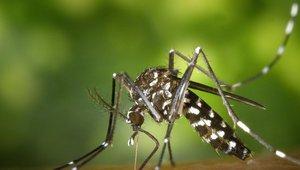
A chaque fois que possible, il sera montré comment chaque discipline a pu contribuer pour sa part à la construction d’une expertise commune contribuant à la recherche de solutions face à une épidémie de maladie infectieuse émergente. La synergie, les relations, l’interdépendance entre les disciplines seront aussi soulignées. Notre approche sera pragmatique et retracera l’étude d’une épidémie de Chikungunya, une maladie transmise par un moustique Aedes albopictus survenue dans l’Océan Indien en 2006. Seront présentés et analysés : les outils de surveillance, les méthodes d’alerte et de détection précoce, les études visant à identifier les facteurs de risque et de déclenchement de l’épidémie, les scénarios pour la prévention, les études séro-épidémiologiques mises en place, la communication sur le risque en période de crise, et la perception du risque par la population et ses comportements.
Go to Class
MOOC List is learner-supported. When you buy through links on our site, we may earn an affiliate commission.

Related Courses

Health Concepts in Chinese Medicine (Coursera) Coursera
The Hong Kong University of Science and Technology - HKUST

Health Concepts in Chinese Medicine (Coursera)

Chinese Medicine and Modern Medicine are two distinct medical systems, yet they both aim at the prevention and treatment of human diseases. With this in mind, we should understand the practice of Chinese Medicine in the context of Modern Medicine. In this course, we explore the basic theories underlying the practice of Chinese Medicine, compare and contrast the use of Chinese Medicine and Modern Medicine in Preventive Health, and discuss how to restore a healthy condition and understand the pharmacological basis of different types of Chinese tonifying herbs.

Sep 28th 2026
5-12 Weeks
Design and Interpretation of Clinical Trials (Coursera) Coursera
Johns Hopkins University

Design and Interpretation of Clinical Trials (Coursera)

Clinical trials are experiments designed to evaluate new interventions to prevent or treat disease in humans. The interventions evaluated can be drugs, devices (e.g., hearing aid), surgeries, behavioral interventions (e.g., smoking cessation program), community health programs (e.g. cancer screening programs) or health delivery systems (e.g., special care units for hospital admissions). We consider clinical trials experiments because the investigators rather the patients or their doctors select the treatment the patients receive.

Sep 28th 2026
5-12 Weeks
Diagnosis and prognosis biomarkers in global health (FUN) FUN
Institut Pasteur

Diagnosis and prognosis biomarkers in global health (FUN)

Biomarkers are the subject of considerable interest by scientists and researchers worldwide: they determine the use of targeted treatments (a major therapeutic advance in medicine), allow to measure the evolution of a disease or to indicate a particular physiological event. The aim of this MOOC is to review the interest of biomarkers for public health, based in particular on the research activities of the thirty-three institutes of the Institut Pasteur international network.

No sessions available
4 Weeks
Principles of fMRI 1 (Coursera) Coursera
Johns Hopkins University

Principles of fMRI 1 (Coursera)

Functional Magnetic Resonance Imaging (fMRI) is the most widely used technique for investigating the living, functioning human brain as people perform tasks and experience mental states. It is a convergence point for multidisciplinary work from many disciplines. Psychologists, statisticians, physicists, computer scientists, neuroscientists, medical researchers, behavioral scientists, engineers, public health researchers, biologists, and others are coming together to advance our understanding of the human mind and brain. This course covers the design, acquisition, and analysis of Functional Magnetic Resonance Imaging (fMRI) data, including psychological inference, MR Physics, K Space, experimental design, pre-processing of fMRI data, as well as Generalized Linear Models (GLM’s).

Sep 14th 2026
4 Weeks
Clinical Terminology for International and U.S. Students (Coursera) Coursera
University of Pittsburgh

Clinical Terminology for International and U.S. Students (Coursera)

Understanding the clinical terms and abbreviations commonly used in U.S. hospitals is challenging. Adaptation to clinical language can be difficult for U.S. students entering the clinical area and even more so for international students whose primary language is not English. This course is designed to help both groups of students understand the terms and abbreviations commonly encountered during the first three months of clinical work on a U.S. hospital unit.

Sep 28th 2026
5-12 Weeks
Reflections from 40 Years Fighting International Epidemics (Coursera) Coursera
Dartmouth College

Reflections from 40 Years Fighting International Epidemics (Coursera)

Reflections on patients, policies, pan-epidemics, prose and medical humanities from a 40-year career fighting epidemics around the world by an infectious disease public health physician. Examples include HIV/AIDS, Anthrax, SARS, MERS, H5N1 and H1N1 influenza, Nipah, Ebola (with MSF 2014), Zika, Plague (with WHO 2017) and COVID-19. Working side-by-side with international colleagues to provide hands-on patient care and to share stories is an expression of medical humanities.

Sep 28th 2026
5-12 Weeks
Infectious Disease Transmission Models for Decision-Makers (Coursera) Coursera
Johns Hopkins University

Infectious Disease Transmission Models for Decision-Makers (Coursera)

During the COVID-19 pandemic, both the promise and perils of using infectious disease transmission models to make public health policy decisions became clearer than ever. Optimal use of modeled output requires that public health policy makers be informed consumers of models, that they understand the strengths and limitations of possible approaches, and they know the right questions to ask about the vulnerabilities of the model results. **Free enrollment available until July 30, 2025. Valid for one enrollment per person.**

Sep 28th 2026
1 Week
Understanding Patient Perspectives on Medications (Coursera) Coursera
University of Copenhagen

Understanding Patient Perspectives on Medications (Coursera)

Inappropriate use of medicines harms patients’ health and increases healthcare costs. When healthcare professionals and patients engage together, healthcare can be based on the patient perspective, so the use of medicines is better tailored to each patients’ needs and preferences. The result is a better relationship between patients and healthcare professionals, more appropriate medicines use, improved patients’ outcomes, and reduced healthcare costs. In this course you will learn about the patient perspective on medicines use, and how to explore and apply it in healthcare and health policy.

Sep 21st 2026
4 Weeks
Precision Medicine (Coursera) Coursera
University of Geneva

Precision Medicine (Coursera)

This course will provide you with the key knowledge and tools to understand the fundamentals and practical implications of precision medicine, its opportunities and challenges. It will address precision-medicine era diagnostics, treatment selection, genetic counseling, public health interventions, and biomedical research. It will also deal with data science and ethical issues. From genomic analysis and genetic counseling to cancer biomarkers, from risk assessment of chronic diseases to the understanding of gene-environment interactions, from pharmacogenomics to multi-omics data integration, experts will walk you through the many aspects of precision medicine, from the bench to the bedside and to population health.

Sep 21st 2026
5-12 Weeks
Epidemics (Coursera) Coursera
University of Hong Kong

Epidemics (Coursera)

“If history is our guide, we can assume that the battle between the intellect and will of the human species and the extraordinary adaptability of microbes will be never-ending.” Despite all the remarkable technological breakthroughs that we have made over the past few decades, the threat from infectious diseases has significantly accelerated. In this course, we will learn why this is the case by looking at the fundamental scientific principles underlying epidemics and the public health actions behind their prevention and control in the 21st century.

Sep 14th 2026
5-12 Weeks