Vital Signs: Understanding What the Body Is Telling Us (Coursera)

Vital Signs: Understanding What the Body Is Telling Us (Coursera)

The vital signs – heart rate, blood pressure, body temperature, respiration rate, and pain – communicate important information about the physiological status of the human body. In this six-part course we explore the anatomy and physiology underlying the vital signs so that you will develop a systematic, integrated understanding of how the body functions.

Class Deals by MOOC List - Click here and see Coursera's Active Discounts, Deals, and Promo Codes.

Relevant body systems are reviewed including cardiovascular and respiratory, followed by explanations of how the function of these systems affects vital signs. We discuss normal ranges, normal variants, and the mechanisms that underlie changes in the objective measurement of vital signs. The course also includes demonstrations of appropriate techniques for measuring vital signs in yourself and others.
The course is designed for a broad, general audience but will be particularly interesting for individuals working in healthcare, those considering a career as a healthcare professional, lay caregivers, those with an interest in personal health and fitness, or anyone who simply wants to understand how the body functions.

Syllabus

WEEK 1
Pulse/Heart Rate
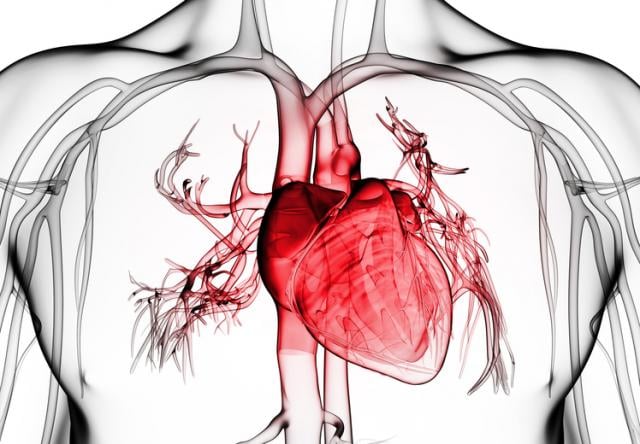
This week we start our exploration of the vital signs with a look at the heart. We'll study the basic structure of the heart, think about how the heart pumps blood through the body, and learn how clinicians assess and think about heart rate and the pulse.

WEEK 2
Blood Pressure
During week 2 we will learn about the anatomy of the blood vessels and how they function. You will have a better understanding of systolic and diastolic blood pressure, mean arterial pressure, and assessing blood pressure accurately.

WEEK 3
Metabolism
This week we will explore metabolism. We will discuss anabolism and catabolism, basal metabolic rate, how the body generates heat. You will also have a better understanding of how health care providers assess metabolic rate.

WEEK 4
Temperature
During week 4 you will learn the definition of mean body temperature and how the body regulates temperature. We will discuss hypothermia and the difference between hyperthermia and fever. Lastly, you will learn how to assess body temperature.

WEEK 5
Respiration Rate
This week we will learn about pulmonary anatomy, capillary gas exchange, and regulation of respiration. You will have a better understanding of how health care providers assess respiration rate and the quality of lung sounds.

WEEK 6
Pain
This week we will explore the neurological pathways associated with pain, and the difference between pain tolerance and pain threshold. We will understand what pain is telling us and why accurately assessing and effectively managing pain are important. In addition, we will review how healthcare providers asses pain.

Go to Class
MOOC List is learner-supported. When you buy through links on our site, we may earn an affiliate commission.

Related Courses

Major Depression in the Population: A Public Health Approach (Coursera) Coursera
Johns Hopkins University

Major Depression in the Population: A Public Health Approach (Coursera)

Public Mental Health is the application of the principles of medicine and social science to prevent the occurrence of mental and behavioral disorders and to promote mental health of the population. This course illustrates the principles of public health applied to depressive disorder, including principles of epidemiology, transcultural psychiatry, health services research, and prevention. It is predicted that by 2020 depressive disorder will be the most important cause of disease burden in the entire world! Every human being suffers from feeling depressed at some point or other, but only about one fifth of the population will experience an episode of depressive disorder over the course of their lives.

Jul 6th 2026
5-12 Weeks
Fundamentals for Implementing a Hypertension Program (Coursera) Coursera
Johns Hopkins University

Fundamentals for Implementing a Hypertension Program (Coursera)

This course provides the fundamental knowledge necessary for program managers and implementors in a hypertension control program, especially in resource-limited settings. The course is interactive and includes useful tips relevant to different settings. The course should be also relevant to physicians, nurses, pharmacists, community health workers, and others who are interested in learning about hypertension diagnosis and management.

Jun 29th 2026
5-12 Weeks
Anatomy: Cardiovascular, Respiratory and Urinary Systems (Coursera) Coursera
University of Michigan

Anatomy: Cardiovascular, Respiratory and Urinary Systems (Coursera)

In this anatomy course, part of the Anatomy Specialization, you will explore the interactive relationships of the cardiovascular, respiratory and urinary systems, and the roles they play in your body. This course is a primer for the cardiovascular, respiratory, and urinary systems in which students learn the pertinent details of the structures and functions through a combination of lectures, videos, labeling activities and quizzes.

Jun 29th 2026
4 Weeks
Pioneers of Medicine and Medical Breakthroughs in Taiwan (Coursera) Coursera
National Taiwan University

Pioneers of Medicine and Medical Breakthroughs in Taiwan (Coursera)

Through ages, doctors and scientists have worked hard to fight against different diseases, but it is not easy to find the effective way to deal with them. However, it is a lot faster and easier to approach new problems nowadays with the help of past experience and modern technology. In this course, we are going to show you some common diseases and its current management. At the same time, we will also show you how modern medicine has developed and what breakthroughs are specially made in Taiwan.

Jul 6th 2026
5-12 Weeks
Anatomy: Gastrointestinal, Reproductive and Endocrine Systems (Coursera) Coursera
University of Michigan

Anatomy: Gastrointestinal, Reproductive and Endocrine Systems (Coursera)

In this anatomy course, part of the Anatomy Specialization, you’ll learn about the various digestive, endocrine, and reproductive organs, their functions, and pathways of nerves and blood vessels serving these organs. Clinical correlations and vignettes will be used to highlight the importance of these anatomical structures and their relationships. Images and videos from cadaveric and artistic materials will be used to illustrate these concepts.

Jun 29th 2026
3 Weeks
Pharmacy Dosages and Prescriptions Essentials (Coursera) Coursera
MedCerts

Pharmacy Dosages and Prescriptions Essentials (Coursera)

In the Pharmacy Dosages and Prescriptions Essentials course, students will learn the language of medicine, using pharmacy nomenclature and the skills necessary to measure different types of prescriptions through four lessons. This includes understanding the dosage calculation methods, mathematical conversions, and formulas most commonly used within the pharmacy.

Jul 6th 2026
4 Weeks
Wilderness First Aid - Introduction (Coursera) Coursera
University of Colorado System

Wilderness First Aid - Introduction (Coursera)

In this course, students will learn the basics of wilderness medicine, including how it is a unique clinical environment, and concepts of scene safety. They will learn how to perform a basic assessment of a patient, including a physical exam, gather history data using the SAMPLE approach, and how to evaluate a patient for a potential spinal cord injury.

Jul 6th 2026
4 Weeks
Medical Terminology, Anatomy, and Physiology Fundamentals (Coursera) Coursera
MedCerts

Medical Terminology, Anatomy, and Physiology Fundamentals (Coursera)

In this Introduction to Medical Terminology and the Human Body course, you will learn about the medical language that is used to describe the human body. Throughout each Lesson, the roots of terms are explained to help students understand how medical terminology works in healthcare and to increase their knowledge and understanding of the material discussed.

Jun 29th 2026
4 Weeks
Advanced Neurobiology I (Coursera) Coursera
Peking University

Advanced Neurobiology I (Coursera)

Hello everyone! Welcome to advanced neurobiology! Neuroscience is a wonderful branch of science on how our brain perceives the external world, how our brain thinks, how our brain responds to the outside of the world, and how during disease or aging the neuronal connections deteriorate. We’re trying to understand the molecular, cellular nature and the circuitry arrangement of how nervous system works.

Jun 29th 2026
5-12 Weeks