Understanding Multiple Sclerosis (MS) (University of Tasmania)

Understanding Multiple Sclerosis (MS) (University of Tasmania)

'Understanding Multiple Sclerosis (MS)' is a free online course that aims to improve understanding and awareness of MS. Developed by the Menzies Institute for Research in partnership with Multiple Sclerosis Limited, the content is delivered by 27 experts in the field including neurologists, researchers, clinicians, allied health practitioners, carers and people living with Multiple Sclerosis.

Members of the public will increase their knowledge of MS-related issues and those in the MS Community will be empowered to create and contribute to personalised MS management plans.

The course is designed for anyone with an interest in Multiple Sclerosis including -
· People living with MS, their families and carers
· Medical and nursing professionals
· Allied health professionals
· Advocates, service delivery staff, support workers
There are six modules released weekly with content addressing the areas of -

  1. Biology and Pathology
  2. Diagnosis and Symptoms
  3. Demographics and Introduction to Risk
  4. Risk Factors
  5. Disease Management and Support Strategies
  6. Living with MS

This course was developed in partnership with Multiple Sclerosis Limited, and in collaboration with the Wicking Dementia Research and Education Centre.
Go to Class
MOOC List is learner-supported. When you buy through links on our site, we may earn an affiliate commission.

Related Courses

Systems Thinking In Public Health (Coursera) Coursera
Johns Hopkins University

Systems Thinking In Public Health (Coursera)

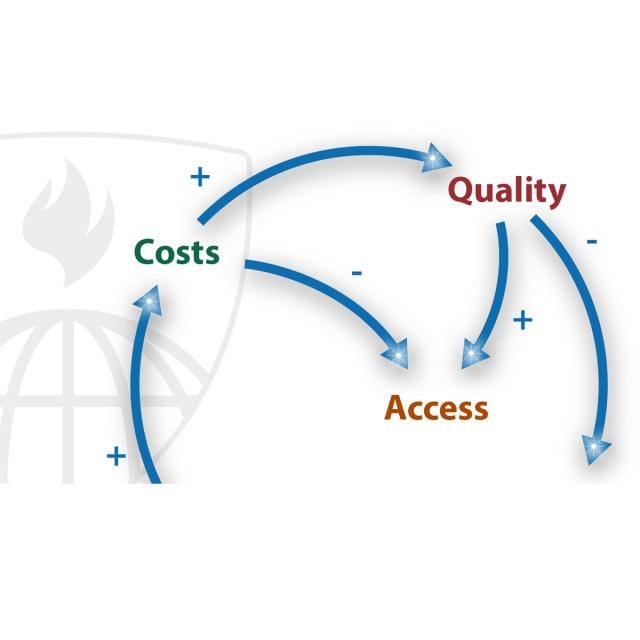
This course provides an introduction to systems thinking and systems models in public health. Problems in public health and health policy tend to be complex with many actors, institutions and risk factors involved. If an outcome depends on many interacting and adaptive parts and actors the outcome cannot be analyzed or predicted with traditional statistical methods. Systems thinking is a core skill in public health and helps health policymakers build programs and policies that are aware of and prepared for unintended consequences.

Oct 5th 2026
4 Weeks
Introduction to Systems Biology (Coursera) Coursera
Icahn School of Medicine at Mount Sinai

Introduction to Systems Biology (Coursera)

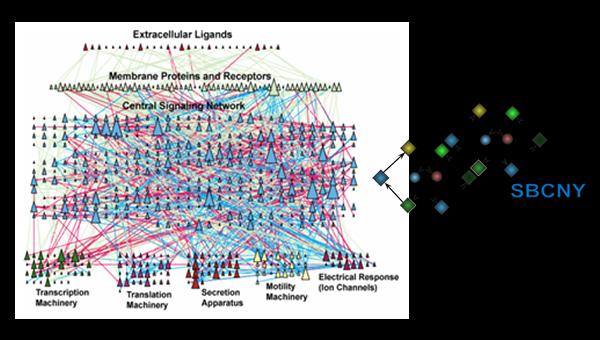
This course will introduce the student to contemporary Systems Biology focused on mammalian cells, their constituents and their functions. Biology is moving from molecular to modular. As our knowledge of our genome and gene expression deepens and we develop lists of molecules (proteins, lipids, ions) involved in cellular processes, we need to understand how these molecules interact with each other to form modules that act as discrete functional systems.

Oct 5th 2026
5-12 Weeks
Focus on Suicidal Behaviours (EPA) Other Providers
European Psychiatric Association

Focus on Suicidal Behaviours (EPA)

The last decades have seen the greatest advances in our knowledge about the causes of suicidal behaviours and in our skills to take care of those at risk and prevent future suicidal events. In this online course, we will give you an overview of these advances through the lenses of some of the world‘s leading experts in the field of suicidology.

Self Paced
Self-Paced
Preventing Dementia (University of Tasmania) Other Providers
University of Tasmania

Preventing Dementia (University of Tasmania)

Preventing Dementia is a Massive Open Online Course (MOOC), offering university-quality education about the latest research in dementia risk and protective factors. The free 4-week course provides an opportunity to engage with the perspectives of a global community, without requiring exams or assignments. This course runs twice a year in May and October.

May 17th 2022
4 Weeks
Psychological First Aid (Coursera) Coursera
Johns Hopkins University

Psychological First Aid (Coursera)

Learn to provide psychological first aid to people in an emergency by employing the RAPID model: Reflective listening, Assessment of needs, Prioritization, Intervention, and Disposition. Utilizing the RAPID model (Reflective listening, Assessment of needs, Prioritization, Intervention, and Disposition), this specialized course provides perspectives on injuries and trauma that are beyond those physical in nature. The RAPID model is readily applicable to public health settings, the workplace, the military, faith-based organizations, mass disaster venues, and even the demands of more commonplace critical events, e.g., dealing with the psychological aftermath of accidents, robberies, suicide, homicide, or community violence.

Oct 5th 2026
5-12 Weeks
La Solución del Conflicto Ético (Coursera) Coursera
Universidad Nacional Autónoma de México

La Solución del Conflicto Ético (Coursera)

En este curso los participantes lograrán identificar y tomar decisiones sobre casos clínicos con conflictos éticos en el área de la salud por medio de la aplicación del razonamiento ético desde una perspectiva universal y considerando los aspectos médicos y éticos, el marco jurídico y la decisión ética.

Oct 5th 2026
5-12 Weeks
Confronting Gender Based Violence: Global Lessons for Healthcare Workers (Coursera) Coursera
Johns Hopkins University

Confronting Gender Based Violence: Global Lessons for Healthcare Workers (Coursera)

This course introduces participants from the healthcare sector to gender based violence (GBV), including global epidemiology of GBV; health outcomes; seminal research; and clinical best practices for GBV prevention, support, and management. A core curriculum is supplemented by lectures that contextualize the content with specific examples and programs from around the world.

Oct 12th 2026
4 Weeks
Essentials of Global Health (Coursera) Coursera
Yale University

Essentials of Global Health (Coursera)

Essentials of Global Health is a comprehensive introduction to global health. It is meant to introduce you to this topic in well-structured, clear and easy to understand ways. Much of the course will focus on five questions: What do people get sick, disabled and die from; Why do they suffer from these conditions? Which people are most affected? Why should we care about such concerns? What can be done to address key health issues, hopefully at least cost, as fast as possible, and in sustainable ways?

Oct 5th 2026
5-12 Weeks
Engineering Life: Synbio, Bioethics & Public Policy (Coursera) Coursera
Johns Hopkins University

Engineering Life: Synbio, Bioethics & Public Policy (Coursera)

Synbio is a diverse field with diverse applications, and the different contexts (e.g., gain-of-function research, biofuels) raise different ethical and governance challenges. The objective of this course is to increase learners’ awareness and understanding of ethical and policy/governance issues that arise in the design, conduct and application of synthetic biology. The course will begin with a short history of recombinant DNA technology and how governance of that science developed and evolved, and progress through a series of areas of application of synbio.

Oct 5th 2026
5-12 Weeks
Ecosystems of California (Coursera) Coursera
University of California, Santa Cruz

Ecosystems of California (Coursera)

This course surveys the diversity, structure and functioning of California’s ecosystems through time and the ways they have influenced and responded to human activities and stewardship. Topics include ecosystem drivers such as climate, soils, and land use history; human and ecological prehistory of the state; comparative marine, freshwater, and terrestrial ecosystem dynamics; and managed ecosystems such as range, fisheries and agriculture in California.

Oct 5th 2026
5-12 Weeks