Assessing and Improving Community Health (Coursera)

Assessing and Improving Community Health (Coursera)

This course is intended to serve as an introduction to population health from both the vantage point of both public health and healthcare. We will examine the key components of community health needs assessments, how they are used, and how to compare population health assessments across subpopulations and time. We will also explore the epidemiological sources and criteria by which to select high quality data sources to estimate population health indicators and to select evidence-based interventions to improve population health. Finally, we will design multi sector collaborations that support the phases of population health improvement.

Class Deals by MOOC List - Click here and see Coursera's Active Discounts, Deals, and Promo Codes.

As a survey of the population health, the course provides an overview for students wishing no more than an introduction to the field, as well as good grounding for students who wish to pursue additional coursework in population health.
After taking this course, you will be able to:

  • Explain differences between population health assessments for public health and healthcare.
  • Outline the key components of community health needs assessments (CHNA).
  • Compare how public health and healthcare will use a CHNA to improve population health.
  • Identify key population health indicators for social determinants of health.
  • Identify key population health indicators for mental health and opioid abuse.
  • Categorize data sources by epidemiologic criteria.
  • Analyze differences between subpopulations and across time trends.
  • Formulate multi sector collaborations that support population health improvement.
  • Outline a plan for population health improvement.
  • Evaluate evidence-based interventions based on epidemiologic criteria and community suitability.

Course 3 of 3 in the The Influence of Social Determinants on Health Specialization.

Syllabus

WEEK 1
Population Health: Healthcare and Public Health
In this introduction to population health, we lay out a comprehensive definition of population health as a process and begin to describe the major approaches to population health improvement. We also outline how the “Triple Aim” of improved population health, improved patient experience, and reduced cost was woven into the U.S. Affordable Care Act through new mandates for population health practices. In healthcare settings, we describe how new patient population management and population medicine approaches are beginning to address two known areas of weaknesses - that is, gaps in care and care transitions - that can have major impacts on a population’s health. We also begin to recognize that healthcare is not designed to address root causes of disease and that new ways of thinking are needed if communities are going to have sustained improvements in their population health.

WEEK 2
Population Health Indicators
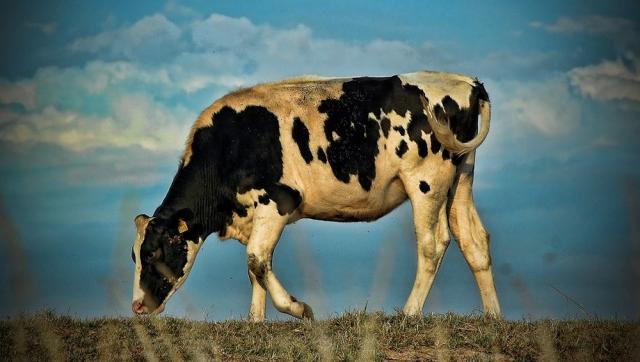
In this week’s module, we map the network of partnerships and interconnections that influence a population health. Specifically, we summarize the ‘health impact pyramid’ and examine connections between community health and social, economic, environmental factors. Building on this foundation, we then extend these ideas into a new arena called the ‘One Health’ concept that recognizes the interrelationship between the health of the planet, its animals, and the health of humans. To enable learners to measure the health of a community, we explore the WHO 100 health indicators and describe what makes a really good population health indicator. The ability to measure a population’s health then helps us stratify patient populations or vulnerable subgroups within a community into different risk groups who would benefit from different preventive approaches. We then end the week with an exploration of The Community Guide - a product of the Community Preventive Services Task Force - who provides systematic reviews and recommendations on the best evidence-based community health interventions.

WEEK 3
Improvement and Interventions Strategies
The ability to measure a population’s health then helps us stratify patient populations or vulnerable subgroups within a community into different risk groups who would benefit from different preventive approaches. We then end the week with an exploration of The Community Guide - a product of the Community Preventive Services Task Force - who provides systematic reviews and recommendations on the best evidence-based community health interventions.

WEEK 4
Community Health Needs Assessment
In this last week, we turn our attention to a standard way to assess and begin to plan improvements in community health - that is, the community health needs assessment. We go through the key principles and process steps underlying community health needs assessments, including some good examples. This week the final project to create a evidence-based intervention plan for your community of interest is due.

Go to Class
MOOC List is learner-supported. When you buy through links on our site, we may earn an affiliate commission.

Related Courses

Confronting Gender Based Violence: Global Lessons for Healthcare Workers (Coursera) Coursera
Johns Hopkins University

Confronting Gender Based Violence: Global Lessons for Healthcare Workers (Coursera)

This course introduces participants from the healthcare sector to gender based violence (GBV), including global epidemiology of GBV; health outcomes; seminal research; and clinical best practices for GBV prevention, support, and management. A core curriculum is supplemented by lectures that contextualize the content with specific examples and programs from around the world.

Aug 17th 2026
4 Weeks
Epidemics (Coursera) Coursera
University of Hong Kong

Epidemics (Coursera)

“If history is our guide, we can assume that the battle between the intellect and will of the human species and the extraordinary adaptability of microbes will be never-ending.” Despite all the remarkable technological breakthroughs that we have made over the past few decades, the threat from infectious diseases has significantly accelerated. In this course, we will learn why this is the case by looking at the fundamental scientific principles underlying epidemics and the public health actions behind their prevention and control in the 21st century.

Aug 17th 2026
5-12 Weeks
Career 911: Your Future Job in Medicine and Healthcare (Coursera) Coursera
Northwestern University

Career 911: Your Future Job in Medicine and Healthcare (Coursera)

This course aims to help high school students, recent graduates, and those considering career transitions explore health care career options and learn strategies for entry into the health care workforce and health related fields. There are lots of amazing job opportunities in medicine and healthcare! Join us, as we share the strategies and secrets for getting those jobs.

Aug 17th 2026
5-12 Weeks
A Life of Happiness and Fulfillment (Coursera) Coursera
Indian School of Business - ISB

A Life of Happiness and Fulfillment (Coursera)

What are the determinants of a happy and fulfilling life? This is surely one of life’s biggest questions, and a question that has interested many of our ancestors. Buddha famously gave up his kingdom in search of happiness. Several Greek philosophers (from Aristotle to Epicurus and Plato to Socrates) had their own views on what it takes to be happy. And of course, we all have our own theories about happiness too.

Aug 17th 2026
5-12 Weeks
eHealth: More than just an electronic record (Coursera) Coursera
The University of Sydney

eHealth: More than just an electronic record (Coursera)

The MOOC, "eHealth: More than just an electronic record!", is multidisciplinary in nature, and aims to equip the global audience of health clinicians, students, managers, administrators, and researchers to reflect on the overall impact of eHealth on the integration of care. It explores the breadth of technology application, current and emerging trends, and showcases both local and international eHealth practice and research.

Aug 17th 2026
5-12 Weeks
The Brain and Space (Coursera) Coursera
Duke University

The Brain and Space (Coursera)

This course is about how the brain creates our sense of spatial location from a variety of sensory and motor sources, and how this spatial sense in turn shapes our cognitive abilities. Knowing where things are is effortless. But “under the hood,” your brain must figure out even the simplest of details about the world around you and your position in it.

Aug 17th 2026
5-12 Weeks
The Social Context of Mental Health and Illness (Coursera) Coursera
University of Toronto

The Social Context of Mental Health and Illness (Coursera)

Learn how social factors promote mental health, influence the onset and course of mental illness, and affect how mental illnesses are diagnosed and treated. This course explores how our understanding of mental health and illness has been influenced by social attitudes and social developments in North America and around the world. The course begins by situating our contemporary mental health practices in historical context, then looks at different aspects of mental health, mental illness and mental health services and their connections to what’s going on in our social environment.

Aug 17th 2026
5-12 Weeks
Chemicals and Health (Coursera) Coursera
Johns Hopkins University

Chemicals and Health (Coursera)

This course covers chemicals in our environment and in our bodies and how they impact our health. It addresses policies and practices related to chemicals, particularly related to how they get into our bodies (exposures), what they do when they get there (toxicology), how we measure them (biomonitoring) and their impact on our health. Most examples are drawn from the US.

Aug 17th 2026
5-12 Weeks
Stories of Infection (Coursera) Coursera
Stanford University

Stories of Infection (Coursera)

This course introduces learners to a variety of infectious diseases using a patient-centered, story-based approach. Through illustrated, short videos, learners will follow the course of each patient’s illness, from initial presentation to resolution. Integrating the relevant microbiology, pathophysiology and immunology, this course aims to engage and entice the learner towards future studies in microbiology, immunology and infectious diseases.

Aug 17th 2026
5-12 Weeks