Jewish Diaspora in Modern China (Coursera)

Offered by Nanjing University,
Jewish Diaspora in Modern China (Coursera)

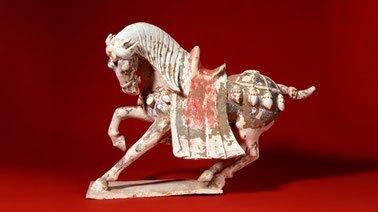
Jewish Diaspora in China is a unique experience for world Jewry, as China is the only country in Far East that has had Jews living in its society for over 1,000 years. Documentary evidence shows that Jews started to live in China no later than the Tang Dynasty (618–907). The famous Kaifeng Jewish community, which was established in Kaifeng, the Chinese capital of the Song Dynasty (960-1279), is but a best-known example.

Class Deals by MOOC List - Click here and see Coursera's Active Discounts, Deals, and Promo Codes.

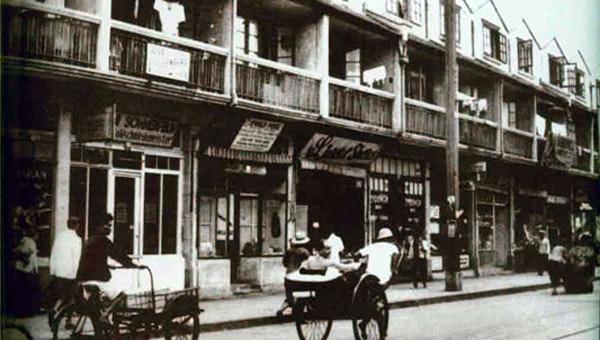
However, the largest Jewish Diaspora in China appeared in modern times. In over 100 years, from the mid-19th century to the mid-20th century, about 40,000 Jews came to China and lived in newly-established major port cities such as Hong Kong, Shanghai, Tianjin, and Harbin. Jewish communities composed of these Jews became an essential part of the economic and social life of those modern Chinese cities. What brought such a large number of Jews to China? Where did these people come from? How did they arrive? Were they all in China at the same time, and were there any differences among them? What happened to them after they arrived? Where are they now? The story of Jews in modern China is certainly a fascinating and up-lifting one. This course will examine these questions and more.

Syllabus

WEEK 1
Introduction
This course, "Jewish Diaspora in Modern China," will give you an understanding of the major issues related to the history of Jews in China in Modern times.
Background: Jews and China
In this module, we will introduce pre-modern Chinese society, wars with Western Powers, and the Open Door Policy. We will also analyze major causes that brought Jews to China. In particular, we will focus on waves of migrating Sephardic and Ashkenazi Jews to China, which mark the beginning of the history of the Jewish diaspora in modern China.

WEEK 2
The Jewish Community in Shanghai
In this module, we will study four Jewish communities established in Shanghai from the second half of the 19th century to the mid-20th century, with a special focus on the Sephardic Jews and European Jewish refugees.

WEEK 3
The Jewish Community in Harbin
In this module, we will discuss Harbin as a newly established modern Chinese city. We will explore the Jewish communal life in the city from its leadership, various Zionist organizations, business, observance, and relations with adjacent Jewish communities in the region and in the country.

WEEK 4
The Jewish Community in Tianjin
In this module, we will focus on the Jewish communal life in the port city of Tianjin, tracing its beginnings, development, and decline. We will also introduce some well-known Jewish individuals living in the city.

WEEK 5
The Jewish Community in Hong Kong
In this module, we will explore the special status of Hong Kong as a center of Jewish life in China. We will trace the ups and downs of Jewish life in the city and the unique roles the Hong Kong Jewish Community played in the city-- the only Jewish community with a sustained, uninterrupted history in China over the past 160 years.

WEEK 6
Departure and Contributions
In this module, we will analyze the factors that spurred the departure of about 40,000 Jews from China. We will also discuss their contributions-- economic and cultural-- on Chinese society today.

WEEK 7
History Renewed and Impact
In this module, we will describe the re-establishment of Jewish communities in contemporary Chinese society, especially in Beijing and Shanghai, following the adoption of China's open-door policies and economic reforms in the 1980s. We will also discuss the impact of the re-establishment of Jewish communities on Chinese academia.


Go to Class
MOOC List is learner-supported. When you buy through links on our site, we may earn an affiliate commission.

Related Courses

Teaching the Holocaust: Innovative Approaches to the Challenges We Face (FutureLearn) FutureLearn
University College London,Yad Vashem

Teaching the Holocaust: Innovative Approaches to the Challenges We Face (FutureLearn)

Explore history, delve into pedagogical challenges revealed by research, and find practical solutions for teaching the Holocaust. The Holocaust was the murder of approximately 6 million Jews perpetrated by Nazi Germany and its collaborators. That this atrocity proved possible raises many complex questions which remain relevant for young people today.

Self Paced
3 Weeks
The History of Medieval Medicine Through Jewish Manuscripts (edX) EdX
University of Pennsylvania,PennX

The History of Medieval Medicine Through Jewish Manuscripts (edX)

Learn about medieval Jewish medical training and thought by exploring and interpreting medical manuscripts. This mini-course is a general introduction to both to medieval medicine and to the value of using manuscripts. Professor Y. Tzvi Langermann presents a case study that builds from a unique 15th-century volume in which three important medical manuscripts in Hebrew and Judeo-Arabic (Arabic in Hebrew characters) are sewn together.

Self-Paced
Self-Paced
Literati China: Examinations, Neo-Confucianism, and Later Imperial China (edX) EdX
HarvardX,Harvard University

Literati China: Examinations, Neo-Confucianism, and Later Imperial China (edX)

Explore China’s imperial period, with a focus on the Song dynasty and the role of the exam system in government. Fundamental changes in government, the economy, and broader society took place between the 8th and 11th centuries in China. The state aristocracy gave way to new literati elite: educated men who sought to enter government through competitive examinations. A new kind of Confucianism also took shape, which prized the moral autonomy of individuals. With this, the later imperial period of China’s history begins.

Self Paced
Self-Paced
Odesa: Jews in the Modern World (Coursera) Coursera
University of California, Santa Cruz

Odesa: Jews in the Modern World (Coursera)

In this course, Peter Kenez and Murray Baumgarten, both emeritus professors at UC Santa Cruz, tell the story of the Jews of the Black Sea port of Odesa. Kenez and Baumgarten include music, literature, and history in their analysis of a city like no other. The course is for anyone with an interest in the history and culture of the Jewish people.

Jun 15th 2026
5-12 Weeks
The Holocaust: an Introduction - Part 2 (FutureLearn) FutureLearn
Tel Aviv University

The Holocaust: an Introduction - Part 2 (FutureLearn)

Part 2 of 2. This course depicts the complex history of the Holocaust, highlighting its impact on our world today. The Holocaust was an inconceivable historical event, which forever robbed Western culture of its innocence. As civilized human beings, we fail to understand how events of such horror could have taken place, and how an idea so inhumanly warped could have spread like wildfire through an entire continent, instigating the systematic annihilation of millions of Jews.

No sessions available
3 Weeks
Changing Minds: Geographic Discoveries and New Worlds through the Eyes of a Renaissance Jewish Scholar (edX) EdX
University of Pennsylvania,PennX

Changing Minds: Geographic Discoveries and New Worlds through the Eyes of a Renaissance Jewish Scholar (edX)

This course will situate a manuscript in the context of the world from which it was produced so that we better understand both. The Italian Renaissance was a time of scientific discovery and artistic revolution, it was also a time of world exploration, religious ferment, and technological changes such as the broad dissemination of print. By understanding a single thinker, Jewish polymath Abraham ben Mordecai Farissol, and one of his most important manuscripts, Iggeret Orhot ‘Olam , in context, this course will offer a fresh.

Self Paced
Self-Paced
Invasions, Rebellions, and the Fall of Imperial China (edX) EdX
HarvardX,Harvard University

Invasions, Rebellions, and the Fall of Imperial China (edX)

An overview of modern Chinese history, including the fall of the Qing and the end of imperial China. In the 18th century, the Qing Dynasty is at its height; it is the wealthiest, most powerful, most civilized state on earth. And yet the 19th century brought enormous challenges for the Qing and for the place we call China. By the 20th century, a 2,000-year imperial tradition is gone. What happened?

Self Paced
Self-Paced
The Final Solution to the Jewish Question (Coursera) Coursera
Yad Vashem

The Final Solution to the Jewish Question (Coursera)

The "Final Solution to the Jewish Question" was the official code name used by Nazi German authorities for the planned annihilation of Jews during World War II. This course focuses on the origins, evolution, and implementation of this deadly operation which led to the murder of six million Jews by the Nazis and their collaborators.

Aug 17th 2026
5-12 Weeks
Israel State and Society  (Coursera) Coursera
Hebrew University of Jerusalem

Israel State and Society (Coursera)

Israel is a country that draws a lot of public attention around the globe. Nevertheless, both those who support Israel and those who are critical of its geopolitical standing and policies, usually have a very limited knowledge about the Israeli society and its political system. This course presents Israel from multiple perspectives - political, social, economic and cultural - in an attempt to expose the learners to a cutting edge academic research on the country.

Jul 27th 2026
13-24 Weeks
In the Margins of a Medieval Jewish Prayer Book: What Can Physical Manuscripts Tell Us about History? (edX) EdX
University of Pennsylvania,PennX

In the Margins of a Medieval Jewish Prayer Book: What Can Physical Manuscripts Tell Us about History? (edX)

This course is a case study of how a particular manuscript, a Jewish prayer book for high holidays, can provide historians with vital insights about Jewish communal life, the way a manuscript can help us map cultural change and continuity in the Middle Ages, and the history of the physical object itself. Elisabeth Hollender (Goethe University, Frankfurt) guides students through the examination of a late 13th century manuscript from Western Ashkenaz, focusing on how the manifold signs of change left in the manuscript illustrate and illuminate the history of a Jewish community in the Rhineland.

Self Paced
Self-Paced
Structuring Values in Modern China (Coursera) Coursera
The Chinese University of Hong Kong

Structuring Values in Modern China (Coursera)

This sequence of four courses will propose a multi-disciplinary approach to the study of Chinese cultural history conceived of as a succession of modes of rationality (philosophical, bureaucratic, and economic). The focus will be on the moments of paradigm shift from one mode of rationality to another. For each of these moments, cultural facts and artifacts—thought, literature, ritual—will be examined in relationship to changing social, political, and economic systems.

Aug 17th 2026
5-12 Weeks