The Holocaust: an Introduction - Part 2 (FutureLearn)

Offered by Tel Aviv University,
The Holocaust: an Introduction - Part 2 (FutureLearn)

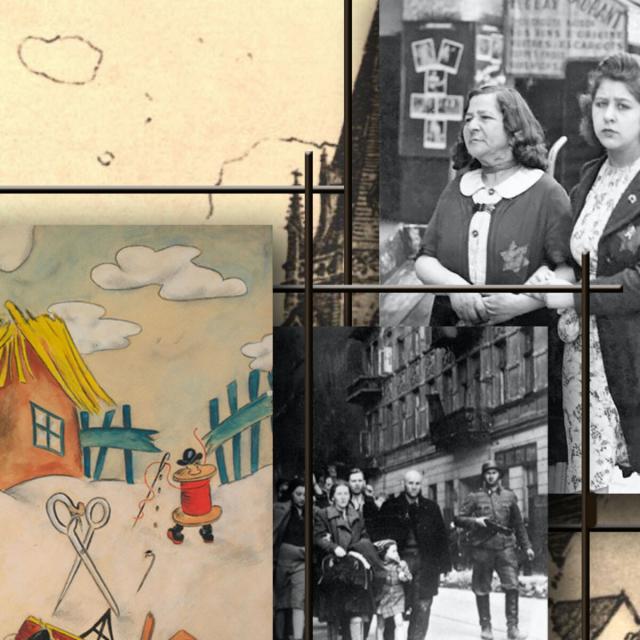
Part 2 of 2. This course depicts the complex history of the Holocaust, highlighting its impact on our world today. The Holocaust was an inconceivable historical event, which forever robbed Western culture of its innocence. As civilized human beings, we fail to understand how events of such horror could have taken place, and how an idea so inhumanly warped could have spread like wildfire through an entire continent, instigating the systematic annihilation of millions of Jews.

Class Deals by MOOC List - Click here and see FutureLearn's Active Discounts, Deals, and Promo Codes.

This free online course was produced jointly by Tel Aviv University and Yad Vashem – the World Center for Holocaust Research.
This course is the second of the two courses and covers three themes in its three weeks:

Week 1: The Final Solution
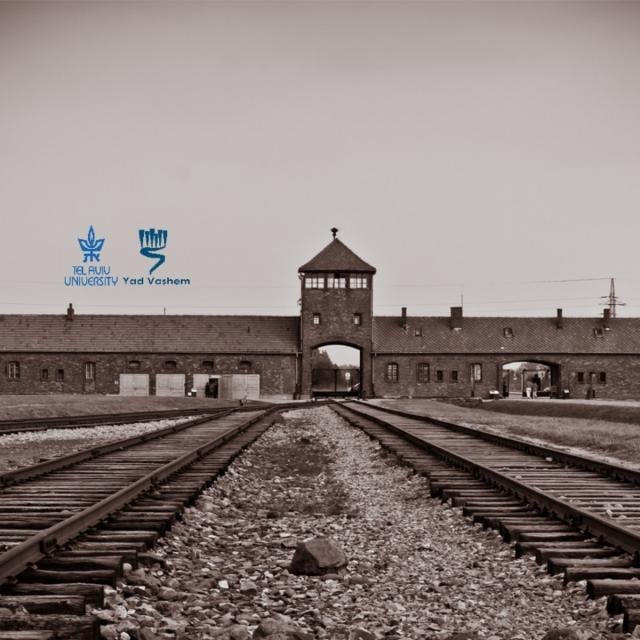
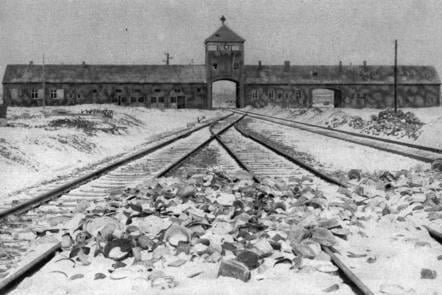
We’ll look at the cultural and mental processes that paved the way to the comprehensive and systematic mass murder of Jews in Europe – that is, the Final Solution. As part of this hard lesson we will discuss the various characteristics of the murder sites and death camps, and reveal selected aspects of the horror that occurred in them.

Week 2: Jewish and Non-Jewish Responses to the Holocaust
We will try to explore questions regarding knowledge about the application of the Final Solution, as well as a variety of responses and annihilation of victims, local populations and perpetrators.

Week 3: The End of the War
We will dedicate this lesson to the events that occurred in the last years of the Holocaust, as well as questions of memory, commemoration and future research.

We strongly recommend that you register for The Holocaust: an Introduction - Part 1 as well. Taking both parts of the course would enable you to obtain a fuller and more comprehensive knowledge about The Holocaust.
This online course is offered in an innovative, multi-level format, comprising:

  • Comprehensive lectures by leading researchers from Tel Aviv University and Yad Vashem.
  • A wealth of voices and viewpoints presented by guest lecturers.
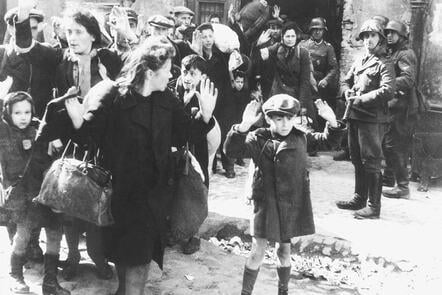
  • Numerous documents, photos, testimonies and works of art from the time of the Holocaust.
  • Novel learning experience: Crowdsourcing – involving the learners themselves in the act of collecting and shaping information, via unique, exciting online assignments.
Go to Class
MOOC List is learner-supported. When you buy through links on our site, we may earn an affiliate commission.

Related Courses

Photographing the Holocaust (FutureLearn) FutureLearn
The University of Nottingham

Photographing the Holocaust (FutureLearn)

What insights do photos offer into histories of National Socialism and the Holocaust? Are they authentic sources, or ‘fake news’? Learn to decode photos and visit secret archives for a new view of history. This course, created by academics from Nottingham and the UK’s National Holocaust Centre and Museum, invites you on a visual journey of discovery.

Oct 11th 2021
3 Weeks
Religions From The Inside: Improving Interreligious Dialogue (FutureLearn) FutureLearn
Università della Svizzera italiana

Religions From The Inside: Improving Interreligious Dialogue (FutureLearn)

Explore the value of cooperation between faiths and learn how the five main world religions’ core beliefs relate to each other. Learn how to encourage and benefit from respectful interfaith dialogue. This short course, led by the Faculty of Theology of Lugano in collaboration with USI, will develop your knowledge of what interfaith dialogue means from a philosophical and epistemological point of view, and teach how to enjoy productive interfaith dialogue.

Oct 4th 2021
5-12 Weeks
Arch of Titus: Rome and the Menorah (Coursera) Coursera
Yeshiva University

Arch of Titus: Rome and the Menorah (Coursera)

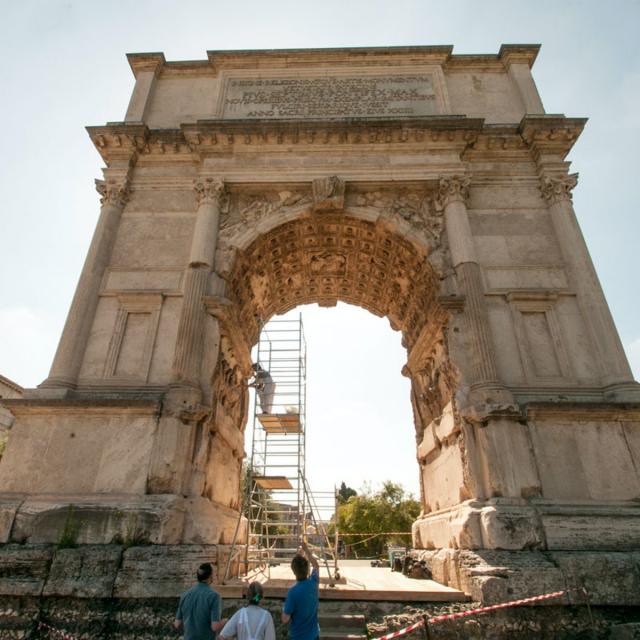
The Arch of Titus: Rome and the Menorah explores one of the most significant Roman monuments to survive from antiquity, from the perspectives of Roman, Jewish and later Christian history and art. The Arch of Titus commemorates the destruction of Jerusalem by the emperor Titus in 70 CE, an event of pivotal importance for the history of the Roman Empire, of Judaism, of Christianity and of modern nationalism. Together with your guide, Professor Steven Fine, you will examine ancient texts and artifacts, gaining skills as a historian as you explore the continuing significance of the Arch of Titus from antiquity to the very present.

Sep 28th 2026
5-12 Weeks
The Holocaust - An Introduction (II): The Final Solution (Coursera) Coursera
Tel Aviv University,Yad Vashem

The Holocaust - An Introduction (II): The Final Solution (Coursera)

The Holocaust was an inconceivable historical event, which forever robbed Western culture of its innocence. As civilized human beings, we fail to understand how events of such horror could have taken place, and how an idea so inhumanly warped could have spread like wildfire through an entire continent, instigating the systematic annihilation of millions of Jews.

Oct 5th 2026
3 Weeks
Religion, Conflict and Peace (edX) EdX
HarvardX,Harvard University

Religion, Conflict and Peace (edX)

Explore the diverse and complex roles that religions play in both promoting and mitigating violence. In this course, we will explore a series of contemporary conflicts in different regions of the world with a special focus on identifying and analyzing the diverse and complex roles that religions play in both promoting and mitigating violence in each context.

Self Paced
Self-Paced
From World War to White Heat: the RAF in the Cold War (FutureLearn) FutureLearn
Royal Holloway, University of London

From World War to White Heat: the RAF in the Cold War (FutureLearn)

Explore the role that the Royal Air Force played in the Cold War through the collections of the RAF Museums at Hendon and Cosford. This free online course is a collaboration between the Royal Air Force (RAF) Museums and the Department of History at Royal Holloway, University of London. It will introduce you to some of the major turning points in the history of Britain in the post-1945 era.

Self Paced
5-12 Weeks
Teaching the Holocaust: Innovative Approaches to the Challenges We Face (FutureLearn) FutureLearn
University College London,Yad Vashem

Teaching the Holocaust: Innovative Approaches to the Challenges We Face (FutureLearn)

Explore history, delve into pedagogical challenges revealed by research, and find practical solutions for teaching the Holocaust. The Holocaust was the murder of approximately 6 million Jews perpetrated by Nazi Germany and its collaborators. That this atrocity proved possible raises many complex questions which remain relevant for young people today.

Self Paced
3 Weeks
Antisemitism: From Its Origins to the Present (FutureLearn) FutureLearn
Yad Vashem

Antisemitism: From Its Origins to the Present (FutureLearn)

Join 50 leading scholars in exploring antisemitism, from its roots to its contemporary forms. In this course, 50 leading scholars from all over the world will explore questions and issues relating to antisemitism including: what is antisemitism? How has it changed throughout history? Why can it be found among so many diverse cultures, and even among opposing ideologies? What happened to antisemitism after the Holocaust? How is antisemitism expressed today, and what are the main spheres in which it can be found?

Nov 8th 2021
5-12 Weeks
Genealogy: Researching Your Family Tree (FutureLearn) FutureLearn
University of Strathclyde

Genealogy: Researching Your Family Tree (FutureLearn)

Dive into your family ancestry and learn how to create a family tree on this online genealogy course. Discover the basics of genealogy and build your own family tree. Have you ever wondered about your family ancestry or wanted to create a family tree of your own? On this 6-week genealogy course for beginners, you’ll learn how to uncover the past and record your family history. The information on this course does not apply to just one country, so you can learn about your family lineage no matter where you’re from.

Self Paced
5-12 Weeks
Western Religions & Ecology (Coursera) Coursera
Yale University

Western Religions & Ecology (Coursera)

At first glance the fields of religion and ecology may seem and unlikely pairing, but a deeper consideration reveals the two have a great deal to contribute to one another and are indeed inextricably linked. Religions recognize the unity and interdependence of humans with nature. Ecological sciences affirm this deep interconnection with the natural world. This partnership can inspire work for the wellbeing of the Earth community

Sep 28th 2026
5-12 Weeks