The Holocaust: an Introduction - Part 1 (FutureLearn)

Offered by Tel Aviv University,
The Holocaust: an Introduction - Part 1 (FutureLearn)

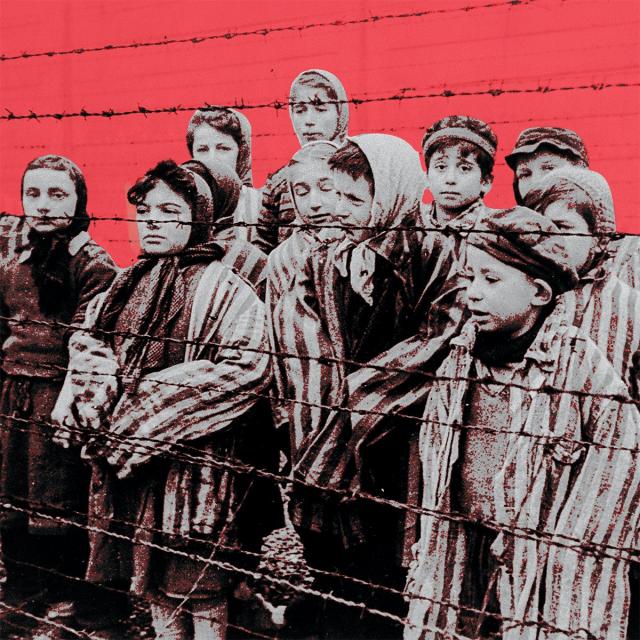
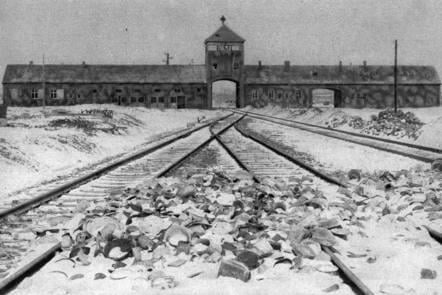
Part 1 of 2. This course depicts the complex history of the Holocaust, highlighting its impact on our world today. The Holocaust was an inconceivable historical event, which forever robbed Western culture of its innocence. As civilized human beings, we fail to understand how events of such horror could have taken place, and how an idea so inhumanly warped could have spread like wildfire through an entire continent, instigating the systematic annihilation of millions of Jews.

Class Deals by MOOC List - Click here and see FutureLearn's Active Discounts, Deals, and Promo Codes.

This free online course was produced jointly by Tel Aviv University and Yad Vashem – the World Center for Holocaust Research. The course tracks the history of the Holocaust and has two parts. The Holocaust: an Introduction - Part 1 is the first of the two courses and covers the following themes in its three weeks:

Week 1: From Hatred to Core Ideology
We will try to delve into Nazi ideology and the special place of Jews and Judaism in it. We will also discuss how the National Socialist Party converted the German Democracy of the Weimar Republic into a totalitarian regime within a short period of time, and its meaning for Jews and non-Jewish citizens.

Week 2: The World and the Jews in World War II
We will try to examine the broader contexts of the Holocaust and to place it, as part of World War 2. In this meeting we will also refer to the vital Jewish world to be found under various Nazi occupations and influences.

Week 3: The Isolation Abyss - the Perspective of the Individual
We will try to reveal different aspects of Jewish life in the face of the badge of shame, ghettos and segregation, as well as the formation of individual, societies’ and leader’s reactions in the face of a consistent policy of dispossession and discrimination.

Once you’ve completed this course, you can continue your learning with The Holocaust: an Introduction - Part 2.
This online course is offered in an innovative, multi-level format, comprising:

  • Comprehensive lectures by leading researchers from Tel Aviv University and Yad Vashem.
  • A wealth of voices and viewpoints presented by guest lecturers.
  • Numerous documents, photos, testimonies and works of art from the time of the Holocaust.
  • Novel learning experience: Crowdsourcing – involving the learners themselves in the act of collecting and shaping information, via unique, exciting online assignments.
Go to Class
MOOC List is learner-supported. When you buy through links on our site, we may earn an affiliate commission.

Related Courses

Irish 102: An Introduction to Irish Language and Culture (FutureLearn) FutureLearn
Dublin City University

Irish 102: An Introduction to Irish Language and Culture (FutureLearn)

Find out how to speak, write and understand basic words, phrases and dialogues in Irish. Develop your knowledge of the basics of the Irish language. Ireland is home to one of the oldest living languages in Europe. On this course, you’ll improve your understanding of basic spoken words, phrases and dialogues in Irish.

Jan 8th 2024
4 Weeks
The History of Modern Israel – Part I: From an Idea to a State (Coursera) Coursera
Tel Aviv University

The History of Modern Israel – Part I: From an Idea to a State (Coursera)

How did the State of Israel come to be? How is it that an idea, introduced in 19th century Europe, became a reality? And how does that reality prevail in the harsh complexities of the Middle East? Presented by Professor Eyal Naveh, with additional units from Professor Asher Sussers' "The Emergence of the Modern Middle East" course, This course will take you on a journey through the history of Modern Israel. In this 1st part of the course we will explore: How did the 19th century idea of a Jewish state become a reality? So the next time you hear about Israel in the news, you will be informed enough about the history of this area to comprehend the many sides and narratives that interact to shape the complex reality of Israel today.

Jun 1st 2026
3 Weeks
The Holocaust - An Introduction (II): The Final Solution (Coursera) Coursera
Tel Aviv University,Yad Vashem

The Holocaust - An Introduction (II): The Final Solution (Coursera)

The Holocaust was an inconceivable historical event, which forever robbed Western culture of its innocence. As civilized human beings, we fail to understand how events of such horror could have taken place, and how an idea so inhumanly warped could have spread like wildfire through an entire continent, instigating the systematic annihilation of millions of Jews.

May 18th 2026
3 Weeks
Religion, Conflict and Peace (edX) EdX
HarvardX,Harvard University

Religion, Conflict and Peace (edX)

Explore the diverse and complex roles that religions play in both promoting and mitigating violence. In this course, we will explore a series of contemporary conflicts in different regions of the world with a special focus on identifying and analyzing the diverse and complex roles that religions play in both promoting and mitigating violence in each context.

Self Paced
Self-Paced
Exploring Stone Age Archaeology: The Mysteries of Star Carr (FutureLearn) FutureLearn
University of York

Exploring Stone Age Archaeology: The Mysteries of Star Carr (FutureLearn)

Discover Star Carr, one of the world's most important archaeological sites, and learn what life was like over 10,000 years ago. Learn about the incredible discoveries at Star Carr. Star Carr is one of Britain’s most important archaeological sites. Because of extraordinary conditions of survival, we have uncovered the oldest known house in Britain, the earliest evidence of carpentry in Europe and the oldest complete bow in the world. These and other discoveries help us interpret what life might have been like over 10,000 years ago.

May 30th 2022
4 Weeks
Corpus Linguistics: Method, Analysis, Interpretation (FutureLearn) FutureLearn
Lancaster University

Corpus Linguistics: Method, Analysis, Interpretation (FutureLearn)

Get a practical introduction to the methodology of corpus linguistics for researchers in the social sciences and humanities. Learn how to build and query corpora in this practical course On this course, you’ll get a practical introduction to corpus linguistics, an extremely versatile methodology of language analysis using computers.

Sep 16th 2024
5-12 Weeks
Burgos: Deciphering Secrets of Medieval Spain (Coursera) Coursera
University of Colorado System

Burgos: Deciphering Secrets of Medieval Spain (Coursera)

This advanced course focuses on two primary goals: (1) appraising how Jews, Christians, and Muslims shaped the history of medieval Spain and (2) mastering the craft of Spanish paleography, the skill of identifying Spanish handwriting in the 11th- through 15th-century manuscripts. Through the lens of the medieval history of Burgos, we dedicate 75% percent of our efforts to developing pragmatic expertise in the interpretation of Carolingian/French/Gothic handwriting.

Jun 24th 2024
5-12 Weeks
Radical Spirituality: the Early History of the Quakers (FutureLearn) FutureLearn
Lancaster University,Woodbrooke Quaker Study Centre

Radical Spirituality: the Early History of the Quakers (FutureLearn)

Learn about the beginnings of this radical religious group as it emerged in 17th century England, with this free online course. When you think of the Quakers, it might bring to mind porridge oats, or pacifism, or perhaps prison reform. But there is much much more to the Quakers than any of these things. Through this course, we will be finding out about what lies at the heart of Quaker beginnings, who its main characters were, and how in a few weeks during the summer of 1652 the Quaker movement was formed in the north of England.

Jan 24th 2022
3 Weeks
Jewish Diaspora in Modern China (Coursera) Coursera
Nanjing University

Jewish Diaspora in Modern China (Coursera)

Jewish Diaspora in China is a unique experience for world Jewry, as China is the only country in Far East that has had Jews living in its society for over 1,000 years. Documentary evidence shows that Jews started to live in China no later than the Tang Dynasty (618–907). The famous Kaifeng Jewish community, which was established in Kaifeng, the Chinese capital of the Song Dynasty (960-1279), is but a best-known example.

No upcoming session
5-12 Weeks