The Qur'an Between Judaism and Christianity (FutureLearn)

The Qur'an Between Judaism and Christianity (FutureLearn)

Get an introduction to the history of the Qur'an, and its relationship with Judaism and Christianity. Explore the relationship between the Qur'an, Judaism and Christianity. This online course will illustrate how the Qur’an situates itself as part of, and as a correction to, the religious discourse of the Jewish and Christian communities of Late Antique Arabia.

Class Deals by MOOC List - Click here and see FutureLearn's Active Discounts, Deals, and Promo Codes.

The course will use the Qur’an, as well as Jewish and Christian historical documents, to reconstruct the religious landscape to which the Muslim scripture reacts in a pointed, precise and nuanced way.
This will give you a historically more informed understanding of nascent Islam, and will allow you to reconsider many of theological and cultural tenets of Late Antique Judaism and Christianity.

What topics will you cover?

  • Traditional and Western approaches to the Qur’an
  • Arabia in Late Antiquity
  • Judaism and Christianity from the first to the seventh century
  • The Qur’an and the Hebrew Bible
  • The Qur’an and the New Testament
  • Law and ritual purity in the Bible, Judaism, Christianity, and in the Qur’an
  • The Qur’an, Judaism and Christianity

What will you achieve?
By the end of the course, you'll be able to...

  • Compare aspects of the Qur'an's message to Jewish and Christian teachings of Late Antiquity
  • Reflect on some of the similarities and on some of the differences between the Qur'an, Judaism, and Christianity
  • Assess some of the historical reasons for the contemporary misconceptions of nascent Islam
  • Collaborate with others on broadening your historical knowledge
  • Debate historical aspects of religion with people from various backgrounds
  • Interpret select Qur'anic passages in dialogue with the Jewish and the Christian tradition
  • Explore the opportunities and the limitations of "traditional" and "Western" approaches to the Qur'an
  • Identify helpful methods of reading the Qur'an historically, comparatively, and respectfully
Go to Class
MOOC List is learner-supported. When you buy through links on our site, we may earn an affiliate commission.

Related Courses

Maqasid Al-Shariah and Sustainable Development (FutureLearn) FutureLearn
University of Malaya

Maqasid Al-Shariah and Sustainable Development (FutureLearn)

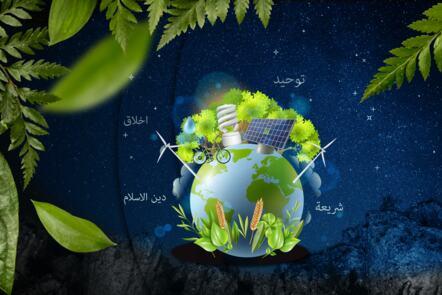
Discover how religion, particularly Islamic teachings, and scientific knowledge can work together towards sustainable solutions. Use a blend of religion and science to explore sustainability. Sustainable Development is one of the most comprehensive worldwide concepts today in the quest to safeguard the environment. This principle of sustainability has been discovered to be intrinsically linked to the concept of Shariah, which emphasises the importance of continuity not just in this world, but also in the afterlife.

Self Paced
3 Weeks
Jewish Diaspora in Modern China (Coursera) Coursera
Nanjing University

Jewish Diaspora in Modern China (Coursera)

Jewish Diaspora in China is a unique experience for world Jewry, as China is the only country in Far East that has had Jews living in its society for over 1,000 years. Documentary evidence shows that Jews started to live in China no later than the Tang Dynasty (618–907). The famous Kaifeng Jewish community, which was established in Kaifeng, the Chinese capital of the Song Dynasty (960-1279), is but a best-known example.

No upcoming session
5-12 Weeks
Introduction to the Quran: The Scripture of Islam (edX) EdX
University of Notre Dame,NotreDameX

Introduction to the Quran: The Scripture of Islam (edX)

Discover the themes of the Quran, its role within Islam, meaning to Muslims, and relationship with the Bible. According to Islamic tradition, the Quran is not simply an inspired scripture. It is a divine book brought down from heaven by the angel Gabriel to the Prophet Muhammad, and its message is the key to heaven. Join us for an exploration of the scripture that is the word of God to over a billion people.

No sessions available
5-12 Weeks
The Holocaust - An Introduction (II): The Final Solution (Coursera) Coursera
Tel Aviv University,Yad Vashem

The Holocaust - An Introduction (II): The Final Solution (Coursera)

The Holocaust was an inconceivable historical event, which forever robbed Western culture of its innocence. As civilized human beings, we fail to understand how events of such horror could have taken place, and how an idea so inhumanly warped could have spread like wildfire through an entire continent, instigating the systematic annihilation of millions of Jews.

Oct 5th 2026
3 Weeks
Teaching the Holocaust: Innovative Approaches to the Challenges We Face (FutureLearn) FutureLearn
University College London,Yad Vashem

Teaching the Holocaust: Innovative Approaches to the Challenges We Face (FutureLearn)

Explore history, delve into pedagogical challenges revealed by research, and find practical solutions for teaching the Holocaust. The Holocaust was the murder of approximately 6 million Jews perpetrated by Nazi Germany and its collaborators. That this atrocity proved possible raises many complex questions which remain relevant for young people today.

Self Paced
3 Weeks
Shakespeare's The Merchant of Venice: Shylock (edX) EdX
HarvardX,Harvard University

Shakespeare's The Merchant of Venice: Shylock (edX)

An exploration of the magnetic and ambivalent character of Shylock in William Shakespeare’s The Merchant of Venice. In the first act of William Shakespeare’s The Merchant of Venice , the Jewish moneylender Shylock proposes a “merry sport” to the merchant Antonio: he will lend Antonio the money he needs if Antonio agrees to let Shylock take a pound of his flesh should he default. Shylock calls this contract a “merry bond,” and Shakespeare’s First Folio calls the play a comedy. But what does Shylock want from the bond, and how merry does the play ultimately prove?

Self Paced
Self-Paced
Coexistence in Medieval Spain: Jews, Christians, and Muslims (Coursera) Coursera
University of Colorado System

Coexistence in Medieval Spain: Jews, Christians, and Muslims (Coursera)

This course explores Jewish, Christian, and Muslim intercultural relations in Iberia from the Visigothic era (6th century CE) until the creation of Queen Isabel I and King Ferdinand II Catholic Spain (late 15th century). We evaluate the many identities of the peninsula known as Christian Hispania, Jewish Sefarad, and Islamic al-Andalus. We trace the origins and trajectory of conflict between these communities (the Muslim conquest of Spain, Christian Reconquista, prohibitions blocking intermixing of peoples, and expulsions).

Sep 14th 2026
5-12 Weeks
Western Religions & Ecology (Coursera) Coursera
Yale University

Western Religions & Ecology (Coursera)

At first glance the fields of religion and ecology may seem and unlikely pairing, but a deeper consideration reveals the two have a great deal to contribute to one another and are indeed inextricably linked. Religions recognize the unity and interdependence of humans with nature. Ecological sciences affirm this deep interconnection with the natural world. This partnership can inspire work for the wellbeing of the Earth community

Sep 14th 2026
5-12 Weeks
Christianisme et philosophie dans l’Antiquité (edX) EdX
Sorbonne University

Christianisme et philosophie dans l’Antiquité (edX)

Présentation des relations entre le christianisme et la philosophie dans l’Antiquité grecque et romaine. Le christianisme s’oppose-t-il à la raison philosophique ? Ce questionnement d’ordre général peut trouver une première réponse dans l’étude historique de la confrontation entre christianisme et philosophie dans l’Antiquité. Cette confrontation a joué un rôle très important dans la constitution de la doctrine chrétienne.

No sessions available
5-12 Weeks
Christianity Through Its Scriptures (edX) EdX
HarvardX,Harvard University

Christianity Through Its Scriptures (edX)

Learn about Christianity through a study of its sacred scriptures. We will explore how diverse Christians have interpreted these writings and practiced their teachings over a 2000 year, global history. Christianity is a global religion. From modest beginnings 2,000 years ago, it has grown to encompass nearly a third of the human population. Diverse in languages, cultures, histories and creeds, Christians nonetheless share a common collection of sacred scripture called the Bible.

Self Paced
Self-Paced