Odesa: Jews in the Modern World (Coursera)

Odesa: Jews in the Modern World (Coursera)

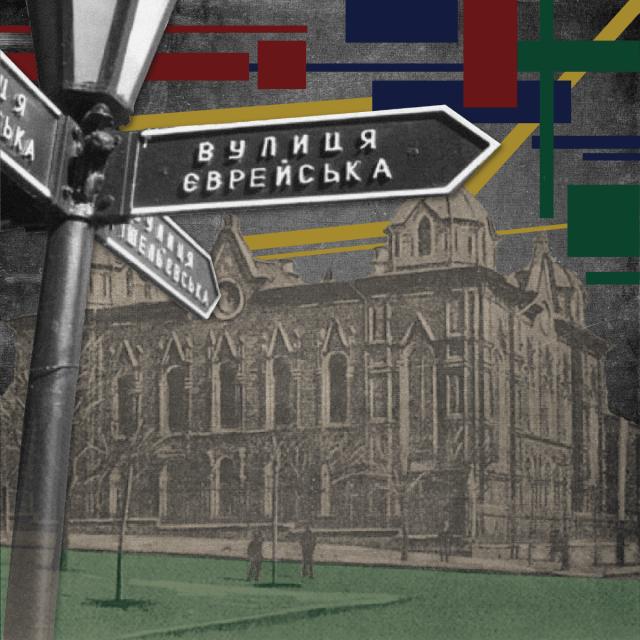
In this course, Peter Kenez and Murray Baumgarten, both emeritus professors at UC Santa Cruz, tell the story of the Jews of the Black Sea port of Odesa. Kenez and Baumgarten include music, literature, and history in their analysis of a city like no other. The course is for anyone with an interest in the history and culture of the Jewish people.

Class Deals by MOOC List - Click here and see Coursera's Active Discounts, Deals, and Promo Codes.

Syllabus

WEEK 1
Lecture 1: A city like no other
In this first lecture, Professors Kenez & Baumgarten describe life in Odesa circa 1850-1930, a port city in Ukraine that was a dynamic opportunity zone for its Jewish population. They also introduce Jewish virtuosos Bialik, Babel, and other writers and artists of Odesa.

WEEK 2
Lecture 2: Jewish life in the Russian Empire
Professor Kenez discusses the lives of Jews in the Pale of the Settlement, demographic changes, and the impact of industrialization on Jews in late 19th-century Russia.

WEEK 3
Lecture 3: Modernism & Internationalism
Professor Baumgarten discusses Babel’s short story “Gedali,” the intercultural lives of Jewish virtuosos, and the impact of modernism and internationalism on their creative output.

WEEK 4
Lecture 4: Antisemitism in the Russian Empire
Professor Kenez discusses programs, varieties of antisemitism, and the Protocols of the Elders of Zion.

WEEK 5
Lecture 5: Jewish achievement in the modern world
Professor Kenez discusses the culture, skills, and talents that Jews used to achieve something extraordinary in the modern world. He focuses on the development Jewish working and entrepreneurial classes, the advent of the Bund (the Jewish Labor Force), and the onset of the Revolution and Russian Civil War.

WEEK 6
Lecture 6: Jewish virtuosity
Professor Baumgarten discusses Babel’s stories about growing up in Odesa where, for a brief window of time, Jews could have a better life than anywhere else in the Russian Empire. Simultaneously this was a dangerous and contested social space.

WEEK 7
Lecture 7: Revolution & Civil War
In this final letcure, Professors Kenez & Baumgarten discuss the role and fates of Jews during the Russian Revolution and Civil War.

WEEK 8
Final Project: A Postcard from Odesa
Learners will compete a peer reviewed final project: "A Postcard from Odesa"

Go to Class
MOOC List is learner-supported. When you buy through links on our site, we may earn an affiliate commission.

Related Courses

Magna Carta and its Legacies: Freedom and protest (Coursera) Coursera
University of London

Magna Carta and its Legacies: Freedom and protest (Coursera)

This course examines the roles that Magna Carta has played historically as well as the importance of Magna Carta today. It aims to equip students with a critical understanding of Magna Carta and its significance around the globe. Students will find out what Magna Carta is, how it came about, and why many believe that it remains one of the most significant documents in history.

Sep 21st 2026
5-12 Weeks
Egiptología (Egyptology) (Coursera) Coursera
Universitat Autònoma de Barcelona

Egiptología (Egyptology) (Coursera)

¿Sientes curiosidad por la civilización del antiguo Egipto? ¿Eres un apasionado de su cultura e historia? En este curso nos acercaremos a los templos de los antiguos faraones, a sus complejos funerarios, a sus ciudades, a su escritura jeroglífica, a su religión y a muchos otros aspectos de esta gran civilización.

Sep 28th 2026
5-12 Weeks
Arch of Titus: Rome and the Menorah (Coursera) Coursera
Yeshiva University

Arch of Titus: Rome and the Menorah (Coursera)

The Arch of Titus: Rome and the Menorah explores one of the most significant Roman monuments to survive from antiquity, from the perspectives of Roman, Jewish and later Christian history and art. The Arch of Titus commemorates the destruction of Jerusalem by the emperor Titus in 70 CE, an event of pivotal importance for the history of the Roman Empire, of Judaism, of Christianity and of modern nationalism. Together with your guide, Professor Steven Fine, you will examine ancient texts and artifacts, gaining skills as a historian as you explore the continuing significance of the Arch of Titus from antiquity to the very present.

Sep 28th 2026
5-12 Weeks
The Emergence of the Modern Middle East - Part I (Coursera) Coursera
Tel Aviv University

The Emergence of the Modern Middle East - Part I (Coursera)

This course will review the emergence of the modern Middle East from the fall of the Ottoman Empire, at the end of the First World War to the present. We will discuss the Ottoman legacy in the region and the Western imperial impact on the creation of the Arab state system. The course will review the rise and retreat of Arab nationalism, the problems of internal cohesion of the Arab states, issues of religion and state, and the evolution of Islamist politics. We will also focus on the evolution of the Arab-Israeli conflict and its impact on the region and will conclude with an in depth analysis of the “Arab Spring” by placing these contemporary revolutionary events in their historical context.

Sep 21st 2026
4 Weeks
Introduction to Ancient Egypt and Its Civilization (Coursera) Coursera
University of Pennsylvania

Introduction to Ancient Egypt and Its Civilization (Coursera)

Colossal pyramids, imposing temples, golden treasures, enigmatic hieroglyphs, powerful pharaohs, strange gods, and mysterious mummies are features of Ancient Egyptian culture that have fascinated people over the millennia. The Bible refers to its gods, rulers, and pyramids. Neighboring cultures in the ancient Near East and Mediterranean wrote about its god-like kings and its seemingly endless supply of gold. The Greeks and Romans describe aspects of Egypt's culture and history.

Sep 21st 2026
5-12 Weeks
History of Rock, Part Two (Coursera) Coursera
University of Rochester

History of Rock, Part Two (Coursera)

This course, part 2 of a 2-course sequence, examines the history of rock, primarily as it unfolded in the United States, from the early 1970s to the early 1990s. This course covers the music of Led Zeppelin, the Allman Brothers, Carole King, Bob Marley, the Sex Pistols, Donna Summer, Michael Jackson, Madonna, Prince, Metallica, Run-DMC, and Nirvana, and many more artists, with an emphasis both on cultural context and on the music itself. We will also explore how developments in the music business and in technology helped shape the ways in which styles developed.

Sep 28th 2026
5-12 Weeks
Introduction to Who Wrote Shakespeare (Coursera) Coursera
University of London,Goldsmiths, University of London

Introduction to Who Wrote Shakespeare (Coursera)

This free course from the University of London explores critical thinking, and the interpretation of texts, through the Shakespeare authorship question. Using doubt about Shakespeare’s authorship as our playground, we will explore the key concept of authorship attribution, while developing skills in literary analysis, interpretation, and argument. Through forensic exploration of key texts, you will learn why Shakespeare’s authorship is questioned, and what evidence is cited on both sides of the debate.

Sep 21st 2026
4 Weeks
Soul Beliefs: Causes and Consequences - Unit 2: Belief Systems (Coursera) Coursera
Rutgers University

Soul Beliefs: Causes and Consequences - Unit 2: Belief Systems (Coursera)

Throughout history, the vast majority of people around the globe have believed they have, however defined, a “soul.” While the question of whether the soul exists cannot be answered by science, what we can study are the causes and consequences of various beliefs about the soul and its prospects of surviving the death of the body. Why are soul and afterlife beliefs so common in human history? Are there adaptive advantages to assuming souls exist?

Sep 28th 2026
5-12 Weeks
Chinese Culture and Contemporary China (Coursera) Coursera
Nanjing University

Chinese Culture and Contemporary China (Coursera)

This course of Chinese Culture and Contemporary China will explore the foundations of Chinese civilization and the dimensions of Chinese culture. It will pay particular attention to the relationship between Chinese culture and the present-day life of the Chinese people and to the different elements of the culture which are under the present social structures, belief systems, literature, arts, customs, etc. The course aims at providing students with a deeper knowledge of Chinese culture, thus enabling them to better understand China.

Sep 21st 2026
5-12 Weeks