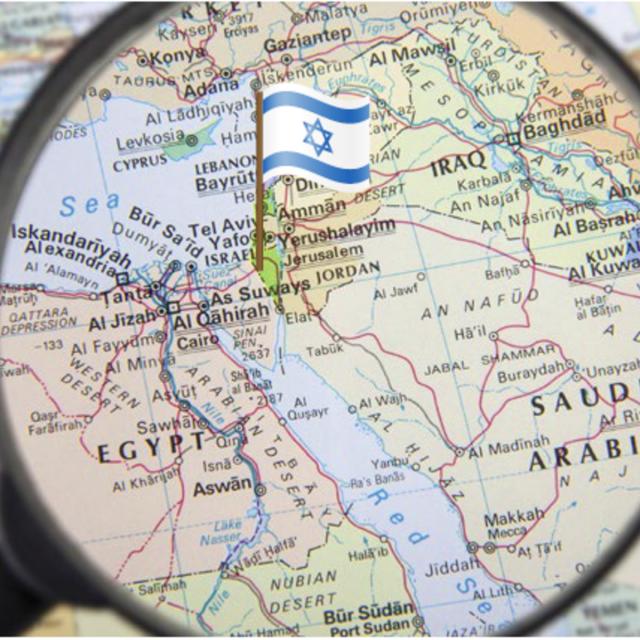
Israel is a country that draws a lot of public attention around the globe. Nevertheless, both those who support Israel and those who are critical of its geopolitical standing and policies, usually have a very limited knowledge about the Israeli society and its political system. This course presents Israel from multiple perspectives - political, social, economic and cultural - in an attempt to expose the learners to a cutting edge academic research on the country.
Class Deals by MOOC List - Click here and see Coursera's Active Discounts, Deals, and Promo Codes.
Each of the 13 sessions is focused on one aspect of the Israeli society. Every session starts with a general introduction of the issue at hand, hosting one expert or more, who share their most recent studies and insights on that specific field. Every 15 minutes, or so, the students are asked to answer an informative quiz of comprised of a single question. Upon the completion of each class, an online chat will be opened. Students studying for credit are expected to participate in it, ask relevant questions and answer questions about the required readings for this class.
Students will graduate from this course with a better understanding of the Israeli society, better knowledge of the Israeli history, politics and economy, and better acquaintance with the varying groups of which the Israeli society is comprised.
Syllabus
WEEK 1
Introduction
Israel is a country that draws a lot of public attention around the globe. Nevertheless, both those who support Israel and those who are critical of its geopolitical standing and policies, usually have a very limited knowledge about the Israeli society and its political system. This course presents Israel from multiple perspectives - political, social, economic and cultural - in an attempt to expose the learners to a cutting edge academic research on the country. Each of the 13 sessions is focused on one aspect of the Israeli society. Every session starts with a general introduction of the issue at hand, hosting one expert or more, who share their most recent studies and insights on that specific field. Every 15 minutes, or so, the students are asked to answer an informative quiz of comprised of a single question. Upon the completion of each class, an online chat will be opened. Students studying for credit are expected to participate in it, ask relevant questions and answer questions about the required readings for this class.
WEEK 2
Zionism - The ideological roots of Israel's state and society
The state of Israel was established in 1948, as the nation state of the Jewish people. Yet, many of its current features can be traced back to the Jewish religious longing to return to Zion (or Jerusalem), and to the national political movement known as Zionism. In our first lesson we go back to the origins of the Zionist ideology and the political institutions it generated and examine how they have shaped Israeli society over the years with a special interest in the Zionist vision of Theodor Herzl.
WEEK 3
Building a nation, constructing a memory: on sacred time and space in the Israeli society
Zionism has brought together Jews from different countries, all over the world; Jews who have lived in this territory for generations, and the Arab inhabitants of the land. These groups have differed in their history, national narratives, and vision for the future of the country. They spoke different languages, and told their children different stories about the things that connect them to the land. This class tells the story of the nation building process and the (partially) successful quest to construct a national identity in this divided society.
WEEK 4
Who are the Israelis – Demographic dynamics and their social consequences
This session presents the different groups comprising the Israeli society, and the changes in their composition over time. It also presents what had been considered the "demographic problem," and the reasons for the country's high fertility rates.
WEEK 5
Israel's political system
The Israeli political system reflects the country’s complex social mosaic and contested history. This class provides the foundation for a better understanding of Israel's political system and its institutions.
WEEK 6
Israel in the Middle East – War and peace
This session will offer a brief historical overview of Israel's place in the Middle East. It tries to highlight the main dynamics, which keep feeding the Jewish-Arab conflict.
WEEK 7
Israel as a Jewish state - Can a state be both Jewish and democratic?
The lecture addresses the appellation "Jewish and Democratic State" from a variety of perspectives and disciplines: historical, political, philosophical, and theological ones. A special focus is place on the way gender outplays in the country, given its Jewish nature.
WEEK 8
Jewish-Arab relations in Israel – Conflicts and integration
Arab-Palestinian citizens constitute the largest national minority in Israel. Despite the formal and legal integration into the Israeli society of the Arab residents, security concerns and doubts regarding their loyalty to the new state, have shaped the complex relationships between the Arab minority, the Jewish majority, and the state, throughout the years. This class discusses the history of the Arab minority in Israel and its contemporary state
WEEK 9
A society of immigrants – multiculturalism and social stratification
Israel is a society of immigrants. It was shaped by waves of Jewish immigration beginning in the late 19th century. At first, most if the immigrants arrived from Eastern and central Europe. After the founding of the state, however, waves of immigrants from the Middle East and North Africa have transformed Israel's social and cultural fabric. In the following decades, new waves of immigration from Ethiopia and the former Soviet Union have continued to add to the social complexity of Jewish society. This class will address the internal cleavages within the Jewish majority in Israel, their socio-economic consequences and the state’s attempts to bridge cultural differences, and close the occupational and educational gaps between the groups. We will specifically focus on how one of those groups - the immigrants from North Africa, have culturally coped with the marginalization they have experienced in Israel through Saints' Impresarios.
WEEK 10
A nation in uniforms – the social consequences of the unending conflict
The military in Israel plays a crucial role in the country's politics, economy and society, due to its engagement in an ongoing armed conflict. Military service is universal for Jewish men and women. It is often the front door to the local labor market, allowing the upward mobility of some, and the exclusion of others. This lesson will examine the role of the IDF in shaping the Israeli society from two complementary perspectives: the role of the army in shaping gender identities; and its place in the production, reproduction and transformation of the social (ethnic and national) hierarchies.
WEEK 11
From state-building to neoliberalism: the role of the state in Israel’s economy
This session will present Israel's economy and its transformation from statist centralized economy to a neo-liberal one organized around its leading high-tech industry. It will explore the social consequences of this process in terms of growing inequality and recent social protest.
WEEK 12
Determinants of voting behavior in Israel
This session will address the question of voting in a society so riddled with external and internal conflicts, and in a political system offering so many options,: "how does the Israeli voter decide?" It will provide both sociological and psychological models of electoral behavior, examining the roles of social cleavages and political communication in determining votes.
WEEK 13
Is there an Israeli identity?
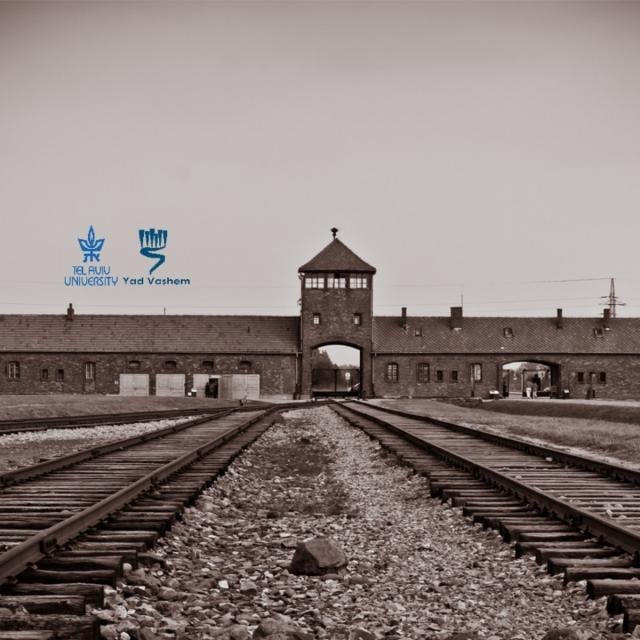
As a young society of immigrants and natives, the development of a relatively coherent and identifiable Israeli identity and culture seemed almost impossible. Yet, many Israelis and foreign commentators argue that such a distinct identity has indeed been created. In this lesson we will explore the swift evolution of an Israeli identity and culture. We will ask what are the origins of this identity and which groups are included (and which groups are marginalized) in its construction. We will consider the possibility that the Israeli culture revolves around cultural traumas associated both with the Holocaust and also, more deeply, with the Jewish predicament of persecution and exile. An analysis that sees Zionism as the solution for the existential fear that is associated with this collective trauma. We will also talk about trauma and its effects in contemporary politics.
WEEK 14
Jerusalem, the microcosms of Israeli society – History, politics and everyday life
Jerusalem is among the most contested cities in the world, characterized by an unremitting struggle for territorial control—neighborhood by neighborhood and even house-by-house. Juxtaposing the city history and its complex Geography, this class will tell the story of Jerusalem as a microcosms of the Israeli society and its place in the middle-east.