European Business Law: Understanding the Fundamentals (Coursera)

Offered by Lund University,
European Business Law: Understanding the Fundamentals (Coursera)

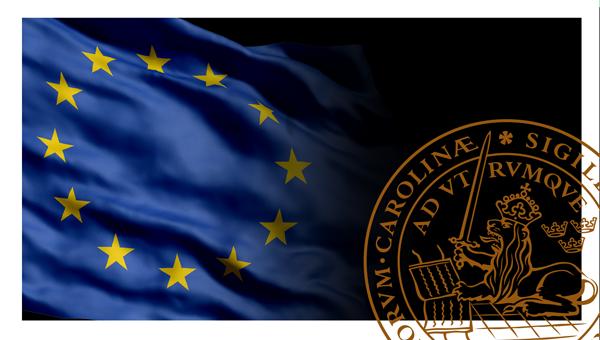
The European Union is one of the world’s largest and most important economies. This five week course is the first in a series of three that will provide students with an insight into European Business Law. The series ranges from considering the basic structures and principles of the European Union to focusing on various specialized areas of law. Each course will give the students an understanding of the laws and policies that regulate the internal market of European Union, as well as relevant case law and useful inputs from leading practitioners in the field.

Class Deals by MOOC List - Click here and see Coursera's Active Discounts, Deals, and Promo Codes.

At the end of this course series, you will have a basic understanding of how to:
• Navigate EU legal sources
• Understand relevant laws and regulations governing the internal European Union market
• Apply the fundamental principles of EU law within the EU legal framework
• Utilize the rules of freedom of movement and their impacts on trade in the EU
• Relate EU law with national laws
• Understand EU policies and their influence on foreign trade and investment
About the Series
In the first course, Understanding the Fundamentals, we will examine the core structures and principles of the European Union as well as the main sources of law. In the second course, Doing business in Europe, we will focus on the main laws that regulate various aspects of establishing and running a business within the European Union. In the final course, Competing in Europe, we will go into more depth about how to compete on the internal market and protect your brand, product or invention.
Syllabus and Format
Each course consists of a number of modules where one module represents about one week of work. A module includes a number of lectures and readings, and finishes with a voluntary assessment – a quiz, a small peer graded assignment or a case law review. The assessments are intended to encourage learning and ensure that you understand the material of the course. Participating in forum discussions is voluntary.
Course I - Understanding the Fundamentals
Module 1. Introduction to EU law
Module 2. Legal Method and Sources
Module 3. Constitutional Freedoms and Fundamental principles
Module 4. Freedom of Movement
Module 5. The External Dimension
Course II - Doing Business in Europe
Module 1. Making Business Transactions
Module 2. Establishing a Company
Module 3. Employing and Working in Europe
Module 4. Paying Taxes and Complying with Environmental Standards
Module 5. Case Clinic
Module 6. Resolving Cross-border Disputes
Course III - Competing in Europe
Module 1. Trademarks as Essential Assets
Module 2. Defending Patents
Module 3. Competition: Illegal Agreements
Module 4. Competition: Abuse of Dominance and Mergers
Module 5. Advocacy and Legal Writing
Module 6. Selling to the State and State Aid

Course 1 of 3 in the European Business Law Specialization

Syllabus

WEEK 1
Introduction to EU law
Welcome to the first week of Understanding the Fundamentals. This first module will help you to build a solid foundation for the coming lectures on EU law. The module provides a brief introduction to the history and the institutions of the EU, as well as the judicial branch i.e. the Court of Justice of the EU. The module will also go into some detail about the most fundamental EU treaties, namely the Treaty on the European Union (TEU) and the Treaty on the Functioning of the European Union (TFEU).

WEEK 2
Sources and Method
The second module will give you a practical introduction to the legal sources and method of EU law. It will provide you with some skills that are crucial when dealing with EU law, such as navigating the vast databases of official publications, legislation and case law. The module provides an overview of the available online resources and EU legal databases. It provides suggestions on how to search the official journals, including the case law of the ECJ. In addition, the module explains what treaties, regulations and directives actually are, and where to find them online. Keep in mind that the module can be used as reference if you continue your studies of European Business Law.

WEEK 3
Fundamental Principles
In the third module you will learn about the fundamental principles and constitutional foundations of EU Law. The dynamic and interaction of the national law of the Member States and the EU will be covered in some detail. This includes the three categories of competence – exclusive, shared and supporting. The effects of the exercise of competence are discussed, as well as relevant case law. A brief historical background is given to the principle of fundamental rights along with its application in contemporary Europe. Finally some of the main principles of EU law are discussed, including the principles of proportionality, non-discrimination and legal certainty.

WEEK 4
Enforcement of EU Law and Judicial Review
The fourth module covers the enforcement of EU law and judicial review. In the previous lectures, you have learned that the EU confers certain rights on individuals and companies and that the EU has certain powers conferred to it by the Member States. This module examines the essential question of how you – as an individual or as a company – are able to enforce your rights at a national level and how you can challenge a legislation through which the EU has acted outside of its conferred powers.

WEEK 5
The Economic Freedoms
Module 5 introduces the four freedoms, including free movement of services, goods, persons and capital. These economic freedoms are at the very heart of EU Law and crucial to understanding the law from a business perspective. The module considers the relevant legal provisions and the key case law. It continues to introduce the right to establishment and discusses the harmonisation of EU law in the national law of member states. In the end of this module you will be given the chance to do a peer graded assignment and earn an honors certificate. You will find the assignment under "Assessments."

WEEK 6
The External Dimension
Module 6 focuses on the common European foreign policy and its institutional setup. This is a complex field where the policies of the individual Member States and the EU overlap and interact. The external dimension is important for anyone conducting international trade or upholding relations with the EU. The division of competence is discussed in the module, followed by a review of the seven main EU institutions and players and their respective role relating to foreign policy. The module gives a thorough overview of the six fields in the external dimension of EU Law: Common commercial policy; EU development policy; Foreign and Security Policy; Security and Defence Policy; Energy Market; Freedom, Security and Justice. Finally, the module gives a brief history of the EEA Agreement, as well as its application.


Go to Class
MOOC List is learner-supported. When you buy through links on our site, we may earn an affiliate commission.

Related Courses

Corporate governance. Mitos y realidades (Coursera) Coursera
Universitat Autònoma de Barcelona

Corporate governance. Mitos y realidades (Coursera)

El corporate governance o gobierno corporativo es uno de los temas más relevantes de nuestro tiempo, tanto desde el punto de vista jurídico como económico. Se trata de una corriente universal, impulsada desde el ámbito anglosajón, pero fuertemente desarrollada en Europa y también en Iberoamérica, Asia o África.

Aug 10th 2026
4 Weeks
Internet Giants: The Law and Economics of Media Platforms (Coursera) Coursera
University of Chicago

Internet Giants: The Law and Economics of Media Platforms (Coursera)

Law

This seven-week course will explore the relationship between law and technology with a strong focus on the law of the United States with some comparisons to laws around the world, especially in Europe. Tech progress is an important source of economic growth and raises broader questions about the human condition, including how culture evolves and who controls that evolution. Technology also matters in countless other ways as it often establishes the framework in which governments interact with their citizens, both in allowing speech and blocking it and in establishing exactly what the boundaries are between private life and the government. And technology itself is powerfully shaped by the laws that apply in areas as diverse as copyright, antitrust, patents, privacy, speech law and the regulation of networks.

Aug 3rd 2026
5-12 Weeks
Global Health Policy (Coursera) Coursera
The University of Tokyo

Global Health Policy (Coursera)

In this course, learners will become familiar with principles and theories of global health problems, and major challenges and controversies in improving global population health as well as practical applications of quantitative methods to analyze and interpret issues and challenges for policy. Topics will include health and foreign policy, health governance, acute disease surveillance, non-communicable diseases, burden of disease, universal health coverage, health systems strengthening, health financing, and human resources for health and ageing.

Aug 10th 2026
4 Weeks
Helping Families Avoid Negative Court Involvement Teach-Out (Coursera) Coursera
Johns Hopkins University

Helping Families Avoid Negative Court Involvement Teach-Out (Coursera)

This course will teach learners how to understand when issues can become legal issues, encourage learners to recognize legal problems early, identify possible “legal soft spots” in their own situations, and act when issues are identified to avoid them escalating. This course will also teach and encourage learners to think preventatively and provide some tools to use with an eye toward preventing future legal issues.

Aug 3rd 2026
1 Week
International Water Law (Coursera) Coursera
University of Geneva

International Water Law (Coursera)

In recent decades, international law has undergone a series of major developments in order to accommodate the many new facets of freshwater management and protection. The adoption of universal, regional and basin instruments highlights how important it is to study the evolution of international water regulations and to be able to identify the main principles in this field. This course aims to provide the necessary background to understand and examine the regulation applicable to transboundary freshwaters especially to rivers, lakes and aquifers. It presents the principles and legal standards that govern the use, sharing, management and protection of these resources.

Jul 27th 2026
5-12 Weeks
La science forensique au tribunal: témoin digne de foi? (Coursera) Coursera
University of Lausanne

La science forensique au tribunal: témoin digne de foi? (Coursera)

L’objectif de ce cours est d’encourager la réflexion critique en ce qui concerne la « science forensique », également appelée police technique et scientifique ou criminalistique. À l’heure actuelle, de manière générale, la plupart des gens sont fascinés par les possibilités techniques qu’offre la police scientifique. Ils sont bercés par une certaine illusion que les preuves de la science forensique sont infaillibles et fournissent des résultats factuels sûrs à 100 %. Ce cours – dispensé par des spécialistes du domaine – dépasse l’image conventionnelle véhiculée par des séries télévisées comme « Les Experts ».

Aug 10th 2026
5-12 Weeks
ERPO: A Civil Approach to Gun Violence Prevention Teach-Out (Coursera) Coursera
Johns Hopkins University

ERPO: A Civil Approach to Gun Violence Prevention Teach-Out (Coursera)

Evidence shows that 1 life is saved for every 10-20 Extreme Risk Protection Orders (ERPOs) issued. ERPOs are legally issued civil orders that allow people on the front lines to ask a court to prevent a person at imminent risk of harm to themselves or others from purchasing or possessing firearms during a critical period of risk. As of October 2020, ERPO laws have been enacted by nineteen states and the District of Columbia and while some aspects differ by state, the general process for applying and issuing ERPOs are quite similar.

Jul 27th 2026
2 Weeks
Artificial Intelligence and legal issues (Coursera) Coursera
Politecnico di Milano

Artificial Intelligence and legal issues (Coursera)

The purpose of the course is to help students understand the legal implications related to the design and use of artificial intelligence systems, providing an overview of the risks and legal protections that can be envisaged and giving an overview of the legislation and legal principles currently applicable on the subject.

Aug 10th 2026
4 Weeks
Introduction to International Criminal Law (Coursera) Coursera
Case Western Reserve University

Introduction to International Criminal Law (Coursera)

From the Nuremberg trial to the case against Saddam Hussein, from the prosecution of Al-Qaeda terrorists to the trial of Somali pirates – no area of law is as important to world peace and security as international criminal law. Taught by one of the world’s leading experts in the field, this course will educate students about the fundamentals of international criminal law and policy. We will explore the contours of international crimes such as genocide, war crimes, terrorism, and piracy. We will examine unique modes of international criminal liability and specialized defenses. And we will delve into the challenges of obtaining custody of the accused and maintaining control of the courtroom.

Jul 27th 2026
5-12 Weeks
International Humanitarian Law in Theory and Practice (Coursera) Coursera
Leiden University,Kalshoven-Gieskes Forum

International Humanitarian Law in Theory and Practice (Coursera)

“International Humanitarian Law in Theory and Practice” is the first MOOC of the Kalshoven-Gieskes Forum on International Humanitarian Law, which is the platform within the Grotius Centre for International Legal Studies of Leiden University for the research, teaching and dissemination of international humanitarian law (IHL).

Aug 10th 2026
5-12 Weeks
Overcoming Dyslexia (Coursera) Coursera
Yale University

Overcoming Dyslexia (Coursera)

Dyslexia is everywhere, touching so many children and adults, and while science has made extraordinary progress in understanding and clarifying the condition, this incredible powerful knowledge rarely reaches those who most need to know and would greatly benefit from it. Our goal is to change all this with the Coursera you are about to view, produced by Dr. Sally Shaywitz, the Audrey G. Ratner Professor in Learning Development, both the leading scientist studying dyslexia and the most devoted advocate for helping those who are dyslexic.

Aug 8th 2026
5-12 Weeks
FinTech Law and Policy (Coursera) Coursera
Duke University

FinTech Law and Policy (Coursera)

Being a successful FinTech firm requires more than just great technology; it also requires an understanding of the laws and regulations applicable to your business. This course will provide you with that understanding. You will learn about the critical legal, regulatory, and policy issues associated with cryptocurrencies, initial coin offerings, online lending, new payments and wealth management technologies, and financial account aggregators.

Aug 10th 2026
5-12 Weeks