EdX

Changing Minds: Geographic Discoveries and New Worlds through the Eyes of a Renaissance Jewish Scholar (edX)

Changing Minds: Geographic Discoveries and New Worlds through the Eyes of a Renaissance Jewish Scholar (edX)

This course will situate a manuscript in the context of the world from which it was produced so that we better understand both. The Italian Renaissance was a time of scientific discovery and artistic revolution, it was also a time of world exploration, religious ferment, and technological changes such as the broad dissemination of print. By understanding a single thinker, Jewish polymath Abraham ben Mordecai Farissol, and one of his most important manuscripts, Iggeret Orhot ‘Olam , in context, this course will offer a fresh.

Class Deals by MOOC List - Click here and see EdX's Active Discounts, Deals, and Promo Codes.

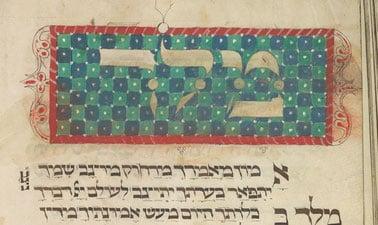
This course will explore the world of the Jewish renaissance scholar Abraham ben Mordecai Fairissol and his manuscript A Letter on the Paths of the World ( Iggeret Orhot ‘Olam )— Farissol, a product of the northern Italian Renaissance, wrote this geographical treatise about a world seen anew through advances in science, exploration, and trade. The manuscript gives us insight into the place of Jews in the northern Italian Renaissance and demonstrates the ways they were at once deeply embedded in the changing intellectual landscape of the day, but also striving to assert distinctive Jewish belonging in this vibrant intellectual world. Among other things, this text is the first mention in Hebrew of the discovery of the Americas.

What you'll learn

  • You will learn about Abraham Farissol and his text A Letter on the Paths of the World ( Iggeret Orhot ‘Olam )
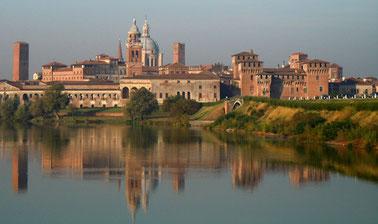
  • You will get a sense for the political, social, intellectual and urban environment of Ferrara during the Renaissance, and the place of Jews in that environment.
  • The impact of new science on traditional religious thought

Syllabus

  1. Abraham Farissol and His Ferraran Environment
  2. Illuminating Nature
  3. Travel, Humanist Education, and the New Meaning of Geography
  4. What are the Aims and Content of the Iggeret Orhot ‘Olam?
  5. The Main Sources of Iggeret Orhot ‘Olam
  6. How Was the Work Circulated? Who Was Interested? And Who Was the Copyist of the Schoenberg Manuscript? The Evidence from the Manuscript Itself
Go to Class
MOOC List is learner-supported. When you buy through links on our site, we may earn an affiliate commission.

Related Courses

In the Margins of a Medieval Jewish Prayer Book: What Can Physical Manuscripts Tell Us about History? (edX) EdX
University of Pennsylvania,PennX

In the Margins of a Medieval Jewish Prayer Book: What Can Physical Manuscripts Tell Us about History? (edX)

This course is a case study of how a particular manuscript, a Jewish prayer book for high holidays, can provide historians with vital insights about Jewish communal life, the way a manuscript can help us map cultural change and continuity in the Middle Ages, and the history of the physical object itself. Elisabeth Hollender (Goethe University, Frankfurt) guides students through the examination of a late 13th century manuscript from Western Ashkenaz, focusing on how the manifold signs of change left in the manuscript illustrate and illuminate the history of a Jewish community in the Rhineland.

Self Paced
Self-Paced
Tangible Things: Discovering History Through Artworks, Artifacts, Scientific Specimens, and the Stuff Around You (edX) EdX
HarvardX,Harvard University

Tangible Things: Discovering History Through Artworks, Artifacts, Scientific Specimens, and the Stuff Around You (edX)

Gain an understanding of history, museum studies, and curation by looking at, organizing, and interpreting art, artifacts, scientific curiosities, and the stuff of everyday life. Have you ever wondered about how museum, library, and other kinds of historical or scientific collections all come together? Or how and why curators, historians, archivists, and preservationists do what they do?

Self Paced
Self-Paced
Scholarly Communication (Coursera) Coursera
Moscow Institute of Physics and Technology

Scholarly Communication (Coursera)

Scholarly Communication is a concise but comprehensive course on how to write research papers in English. The course will help the candidates gain a better understanding of the rhetorical conventions of English and the common challenges the candidates may face as an academic writer. The course provides instruction, exercises, structure, and deadlines needed to create a publishable paper.

May 16th 2022
4 Weeks
The Holocaust - An Introduction (II): The Final Solution (Coursera) Coursera
Tel Aviv University,Yad Vashem

The Holocaust - An Introduction (II): The Final Solution (Coursera)

The Holocaust was an inconceivable historical event, which forever robbed Western culture of its innocence. As civilized human beings, we fail to understand how events of such horror could have taken place, and how an idea so inhumanly warped could have spread like wildfire through an entire continent, instigating the systematic annihilation of millions of Jews.

Oct 5th 2026
3 Weeks
Teaching the Holocaust: Innovative Approaches to the Challenges We Face (FutureLearn) FutureLearn
University College London,Yad Vashem

Teaching the Holocaust: Innovative Approaches to the Challenges We Face (FutureLearn)

Explore history, delve into pedagogical challenges revealed by research, and find practical solutions for teaching the Holocaust. The Holocaust was the murder of approximately 6 million Jews perpetrated by Nazi Germany and its collaborators. That this atrocity proved possible raises many complex questions which remain relevant for young people today.

Self Paced
3 Weeks
The Birmingham Qur'an: Its Journey from the Islamic Heartlands (FutureLearn) FutureLearn
University of Birmingham

The Birmingham Qur'an: Its Journey from the Islamic Heartlands (FutureLearn)

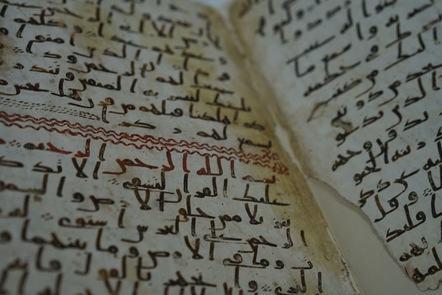
Explore the history and significance of the Birmingham Qur'an, and its journey from late Antiquity Middle East to contemporary UK. The Birmingham Qur’an is one of the oldest surviving Islamic manuscripts. This course will explore the origins and the journey of the Birmingham Qur’an from the Islamic heartlands, the significance of the Birmingham Qur’an, the methods used to determine its age and how it is cared for at Cadbury Research Library, University of Birmingham.

No sessions available
4 Weeks
Writing and Editing: Polishing a Manuscript | Learn with Wattpad (Skillshare) Skillshare
Skillshare

Writing and Editing: Polishing a Manuscript | Learn with Wattpad (Skillshare)

Join one of Wattpad's most successful writers Ali Novak for a fun, straightforward class on editing and revising your writing. While writing a draft is a feat in itself, revising and editing your work is when your story takes shape and the real writing begins! In this 25-minute class, Ali walks through the process of polishing a manuscript for publication.

Self Paced
Self-Paced
Cosmopolitan Tang: Aristocratic Culture in China (edX) EdX
HarvardX,Harvard University

Cosmopolitan Tang: Aristocratic Culture in China (edX)

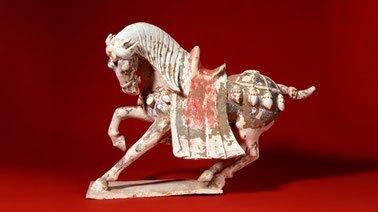
Explore the reunification of China under the Tang with a focus on aristocratic culture — from poetry to calligraphy to literature. By the Tang period, China was divided into northern and southern dynasties with different rulers and political systems. The north was conquered by relatively unsophisticated barbarians, but in the south, the aristocratic families established a refined appreciation of writing and literature.

Self Paced
Self-Paced
Invasions, Rebellions, and the Fall of Imperial China (edX) EdX
HarvardX,Harvard University

Invasions, Rebellions, and the Fall of Imperial China (edX)

An overview of modern Chinese history, including the fall of the Qing and the end of imperial China. In the 18th century, the Qing Dynasty is at its height; it is the wealthiest, most powerful, most civilized state on earth. And yet the 19th century brought enormous challenges for the Qing and for the place we call China. By the 20th century, a 2,000-year imperial tradition is gone. What happened?

Self Paced
Self-Paced
Coexistence in Medieval Spain: Jews, Christians, and Muslims (Coursera) Coursera
University of Colorado System

Coexistence in Medieval Spain: Jews, Christians, and Muslims (Coursera)

This course explores Jewish, Christian, and Muslim intercultural relations in Iberia from the Visigothic era (6th century CE) until the creation of Queen Isabel I and King Ferdinand II Catholic Spain (late 15th century). We evaluate the many identities of the peninsula known as Christian Hispania, Jewish Sefarad, and Islamic al-Andalus. We trace the origins and trajectory of conflict between these communities (the Muslim conquest of Spain, Christian Reconquista, prohibitions blocking intermixing of peoples, and expulsions).

Sep 14th 2026
5-12 Weeks