From World War to White Heat: the RAF in the Cold War (FutureLearn)

From World War to White Heat: the RAF in the Cold War (FutureLearn)

Explore the role that the Royal Air Force played in the Cold War through the collections of the RAF Museums at Hendon and Cosford. This free online course is a collaboration between the Royal Air Force (RAF) Museums and the Department of History at Royal Holloway, University of London. It will introduce you to some of the major turning points in the history of Britain in the post-1945 era.

Class Deals by MOOC List - Click here and see FutureLearn's Active Discounts, Deals, and Promo Codes.

Explore the changing role of the RAF during the Cold War
Guided by Dr Ross Mahoney, Aviation Historian, RAF Museum, and Dr Emmett Sullivan, Senior Lecturer in History, Royal Holloway, the course will examine:

  • The role of the RAF in the early Cold War period;
  • RAF’s operations across the globe in an era of decolonisation;
  • Britain’s decision to develop a nuclear deterrent;
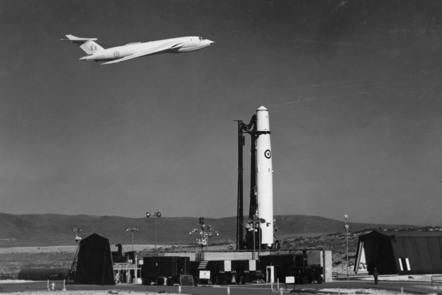
  • The development of the RAF’s strategic nuclear capability, the V-Force;
  • The role of the RAF in defending UK airspace;
  • The re-focus on NATO after East of Suez and the transfer of the strategic nuclear role to the Royal Navy;
  • The RAF’s contribution to NATO.

Consider how the RAF is remembered and memorialised
Finally, we will consider how the RAF has been remembered and memorialised through the Cold War and beyond, with the establishment of the RAF Museums at Hendon and Cosford, the National Cold War Exhibition, and the erection of statues and monuments after 1945.
The course makes extensive use of material from the archives of the RAF Museum to illustrate the Cold War history of the RAF and was filmed on site at RAF Museum Hendon and Cosford.

Syllabus

Week 1: The Early Cold War 1945-1953
Week 2: The RAF, the Empire, and a New Global Role
Week 3: The Independent British Nuclear Deterrent
Week 4: Defending the Skies
Week 5: Aspirations, Cancellations and a New Role
Week 6: Honouring the RAF in the Cold War and After

What will you achieve?
By the end of the course, you'll be able to...

  • Demonstrate an understanding of the role of the RAF at the end of the Second World War.
  • Assess the role of the RAF as it developed in the early Cold War years.
  • Compare the RAF’s responsibilities with respect to Britain’s nuclear deterrent before and after 1968.
  • Debate with educators and learners Britain’s motivation in holding a nuclear arsenal in the Cold War.
  • Develop a knowledge of the Government’s strategy in procuring RAF aircraft from British industry.
  • Discuss the responsibilities of the RAF in an era of decolonisation overseas and with NATO.
  • Evaluate what the Government’s priorities were for the RAF in defending the ‘Home Front’ in the Cold War.
  • Explain why the Royal Navy were destined to deploy Britain’s nuclear deterrent after the Nassau Agreement.
  • Identify key turning points in the Cold War, and how the RAF responded to these.
  • Reflect on the way the public considers the history of the RAF through its museums and public monuments.

Who is the course for?
This course is intended for anyone with an interest in 20th-century history, the Cold War or the history of aviation. It doesn’t require any reading before you start or previous experience of studying the subject.
Go to Class
MOOC List is learner-supported. When you buy through links on our site, we may earn an affiliate commission.

Related Courses

From Waterloo to the Rhine: The British Army 1815-1945 (FutureLearn) FutureLearn
University of Kent,National Army Museum

From Waterloo to the Rhine: The British Army 1815-1945 (FutureLearn)

Examine one of the UK’s most storied institutions, and how 130 years of social, cultural and military change have shaped it. Explore the British Army’s part in the making of the modern world. With a legacy stretching back centuries, the British Army is proud of its hard-won reputation as one of the most formidable fighting forces in the world.

Self Paced
4 Weeks
New Zealand History, Culture and Conflict: A Museum Perspective (FutureLearn) FutureLearn
Museum of New Zealand Te Papa Tongarewa

New Zealand History, Culture and Conflict: A Museum Perspective (FutureLearn)

Discover the social history of Aotearoa New Zealand, learning how the country’s bicultural national consciousness was formed. Identify the factors that have contributed to New Zealand’s cultural identity. New Zealand’s social history is built on a foundation of exploration and colonial conflict. On this three-week course, you’ll access artefacts, treasures, and exhibitions within Te Papa Tongarewa’s collections to discover how New Zealand culture has evolved over time, identifying key historical moments that have impacted the formation of a national identity.

Self Paced
3 Weeks
Egiptología (Egyptology) (Coursera) Coursera
Universitat Autònoma de Barcelona

Egiptología (Egyptology) (Coursera)

¿Sientes curiosidad por la civilización del antiguo Egipto? ¿Eres un apasionado de su cultura e historia? En este curso nos acercaremos a los templos de los antiguos faraones, a sus complejos funerarios, a sus ciudades, a su escritura jeroglífica, a su religión y a muchos otros aspectos de esta gran civilización.

Aug 3rd 2026
5-12 Weeks
History of Rock, Part Two (Coursera) Coursera
University of Rochester

History of Rock, Part Two (Coursera)

This course, part 2 of a 2-course sequence, examines the history of rock, primarily as it unfolded in the United States, from the early 1970s to the early 1990s. This course covers the music of Led Zeppelin, the Allman Brothers, Carole King, Bob Marley, the Sex Pistols, Donna Summer, Michael Jackson, Madonna, Prince, Metallica, Run-DMC, and Nirvana, and many more artists, with an emphasis both on cultural context and on the music itself. We will also explore how developments in the music business and in technology helped shape the ways in which styles developed.

Aug 3rd 2026
5-12 Weeks
World War 1: Paris 1919 - A New World Order? (FutureLearn) FutureLearn
University of Glasgow

World War 1: Paris 1919 - A New World Order? (FutureLearn)

This course reassesses the legacy of the Paris Peace Conference (1919) and how it sought to create a new world order. The Paris Peace Conference of 1919 ended a Great War, but it also designed the post-war future. In 1919, world leaders assembled in Paris redrew the map of the world, partitioned and created countries, and ushered in a new era of international relations. The naivety of the peace-makers of 1919 has been justly criticised. However, in setting up a permanent ‘world organisation’, the League of Nations, they changed the management of world affairs forever…

No sessions available
3 Weeks
Discover the Hidden History of York (FutureLearn) FutureLearn
University of York

Discover the Hidden History of York (FutureLearn)

Investigate York’s cultural and social history and the pivotal events and people that helped define a nation. Uncover fascinating facts about the city of York, from medieval times to today. York is a city bursting with engaging and unusual episodes from its rich and diverse history. On this three-week course, you’ll delve into the city’s past and learn about some of the most interesting events and people to have contributed to York’s story.

Self Paced
3 Weeks
Casing the Joint: Introducing Histories of Crime (FutureLearn) FutureLearn
The University of Newcastle, Australia

Casing the Joint: Introducing Histories of Crime (FutureLearn)

Learn about historical approaches to the study of crime and punishment, particularly in Australia. Delve beyond true crime podcasts, books and television series Crime holds a special place in Australian history, having facilitated colonisation, provided its most celebrated anti-hero in Ned Kelly and been used to sell millions of newspapers, books and movie tickets.

No sessions available
3 Weeks
Accounting for Death in War: Separating Fact from Fiction (FutureLearn) FutureLearn
Royal Holloway, University of London,Every Casualty Counts

Accounting for Death in War: Separating Fact from Fiction (FutureLearn)

Discover the main methods used to account for war deaths, how they've been used and practice using them yourself. Calculating the number of deaths during a war is a difficult, but necessary, task - having accurate information is crucial for political and societal debates and decisions. On this course you will explore the methods currently used to account for war deaths and then apply these methods to particular wars.

Self Paced
3 Weeks
Heart of Scotland: History & Heritage of Stirling at 900 Years (FutureLearn) FutureLearn
University of Stirling

Heart of Scotland: History & Heritage of Stirling at 900 Years (FutureLearn)

Explore Stirling, the 'Gateway to the Highlands', and discover 900 years of history in the city of Scottish kings and queens. On this four-week course, spanning the 12th century to the modern era, gain an expansive understanding of one of Scotland’s most important and beloved cities. Hit all the stops on this heritage tour of Stirling.

Self Paced
4 Weeks
Global Geordies: The North East of England and the World (FutureLearn) FutureLearn
Northumbria University Institute of the Humanities

Global Geordies: The North East of England and the World (FutureLearn)

Get an introduction to the hidden history, culture and people of the North East of England. Where was the light bulb invented? What about the first steam locomotive, or hydroelectricity? They were all invented in the North East of England. This course introduces you to the historical, technological and cultural connections between the people and places of the North East and the wider world.

No sessions available
5-12 Weeks
Terrorism and Counterterrorism: Comparing Theory and Practice (FutureLearn) FutureLearn
Leiden University

Terrorism and Counterterrorism: Comparing Theory and Practice (FutureLearn)

Delve into the research behind terrorism as you unpack the assumptions and impacts of both terrorism and counterterrorism. Explore terrorism and counterterrorism studies. Terrorism has arguably been one of the defining factors of our age. It frequently makes headlines, threatening or attacking governments, private businesses, and ordinary citizens. In many parts of the world, it has been one of the most important threats to peace, security, and stability – but what does this mean exactly? On this six-week course from Leiden University, you’ll explore the essence of terrorism and discover why it is so difficult to define.

Apr 25th 2022
5-12 Weeks