England in the Time of King Richard III (FutureLearn)

England in the Time of King Richard III (FutureLearn)

Explore 15th century England through archaeology, history and literature. Learn more about Richard III’s discovery and reburial. The discovery of the skeleton of Richard III in a Leicester car park - and the recent revelations of an infidelity within his family’s bloodline - have made headline news around the world.

Class Deals by MOOC List - Click here and see FutureLearn's Active Discounts, Deals, and Promo Codes.

Go beyond the headlines with this online course. You’ll learn from scholars at the University of Leicester not only about the discovery of Richard III, but about England during his life time. Each week you’ll examine a different aspect of the 15th century period, including medieval warfare, food and culture, death and commemoration and more. Now’s your chance to travel back in time.

What topics will you cover?

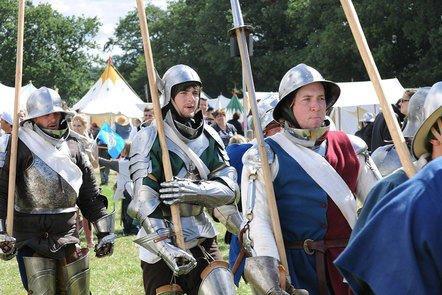
  • Medieval battles and the Wars of the Roses
  • Peasants and farmers
  • Medieval towns, villages and houses
  • Books, literacy and printing
  • Death and commemoration
  • Food and cooking in the 15th century
  • The discovery and reburial of King Richard III

What will you achieve?
By the end of the course, you'll be able to...

  • Describe the sequence of events and the key players in the Wars of the Roses, and explain the ways in which reputations are created
  • Explain the nature of armed combat in the middle ages
  • Describe the way English farming was organised before the Black Death
  • Identify 15th century changes in the landscape and the benefits to ordinary people of the new developments
  • Explore the evidence for the scale of literacy in England before printed books
  • Describe how typefaces were first created and how rapidly printed books spread, and to whom
  • Summarise medieval beliefs about the afterlife
  • Identify the types of late medieval burial, burial customs, commemoration and memorial monuments
  • Identify what foods were, and were not, available in the 15th century and the differences in the diet of rich and poor
  • Describe the ways in which people cooked and ate at the table
  • Reflect on some of the reasons why the discovery of Richard III has aroused such international interest
  • Interpret the range of evidence that makes the identification of Richard III's body convincing
Go to Class
MOOC List is learner-supported. When you buy through links on our site, we may earn an affiliate commission.

Related Courses

Teaching the Holocaust: Innovative Approaches to the Challenges We Face (FutureLearn) FutureLearn
University College London,Yad Vashem

Teaching the Holocaust: Innovative Approaches to the Challenges We Face (FutureLearn)

Explore history, delve into pedagogical challenges revealed by research, and find practical solutions for teaching the Holocaust. The Holocaust was the murder of approximately 6 million Jews perpetrated by Nazi Germany and its collaborators. That this atrocity proved possible raises many complex questions which remain relevant for young people today.

Self Paced
3 Weeks
World War 1: Changing Faces of Heroism (FutureLearn) FutureLearn
University of Leeds

World War 1: Changing Faces of Heroism (FutureLearn)

Learn how the war moved us away from traditional views of heroism and created new kinds of heroes and heroines. Did the First World War make heroism meaningless or was it the conflict that gave it the most meaning? We’ve designed this course in partnership with the BBC to help you explore, discuss and challenge the ways in which First World War heroism has been remembered. Our experts will take you through the changing British, French and German views of heroism and discuss important similarities and differences.

No sessions available
3 Weeks
Terrorism and Counterterrorism: Comparing Theory and Practice (FutureLearn) FutureLearn
Leiden University

Terrorism and Counterterrorism: Comparing Theory and Practice (FutureLearn)

Delve into the research behind terrorism as you unpack the assumptions and impacts of both terrorism and counterterrorism. Explore terrorism and counterterrorism studies. Terrorism has arguably been one of the defining factors of our age. It frequently makes headlines, threatening or attacking governments, private businesses, and ordinary citizens. In many parts of the world, it has been one of the most important threats to peace, security, and stability – but what does this mean exactly? On this six-week course from Leiden University, you’ll explore the essence of terrorism and discover why it is so difficult to define.

Apr 25th 2022
5-12 Weeks
Irish Lives in War and Revolution: Exploring Ireland's History 1912-1923 (FutureLearn) FutureLearn
Trinity College Dublin

Irish Lives in War and Revolution: Exploring Ireland's History 1912-1923 (FutureLearn)

Explore the lives of men, women and children living through war and revolution and social changes that made modern Ireland. How do people experience war and revolution? How does political change, violence, total war, affect life in its most basic ways? Looking at Ireland through war and revolution, this course considers these and other questions about Irish life between 1912 and 1923.

No sessions available
5-12 Weeks
The Life and Afterlife of Mary Queen of Scots (FutureLearn) FutureLearn
University of Glasgow

The Life and Afterlife of Mary Queen of Scots (FutureLearn)

Explore the 16th century life of Mary Queen of Scots, and her place in cultural history in the centuries that followed. Discover the life and lasting legacy of Mary Queen of Scots. Mary Queen of Scots was born and ascended to the throne of Scotland in 1542, before being forced to abdicate in 1567. She was married three times, first to the king of France, and then to two noblemen from the British Isles, one of whom was spectacularly murdered.

Self Paced
3 Weeks
The Scottish Highland Clans: Origins, Decline and Transformation (FutureLearn) FutureLearn
University of Glasgow

The Scottish Highland Clans: Origins, Decline and Transformation (FutureLearn)

Explore fascinating Scottish history by learning about the Highland clans and how clanship has changed across hundreds of years. Discover the important history of the Highland clans. The Highland, Gaelic speaking clans are a vital part of Scotland’s history. They also shape how the world imagines Scotland today.

Self Paced
3 Weeks
World War 1: Trauma, Memory, Controversy (FutureLearn) FutureLearn
The Open University

World War 1: Trauma, Memory, Controversy (FutureLearn)

Explore the traumatic effects of WW1 on soldiers and civilians. Discover how we remember and debate the history of this war. In this free online course, you will study the social, cultural, medical and diplomatic history of the First World War. Topics range from physical and mental trauma suffered by combatants to the traumatic experiences of civilians in wartime.

Self Paced
4 Weeks
Personalised Care: Peer Leadership Foundation - Step Two (FutureLearn) FutureLearn
Personalised Care Group at NHS England and NHS Improvement

Personalised Care: Peer Leadership Foundation - Step Two (FutureLearn)

Further explore personalised care in the NHS and how you can help others to benefit. Learn more about personalised care so you can help others to benefit. You will learn about the changing culture in the NHS and the shift from ‘what’s the matter with you’ to ‘what matters to you?’ You will see further real-life examples of personalised care in practice and learn about the role of policy, guidance, legislation and good practice in delivering personalised care.

Oct 31st 2022
4 Weeks
The Tudors (FutureLearn) FutureLearn
University of Roehampton

The Tudors (FutureLearn)

Go back in time to learn about the dramatic rule of the Tudor monarchs and religious change of the sixteenth century reformation. Uncover the turbulent history of Tudor England and its lasting impact. From magnificence and martyrs to weddings and war, the Tudor period was one of the most eventful in British history. The reigns of the five (or was it six?) monarchs during the late fifteenth to seventeenth century has enthralled historians, students and television and film producers alike.

Self Paced
5-12 Weeks