The Scottish Highland Clans: Origins, Decline and Transformation (FutureLearn)

Offered by University of Glasgow,
The Scottish Highland Clans: Origins, Decline and Transformation (FutureLearn)

Explore fascinating Scottish history by learning about the Highland clans and how clanship has changed across hundreds of years. Discover the important history of the Highland clans. The Highland, Gaelic speaking clans are a vital part of Scotland’s history. They also shape how the world imagines Scotland today.

Class Deals by MOOC List - Click here and see FutureLearn's Active Discounts, Deals, and Promo Codes.

This course uses the expertise of University of Glasgow academics to explain the structure, economy and culture of the clans. It covers the centuries between the fall of the MacDonald Lords of the Isles in 1493 until around 1800, when the clans dissolved away as a result of social economic change. It then discusses how the legacies of clanship shaped global images of Scotland up until the present.

What topics will you cover?

  • Week 1:Defining the Clans: Meet the chiefs and the clan gentry. See how different forms of family, kinship and strong links to land helped bind a clan together. Explore how archaeology and history can help explain the castles, churches, defensive sites, and overall function of the clans
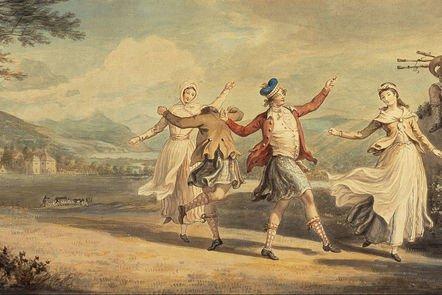
  • Week 2:Clan Society and Culture: Explore daily life for ordinary people living under the authority the chiefs. Why and how did clans feud, and what made the Scottish Crown seek to ‘civilise’ the Highlands? Learn about Gaelic musical culture, poetry and dress. Discover how clan involvement in the religious and civil wars of the seventeenth century was high profile and traumatic. Lastly, consider how new cultural and social-economic changes resulted in a slow decline of the clans as a form of community
  • Week 3:Decline and Transformation: Assess the debates around clan involvement in the Jacobite risings between 1689 and 1746. Discover the latest thinking on the Battle of Culloden and the ‘Clearances’. Finally, appreciate how the literature of Walter Scott, the romantic poets, as well as Highland Games, theatre and film reinvented the clans as a romantic Scottish and global emblem.

What will you achieve?
By the end of the course, you'll be able to...

  • Develop an understanding of the origins and functions of the Scottish Highland clans, and assess their social structures, economy and culture
  • Investigate the contrast between hostile stereotypes of the clans as barbaric and warlike and their day-to-day role as complex social communities
  • Reflect on the processes of feuding, civil war, revolt and social-economic change between 1500 and 1800 that resulted in the slow transformation and decline of the clans
  • Explore how the clans were reinvented and romanticised in the later eighteenth and nineteenth centuries through literature and poetry
  • Identify and assess the modern legacies of the clans in events such as Highland Games, Clan Societies and Tartan Parades, as well as their portrayal in film and television
  • Assess in an informed way the key charactertistics of Scottish Highland clanship, their history, their decline and their modern reinvention.
  • Assess in an informed way the key charactertistics of Scottish Highland clanship, their history, their decline and their modern reinvention.
Go to Class
MOOC List is learner-supported. When you buy through links on our site, we may earn an affiliate commission.

Related Courses

From World War to White Heat: the RAF in the Cold War (FutureLearn) FutureLearn
Royal Holloway, University of London

From World War to White Heat: the RAF in the Cold War (FutureLearn)

Explore the role that the Royal Air Force played in the Cold War through the collections of the RAF Museums at Hendon and Cosford. This free online course is a collaboration between the Royal Air Force (RAF) Museums and the Department of History at Royal Holloway, University of London. It will introduce you to some of the major turning points in the history of Britain in the post-1945 era.

Nov 8th 2021
5-12 Weeks
The Life and Afterlife of Mary Queen of Scots (FutureLearn) FutureLearn
University of Glasgow

The Life and Afterlife of Mary Queen of Scots (FutureLearn)

Explore the 16th century life of Mary Queen of Scots, and her place in cultural history in the centuries that followed. Discover the life and lasting legacy of Mary Queen of Scots. Mary Queen of Scots was born and ascended to the throne of Scotland in 1542, before being forced to abdicate in 1567. She was married three times, first to the king of France, and then to two noblemen from the British Isles, one of whom was spectacularly murdered.

Mar 13th 2023
3 Weeks
The Ancient Greeks (Coursera) Coursera
Wesleyan University

The Ancient Greeks (Coursera)

This is a survey of ancient Greek history from the Bronze Age to the death of Socrates in 399 BCE. Along with studying the most important events and personalities, we will consider broader issues such as political and cultural values and methods of historical interpretation.

Jun 29th 2026
5-12 Weeks
Discover the Hidden History of York (FutureLearn) FutureLearn
University of York

Discover the Hidden History of York (FutureLearn)

Investigate York’s cultural and social history and the pivotal events and people that helped define a nation. Uncover fascinating facts about the city of York, from medieval times to today. York is a city bursting with engaging and unusual episodes from its rich and diverse history. On this three-week course, you’ll delve into the city’s past and learn about some of the most interesting events and people to have contributed to York’s story.

Jul 7th 2022
3 Weeks
Heart of Scotland: History & Heritage of Stirling at 900 Years (FutureLearn) FutureLearn
University of Stirling

Heart of Scotland: History & Heritage of Stirling at 900 Years (FutureLearn)

Explore Stirling, the 'Gateway to the Highlands', and discover 900 years of history in the city of Scottish kings and queens. On this four-week course, spanning the 12th century to the modern era, gain an expansive understanding of one of Scotland’s most important and beloved cities. Hit all the stops on this heritage tour of Stirling.

Oct 21st 2024
4 Weeks
World War 1: Paris 1919 - A New World Order? (FutureLearn) FutureLearn
University of Glasgow

World War 1: Paris 1919 - A New World Order? (FutureLearn)

This course reassesses the legacy of the Paris Peace Conference (1919) and how it sought to create a new world order. The Paris Peace Conference of 1919 ended a Great War, but it also designed the post-war future. In 1919, world leaders assembled in Paris redrew the map of the world, partitioned and created countries, and ushered in a new era of international relations. The naivety of the peace-makers of 1919 has been justly criticised. However, in setting up a permanent ‘world organisation’, the League of Nations, they changed the management of world affairs forever…

No sessions available
3 Weeks
Teaching the Holocaust: Innovative Approaches to the Challenges We Face (FutureLearn) FutureLearn
University College London,Yad Vashem

Teaching the Holocaust: Innovative Approaches to the Challenges We Face (FutureLearn)

Explore history, delve into pedagogical challenges revealed by research, and find practical solutions for teaching the Holocaust. The Holocaust was the murder of approximately 6 million Jews perpetrated by Nazi Germany and its collaborators. That this atrocity proved possible raises many complex questions which remain relevant for young people today.

Feb 28th 2022
3 Weeks
A Question of Time: How We Date Human Evolution (FutureLearn) FutureLearn
Griffith University

A Question of Time: How We Date Human Evolution (FutureLearn)

Discover the role that dating human fossils plays in the reconstruction of human evolution: explore examples from around the world. Uncover the history of our ancestors by dating human fossils. Trace your origins and develop your understanding of human evolution, with this course from the world-leading experts at Griffith University.

No sessions available
2 Weeks
Global Geordies: The North East of England and the World (FutureLearn) FutureLearn
Northumbria University Institute of the Humanities

Global Geordies: The North East of England and the World (FutureLearn)

Get an introduction to the hidden history, culture and people of the North East of England. Where was the light bulb invented? What about the first steam locomotive, or hydroelectricity? They were all invented in the North East of England. This course introduces you to the historical, technological and cultural connections between the people and places of the North East and the wider world.

No sessions available
5-12 Weeks
Accounting for Death in War: Separating Fact from Fiction (FutureLearn) FutureLearn
Royal Holloway, University of London,Every Casualty Counts

Accounting for Death in War: Separating Fact from Fiction (FutureLearn)

Discover the main methods used to account for war deaths, how they've been used and practice using them yourself. Calculating the number of deaths during a war is a difficult, but necessary, task - having accurate information is crucial for political and societal debates and decisions. On this course you will explore the methods currently used to account for war deaths and then apply these methods to particular wars.

Available now
3 Weeks
Dead Interesting: Uncovering Roman Britain in Old Museum Collections (FutureLearn) FutureLearn
University of Reading,Colchester Musuems

Dead Interesting: Uncovering Roman Britain in Old Museum Collections (FutureLearn)

Explore the archaeology of early Roman Britain an d learn techniques to build a profile of an individual from the first century AD. Uncover the history of early Roman Britain. What did a Roman funeral look, sound, and smell like? And how can you tell just from a person’s remains? Join a research team uncovering exciting new information about cremation burials excavated over 100 years ago in Colchester, the site of Camulodunum, one of Britain’s oldest towns and its first Roman capital city.

Dec 6th 2021
2 Weeks