History of Slavery in the British Caribbean (FutureLearn)

History of Slavery in the British Caribbean (FutureLearn)

Explore the history and legacy of British colonial slavery and oppression in the Caribbean through historical slave accounts. Learn about Britain’s involvement in the transatlantic slave trade. On this course, you’ll be introduced to the history of slavery and the lived experiences of enslaved people in the British Caribbean.

Class Deals by MOOC List - Click here and see FutureLearn's Active Discounts, Deals, and Promo Codes.

Explore the link between global racial civil unrest and colonial and post-colonial processes
Against a backdrop of global protests and civil unrest due to racial inequities in our contemporary society, this course offers the opportunity to explore how these inequalities are related to historical colonial processes.
Starting with the context of life, culture, and economy of West Africa, you’ll follow enslaved people through their forced migration to the islands of the Caribbean and the life they found there.

Discover the lives of enslaved people in British colonies in the Caribbean
The course will teach you how enslaved people lived in the Caribbean and what methods were used to control their way of life and oppress enslaved people.
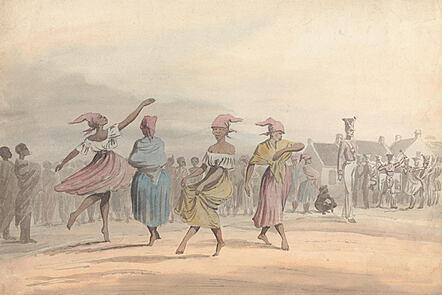
As you interpret different types of historical evidence of slavery through written and visual material, you’ll learn how enslaved people resisted slavery in small, everyday ways, as well as through armed rebellion and revolution.
You’ll also examine the context and events that led to the end of slavery, as well as the labour systems devised to replace it.

Consider the ongoing legacies of British slavery
Led by leading academics from the University of Glasgow, you’ll benefit from a wide range of expertise on the history, archaeology and legacies of slavery.
By the end of the course, you’ll better understand the contemporary legacies of slavery in the modern world and be equipped with the skills to investigate slavery’s legacies in your local area.

What topics will you cover?

  • Trafficking in enslaved people in the transatlantic trade.
  • The culture and lifestyle of enslaved people.
  • How enslaved people resisted enslavement.
  • What methods were used to control and oppress enslaved people in the Caribbean.
  • What happened in the Caribbean when slavery was outlawed.
  • How to explore the contemporary legacies of slavery in the modern world.

What will you achieve?
By the end of the course, you‘ll be able to...

  • Learners will be able to explain how slavery was organised in the British Caribbean.
  • They will be able to describe the lifestyles of enslaved people.
  • They will be able to interpret different types of historical evidence of slavery: written, visual and material.
  • They will be able to debate the relative importance of different factors in bringing slavery to a legal end.
  • Learners will be equipped to investigate slavery’s legacies in their local area.

Who is the course for?
The course is designed for anyone interested in learning more the Black experience during British involvement in the transatlantic slave trade.
The inclusion of slavery’s legacy centres on the racial inequities in our contemporary society will also be useful for heritage, third-sector, educational and media workers who wish to engage in conversations around current global racialised civil unrest and how they are linked to colonial and post-colonial processes.
Go to Class
MOOC List is learner-supported. When you buy through links on our site, we may earn an affiliate commission.

Related Courses

Desigualdades en América Latina y el Caribe: Investigación, Políticas y Gestión para las Transformaciones Sociales (FutureLearn) FutureLearn
UNESCO,CLAD

Desigualdades en América Latina y el Caribe: Investigación, Políticas y Gestión para las Transformaciones Sociales (FutureLearn)

Explore nuevas estrategias de producción y gestión de conocimiento para mejorar las políticas frente a las desigualdades. Las desigualdades representan uno de los principales desafíos que enfrenta América Latina y el Caribe, y constituyen una constante preocupación para sus gobiernos. Frente a estos escenarios cada vez más complejos, el diálogo fluido entre investigación social y políticas públicas resulta urgente y estratégico. Este curso aborda el actual panorama regional de las desigualdades, alerta sobre sus dramáticas consecuencias, y ofrece estrategias transformadoras que pueden diseñarse para mejorar las políticas sociales y la gestión pública.

No sessions available
4 Weeks
Terrorism and Counterterrorism: Comparing Theory and Practice (FutureLearn) FutureLearn
Leiden University

Terrorism and Counterterrorism: Comparing Theory and Practice (FutureLearn)

Delve into the research behind terrorism as you unpack the assumptions and impacts of both terrorism and counterterrorism. Explore terrorism and counterterrorism studies. Terrorism has arguably been one of the defining factors of our age. It frequently makes headlines, threatening or attacking governments, private businesses, and ordinary citizens. In many parts of the world, it has been one of the most important threats to peace, security, and stability – but what does this mean exactly? On this six-week course from Leiden University, you’ll explore the essence of terrorism and discover why it is so difficult to define.

Apr 25th 2022
5-12 Weeks
Antiquities Trafficking and Art Crime (FutureLearn) FutureLearn
University of Glasgow

Antiquities Trafficking and Art Crime (FutureLearn)

Law

Delve into the seedy underbelly of the art world, looking at smuggling, theft, fakes, and fraud, with this free online course. From fakes and fraud, to thefts and trafficking, art crime has turned archaeological sites in Iraq and Syria into “lunar landscapes”, decapitated Buddha sculptures in Cambodia and left empty frames on museum walls.

No sessions available
3 Weeks
World War 1: Trauma, Memory, Controversy (FutureLearn) FutureLearn
The Open University

World War 1: Trauma, Memory, Controversy (FutureLearn)

Explore the traumatic effects of WW1 on soldiers and civilians. Discover how we remember and debate the history of this war. In this free online course, you will study the social, cultural, medical and diplomatic history of the First World War. Topics range from physical and mental trauma suffered by combatants to the traumatic experiences of civilians in wartime.

Self Paced
4 Weeks
World War 1: Paris 1919 - A New World Order? (FutureLearn) FutureLearn
University of Glasgow

World War 1: Paris 1919 - A New World Order? (FutureLearn)

This course reassesses the legacy of the Paris Peace Conference (1919) and how it sought to create a new world order. The Paris Peace Conference of 1919 ended a Great War, but it also designed the post-war future. In 1919, world leaders assembled in Paris redrew the map of the world, partitioned and created countries, and ushered in a new era of international relations. The naivety of the peace-makers of 1919 has been justly criticised. However, in setting up a permanent ‘world organisation’, the League of Nations, they changed the management of world affairs forever…

No sessions available
3 Weeks
New Zealand History, Culture and Conflict: A Museum Perspective (FutureLearn) FutureLearn
Museum of New Zealand Te Papa Tongarewa

New Zealand History, Culture and Conflict: A Museum Perspective (FutureLearn)

Discover the social history of Aotearoa New Zealand, learning how the country’s bicultural national consciousness was formed. Identify the factors that have contributed to New Zealand’s cultural identity. New Zealand’s social history is built on a foundation of exploration and colonial conflict. On this three-week course, you’ll access artefacts, treasures, and exhibitions within Te Papa Tongarewa’s collections to discover how New Zealand culture has evolved over time, identifying key historical moments that have impacted the formation of a national identity.

Self Paced
3 Weeks
Christian-Muslim Relations (FutureLearn) FutureLearn
University of Edinburgh

Christian-Muslim Relations (FutureLearn)

Uncover important themes in the history of Christian-Muslim relations and understand the politics that continue to shape it. Gain an insight into the academic study of Christian-Muslim Relations. On this innovative four-week course, you’ll be introduced to the academic study of Christian-Muslim Relations with the School of Divinity at the University of Edinburgh.

Oct 3rd 2022
4 Weeks
From World War to White Heat: the RAF in the Cold War (FutureLearn) FutureLearn
Royal Holloway, University of London

From World War to White Heat: the RAF in the Cold War (FutureLearn)

Explore the role that the Royal Air Force played in the Cold War through the collections of the RAF Museums at Hendon and Cosford. This free online course is a collaboration between the Royal Air Force (RAF) Museums and the Department of History at Royal Holloway, University of London. It will introduce you to some of the major turning points in the history of Britain in the post-1945 era.

Self Paced
5-12 Weeks
Irish Lives in War and Revolution: Exploring Ireland's History 1912-1923 (FutureLearn) FutureLearn
Trinity College Dublin

Irish Lives in War and Revolution: Exploring Ireland's History 1912-1923 (FutureLearn)

Explore the lives of men, women and children living through war and revolution and social changes that made modern Ireland. How do people experience war and revolution? How does political change, violence, total war, affect life in its most basic ways? Looking at Ireland through war and revolution, this course considers these and other questions about Irish life between 1912 and 1923.

No sessions available
5-12 Weeks
How We Remember War and Violence: Theory and Practice (FutureLearn) FutureLearn
University of Bath

How We Remember War and Violence: Theory and Practice (FutureLearn)

Compare three models of remembering, exploring how the new model of ‘agonistic memory’ can help us better understand conflict. Consider how we recall war and violence and discover a different way to remember. Our memories of conflict are often used against us. Nationalist movements manipulate the story - offering confrontational, harmful perspectives. But there’s a different way.

No sessions available
4 Weeks
World War 1: Changing Faces of Heroism (FutureLearn) FutureLearn
University of Leeds

World War 1: Changing Faces of Heroism (FutureLearn)

Learn how the war moved us away from traditional views of heroism and created new kinds of heroes and heroines. Did the First World War make heroism meaningless or was it the conflict that gave it the most meaning? We’ve designed this course in partnership with the BBC to help you explore, discuss and challenge the ways in which First World War heroism has been remembered. Our experts will take you through the changing British, French and German views of heroism and discuss important similarities and differences.

No sessions available
3 Weeks