IoT Networking (Coursera)

IoT Networking (Coursera)

This course builds on the first two courses in this series: IoT Devices and IoT Communications. Here you will begin to learn enterprise IoT. Enterprise networks, from first-hop access to backend IoT services are critical because they allow your IoT devices to reach the Internet and achieve their true intelligence. IoT places extreme demands on first-hop access - ultra-dense deployments challenge spectrum allocation, the need to provide strong segmentation yet let devices reach into IoT services such as gateways and databases.

Class Deals by MOOC List - Click here and see Coursera's Active Discounts, Deals, and Promo Codes.

During this week you will begin to learn about these challenges, and the underlying protocols and technologies of wired networks that can help you to address them.

Course 3 of 4 in the Hands-on Internet of Things Specialization

Syllabus

WEEK 1
Course Orientation and Enterprise Infrastructure Part 1
Welcome to the third IoT course. This course builds on the first two courses in this series: IoT Devices and IoT Communications. Here, you will begin to learn enterprise IoT. Enterprise networks, from first-hop access to backend IoT services are critical because they allow your IoT devices to reach the Internet and achieve their true intelligence. IoT places extreme demands on first-hop access - ultra-dense deployments challenge spectrum allocation, the need to provide strong segmentation yet let devices reach into IoT services such as gateways and databases. During this week you will begin to learn about these challenges, and the underlying protocols and technologies of wired networks that can help you to address them.

WEEK 2
Infrastructure Part 2
This week we will cover the second part of Enterprise Infrastructures. Please be aware that this week there is a review quiz that covers Week 1 and 2.

WEEK 3
Infrastructure: Core Networking Part 1
How do you build routers and switches that can handle these extreme demands? We will go inside them to understand. We will take a trip inside a router, and understand it from the inside out. We will start by understanding how packets flow across devices, then understand the different device types that make up core networks, their internal architectures, data structures and algorithms they use internally to forward packets with strong performance guarantees.

WEEK 4
Core Networking Part 2
This week, we continue to explore further the topics of Core Networking. Please be aware that this week contains a review quiz which covers both week 3 and 4.
Go to Class
MOOC List is learner-supported. When you buy through links on our site, we may earn an affiliate commission.

Related Courses

The Arduino Platform and C Programming (Coursera) Coursera
University of California, Irvine

The Arduino Platform and C Programming (Coursera)

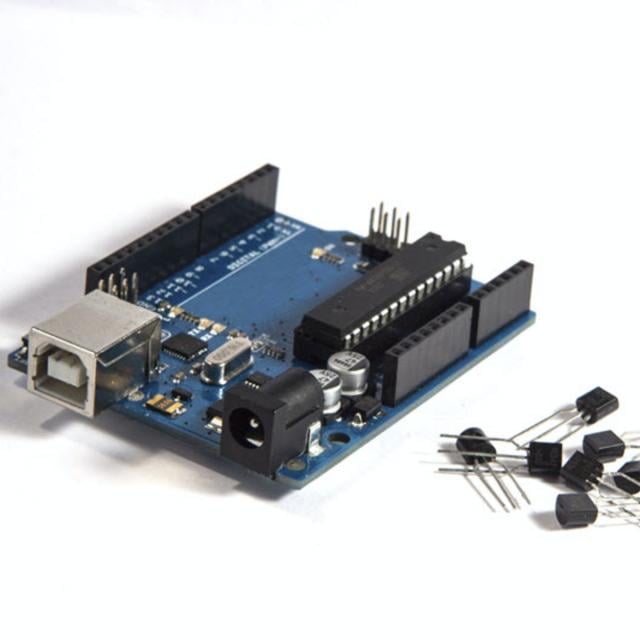
The Arduino is an open-source computer hardware/software platform for building digital devices and interactive objects that can sense and control the physical world around them. In this class you will learn how the Arduino platform works in terms of the physical board and libraries and the IDE (integrated development environment). You will also learn about shields, which are smaller boards that plug into the main Arduino board to perform other functions such as sensing light, heat, GPS tracking, or providing a user interface display. The course will also cover programming the Arduino using C code and accessing the pins on the board via the software to control external devices.

Oct 26th 2026
4 Weeks
The Raspberry Pi Platform and Python Programming for the Raspberry Pi (Coursera) Coursera
University of California, Irvine

The Raspberry Pi Platform and Python Programming for the Raspberry Pi (Coursera)

The Raspberry Pi is a small, affordable single-board computer that you will use to design and develop fun and practical IoT devices while learning programming and computer hardware. In addition, you will learn how to set up up the Raspberry Pi environment, get a Linux operating system running, and write and execute some basic Python code on the Raspberry Pi. You will also learn how to use Python-based IDE (integrated development environments) for the Raspberry Pi and how to trace and debug Python code on the device.

Oct 26th 2026
4 Weeks
Introduction to the Internet of Things and Embedded Systems (Coursera) Coursera
University of California, Irvine

Introduction to the Internet of Things and Embedded Systems (Coursera)

The explosive growth of the “Internet of Things” is changing our world and the rapid drop in price for typical IoT components is allowing people to innovate new designs and products at home. In this first class in the specialization you will learn the importance of IoT in society, the current components of typical IoT devices and trends for the future. IoT design considerations, constraints and interfacing between the physical world and your device will also be covered. You will also learn how to make design trade-offs between hardware and software. We'll also cover key components of networking to ensure that students understand how to connect their device to the Internet.

Oct 26th 2026
4 Weeks
Programming Mobile Applications for Android Handheld Systems: Part 2 (Coursera) Coursera
University of Maryland, College Park

Programming Mobile Applications for Android Handheld Systems: Part 2 (Coursera)

This course introduces you to the design and implementation of Android applications for mobile devices. You will build upon concepts from the prior course, including handling notifications, using multimedia and graphics and incorporating touch and gestures into your apps.

Oct 26th 2026
5-12 Weeks
Interfacing with the Arduino (Coursera) Coursera
University of California, Irvine

Interfacing with the Arduino (Coursera)

Arduino senses the environment by receiving inputs from add-on devices such as sensors, and can control the world around it by adjusting lights, motors, and other actuators. In this class you will learn how and when to use the different types of sensors and how to connect them to the Arduino. Since the external world uses continuous or analog signals and the hardware is digital you will learn how these signals are converted back-and-forth and how this must be considered as you program your device. You'll also learn about the use of Arduino-specific shields and the shields software libraries to interface with the real world.

Oct 26th 2026
4 Weeks
Introduction and Programming with IoT Boards (Coursera) Coursera
Pohang University of Science and Technology - POSTECH

Introduction and Programming with IoT Boards (Coursera)

Internet of Things (IoT) is an emerging area of information and communications technology (ICT) involving many disciplines of computer science and engineering including sensors/actuators, communications networking, server platforms, data analytics and smart applications. IoT is considered to be an essential part of the 4th Industrial Revolution along with AI and Big Data. This course will be very useful to senior undergraduate and graduate students as well as engineers who are working in the industry.

Oct 26th 2026
5-12 Weeks
Technologies and platforms for Artificial Intelligence (Coursera) Coursera
Politecnico di Milano

Technologies and platforms for Artificial Intelligence (Coursera)

This course will address the hardware technologies for machine and deep learning (from the units of an Internet-of-Things system to a large-scale data centers) and will explore the families of machine and deep learning platforms (libraries and frameworks) for the design and development of smart applications and systems.

Nov 9th 2026
4 Weeks
Digital Footprint (Coursera) Coursera
University of Edinburgh

Digital Footprint (Coursera)

If I Googled you, what would I find? As we move around the online world we leave tracks and traces of our activity all the time: social media accounts, tagged images, professional presences, scraps of text, but also many artefacts we don't always realise we are leaving behind, or that others leave about us. In this course you will hear from a range of experts and you will have an opportunity to explore and reflect on your own online tracks and traces, to understand why your digital footprint is important. We will introduce you to some of the tools and approaches to effectively manage your online presence (or digital footprint).

Nov 2nd 2026
3 Weeks
New Technologies for Business Leaders (Coursera) Coursera
Rutgers University

New Technologies for Business Leaders (Coursera)

This introductory course is developed for high-level business people (and those on their way) who want a broad understanding of new Information Technologies and understand their potential for business functions (e.g. marketing, supply change management, finance). This is not a course for people looking for guidance on how to become a deep technical expert or implement these technologies.

Oct 26th 2026
5-12 Weeks
Business English: Networking (Coursera) Coursera
University of Washington

Business English: Networking (Coursera)

This course begins with a welcome message and an overview of the Specialization. After this introduction, you will be asked to take a proficiency test to see if this course is right for you. During the course, you will begin learning vocabulary and customs related to socializing and networking in English. The goal is to enable you to interact with business contacts in person, on the phone and over email in a professional way.

Oct 26th 2026
5-12 Weeks
Linux on LinuxONE (Coursera) Coursera
IBM

Linux on LinuxONE (Coursera)

This course is for Linux Systems Administrators, Architects and Developers who are already familiar with Linux components and everyday tasks, but need a primer on how to best take advantage of the LinuxONE platform. This includes working with the hardware, software, facilities, and processes unique to LinuxONE. It is comprised of videos, links to online resources, and a final test for a badge.

Nov 9th 2026
5-12 Weeks