An Introduction to Consumer Neuroscience & Neuromarketing (Coursera)

An Introduction to Consumer Neuroscience & Neuromarketing (Coursera)

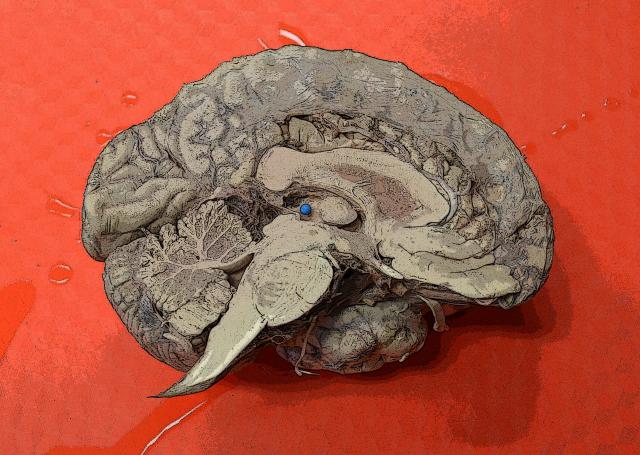
How do we make decisions as consumers? What do we pay attention to, and how do our initial responses predict our final choices? To what extent are these processes unconscious and cannot be reflected in overt reports? This course will provide you with an introduction to some of the most basic methods in the emerging fields of consumer neuroscience and neuromarketing. You will learn about the methods employed and what they mean. You will learn about the basic brain mechanisms in consumer choice, and how to stay updated on these topics. The course will give an overview of the current and future uses of neuroscience in business.

Class Deals by MOOC List - Click here and see Coursera's Active Discounts, Deals, and Promo Codes.

Syllabus

WEEK 1
What is Neuromarketing all About?
We first need to define the field – what are the key concepts, what are the key methods and reasons for employing neuroscience to study consumers and communication effects? In this module, we will introduce the topic and how some specific studies provide key insights into what neuroscience has to offer in relationship with more traditional methods.

WEEK 2
Attention & Consciousness
In the second module of this course we are turning to the functions of the brain, and we will first focus on attention and consciousness. This module will focus on some key concepts in attention and consciousness.

WEEK 3
Sensory Neuromarketing
In this module we will have contents filled on the topic of sensory neuromarketing. How are our senses affected differently as consumers? What can you do to organise your communications to better use all the senses? How does the brain actually use the senses? What tools do we have for assessing the use of senses, and how they affect consumers?

WEEK 4
Emotions & Feelings, Wanting & Liking
In this module, everything is about emotions and feelings, and the relationship between emotions and preference.
As we will see, our minds have a dual side: a conscious and an unconscious response and motivation, which are crucial to understanding consumer preference and choice. Indeed, unconscious emotional responses may turn out to be driving consumer choice to the same - or even larger - degree than conscious feelings. Are conscious feelings a mere after-the-fact rationalization upon conscious choice?

WEEK 5
Learning & Memory
This module will focus on Learning & Memory. We will determine not only that there are multiple kinds of memory, but that they also serve multiple purposes. If anything, learning is the vehicle we need to understand the most in consumer behaviour. What causes memory, and can we be affected unconsciously by our memories? How can we measure memory effects, and what is the relationship between brand equity and the brain?
This module, we also have an interview with Prof. Richard Silberstein, who shares his view on neuromarketing and consumer neuroscience. Prof. Silberstein is the Founder and chairman of the neuromarketing company Neuro-Insight.

WEEK 6
Neuroethics and Consumer Aberrations
This module, we will focus on both the ethics of neuromarketing, as well as aberrant consumer behaviours. We see that consumer choice can sometimes become the centre focus on a person's life, be it pathological gambling, "shopaholism" or digital dependencies. This module, we will focus on some of these issues, and combine them with the ethical aspects that we face when talking neuro. This module we also end off with two interviews: one with Prof. Jan Trzaskowksi at the CBS, who is working on marketing and the law, where we discuss what the ethical and legal aspects of neuromarketing is. As you will see, Jan has a very particular take on this that I am sure you will find interesting. Our second interview is with Carl Marci, who is the Co-Founder and Chief Science Officer of Innerscope Research on his background and their take on neuromarketing and consumer neuroscience.


Go to Class
MOOC List is learner-supported. When you buy through links on our site, we may earn an affiliate commission.

Related Courses

Learning How to Learn: Powerful mental tools to help you master tough subjects (Coursera) Coursera
University of California, San Diego,McMaster University

Learning How to Learn: Powerful mental tools to help you master tough subjects (Coursera)

This course gives you easy access to the invaluable learning techniques used by experts in art, music, literature, math, science, sports, and many other disciplines. We’ll learn about the how the brain uses two very different learning modes and how it encapsulates (“chunks”) information. We’ll also cover illusions of learning, memory techniques, dealing with procrastination, and best practices shown by research to be most effective in helping you master tough subjects.

Jun 1st 2026
4 Weeks
On Strategy : What Managers Can Learn from Philosophy - PART 1 (Coursera) Coursera
CentraleSupélec

On Strategy : What Managers Can Learn from Philosophy - PART 1 (Coursera)

In the expression “creative thinking”, the keyword is not creativity; the keyword is thinking. With the help of great philosophers, you will rediscover the art of thinking. To help leaders to be rigorous even without figures, great philosophers have lots of ideas. Managers are invited to rediscover the art of thinking. They should understand the role of mental models, realize the importance of cognitive bias, agree on clear definitions and efficient criteria etc. Creativity demands the ability to unshackle ourselves from conventional ways of thinking, to "think outside the box".

Jun 1st 2026
5-12 Weeks
Operations Management: Analysis and Improvement Methods (Coursera) Coursera
University of Illinois at Urbana-Champaign

Operations Management: Analysis and Improvement Methods (Coursera)

In this course, you will learn about the role of operations and how they are connected to other business functions in manufacturing- and service-focused organizations. You will learn and practice the use of decision-making frameworks and techniques applicable at all levels, from management-level strategic decisions such as connecting process to the needs of various customer segments, to front-line tactical decisions such as choosing between ordering larger quantities vs. ordering more frequently.

Jun 1st 2026
4 Weeks
Managing Responsibly: Practicing Sustainability, Responsibility and Ethics (Coursera) Coursera
University of Manchester

Managing Responsibly: Practicing Sustainability, Responsibility and Ethics (Coursera)

Managers are increasingly confronted with issues of sustainability, responsibility and ethics. Managing responsibly is an integrative approach to sustainability, responsibility and ethics, which allows you as a manager to deal competently with such challenges. This course will facilitate your learning process to engage in changing practices to make them more sustainable, responsible, and ethically informed.

Jun 1st 2026
5-12 Weeks
Introduction to Financial Accounting (Coursera) Coursera
University of Pennsylvania

Introduction to Financial Accounting (Coursera)

Master the technical skills needed to analyze financial statements and disclosures for use in financial analysis, and learn how accounting standards and managerial incentives affect the financial reporting process. By the end of this course, you’ll be able to read the three most common financial statements: the income statement, balance sheet, and statement of cash flows. Then you can apply these skills to a real-world business challenge as part of the Wharton Business Foundations Specialization.

Jun 1st 2026
4 Weeks
High Performance Collaboration: Leadership, Teamwork, and Negotiation (Coursera) Coursera
Northwestern University

High Performance Collaboration: Leadership, Teamwork, and Negotiation (Coursera)

Are leaders born or made? Learn the essential skills to develop and expand your leadership repertoire, design teams for collaboration, and craft win-win negotiation strategies. High Performance Collaboration: Leadership, Teamwork, and Negotiation focuses on leadership, teamwork, and negotiation. Students will engage in self-assessments to analyze their leadership style, develop team charters to optimize their groups, and develop a game plan for effective negotiation.

Jun 1st 2026
3 Weeks
Teamwork Skills: Communicating Effectively in Groups (Coursera) Coursera
University of Colorado Boulder

Teamwork Skills: Communicating Effectively in Groups (Coursera)

Effective teamwork and group communication are essential for your professional and personal success. In this course you will learn to: make better decisions, be more creative and innovative, manage conflict and work with difficult group members, negotiate for preferred outcomes, improve group communication in virtual environments, develop a better overall understanding of human interaction, and work more effectively as a team. Our goal is to help you understand these important dynamics of group communication and learn how to put them into practice to improve your overall teamwork.

Jun 7th 2026
4 Weeks
Fundamentals of Project Planning and Management (Coursera) Coursera
University of Virginia

Fundamentals of Project Planning and Management (Coursera)

Projects are all around us. Virtually every organization runs projects, either formally or informally. We are engaged in projects at home and at work. Across settings, planning principles and execution methodologies can offer ways in which projects can be run more effectively and efficiently. Project management provides organizations (and individuals) with the language and the frameworks for scoping projects, sequencing activities, utilizing resources, and minimizing risks.

Jun 1st 2026
4 Weeks
Model Thinking (Coursera) Coursera
University of Michigan

Model Thinking (Coursera)

We live in a complex world with diverse people, firms, and governments whose behaviors aggregate to produce novel, unexpected phenomena. We see political uprisings, market crashes, and a never ending array of social trends. How do we make sense of it? Models. Evidence shows that people who think with models consistently outperform those who don't. And, moreover people who think with lots of models outperform people who use only one. Why do models make us better thinkers? Models help us to better organize information - to make sense of that fire hose or hairball of data (choose your metaphor) available on the Internet.

Jun 1st 2026
5-12 Weeks
Innovation Management (Coursera) Coursera
Erasmus University Rotterdam

Innovation Management (Coursera)

What is innovation management? How do firms bring in new business models and get new products and services to the market? Go on a nine-week journey through innovation management concepts, theories of idea generation, selection, strategy formulation and implementation in this MOOC in Innovation Management. In it, you will also learn the tools for implementing innovation projects yourself. Guided by world-class academics, you will develop an innovative mindset and expertise in how firms successfully create new ideas for marketing new products. The syllabus also includes sessions about innovation strategy, idea management and social networks.

Jun 4th 2026
5-12 Weeks
Learning How To Learn for Youth (Coursera) Coursera
Arizona State University

Learning How To Learn for Youth (Coursera)

Based on the most popular open online course in the world, this course gives you easy access to the learning techniques used by experts in art, music, literature, math, science, sports, and many other disciplines. No matter what your current skill level, using these approaches can help you master new topics, change your thinking and improve your life.

Jun 5th 2026
3 Weeks