How to Read a Mind: an Introduction to Understanding Literary Characters (FutureLearn)

How to Read a Mind: an Introduction to Understanding Literary Characters (FutureLearn)

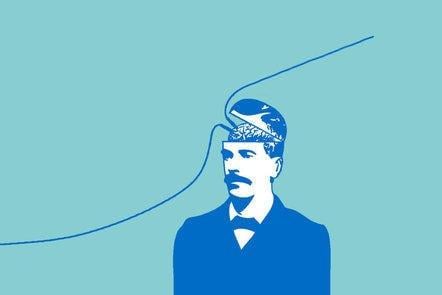
How do we read and model fictional minds? Introducing cognitive poetics: the application of cognitive science to literary reading.

Class Deals by MOOC List - Click here and see FutureLearn's Active Discounts, Deals, and Promo Codes.

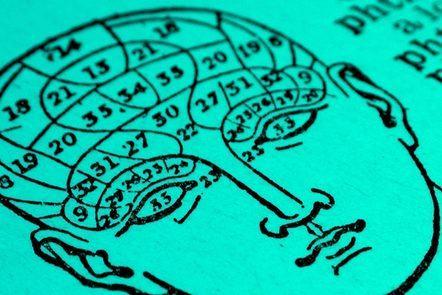
This free online course offers an introduction to the field known as cognitive poetics – applying cognitive science (the study of the mind and its processes) to how we read literature.

Understand cognitive poetics: what happens in our minds when we read
Taking our best current knowledge of how our minds and language work, we will ask some key questions about reading literature:

  • Why do we feel anything for fictional characters?
  • Why do we get angry, moved, irritated, annoyed or sentimental about imaginary people in imaginary worlds?
  • And why do the lives of fictional characters matter so much to readers?

The answers to these questions are surprising and empowering, and as we explore each, we will introduce you to some key concepts from psychology, linguistics and philosophy.


Go to Class
MOOC List is learner-supported. When you buy through links on our site, we may earn an affiliate commission.

Related Courses

Soul Beliefs: Causes and Consequences - Unit 2: Belief Systems (Coursera) Coursera
Rutgers University

Soul Beliefs: Causes and Consequences - Unit 2: Belief Systems (Coursera)

Throughout history, the vast majority of people around the globe have believed they have, however defined, a “soul.” While the question of whether the soul exists cannot be answered by science, what we can study are the causes and consequences of various beliefs about the soul and its prospects of surviving the death of the body. Why are soul and afterlife beliefs so common in human history? Are there adaptive advantages to assuming souls exist?

Jun 8th 2026
5-12 Weeks
Mind Control: Managing Your Mental Health During COVID-19 (Coursera) Coursera
University of Toronto

Mind Control: Managing Your Mental Health During COVID-19 (Coursera)

Never in the history of humanity have so many people been feeling intense anxiety related to COVID-19 and the world it will leave in its wake. The intent of this course is to give you a deeper understanding of the anxiety reaction as it relates to various aspects of our current life, ranging from our consumption of news to the way we talk to our children about this. I will also give you clear strategies for managing and, in fact, turning off the anxiety response at least for short periods.

May 18th 2026
4 Weeks
Understanding Dementia (University of Tasmania) Other Providers
University of Tasmania

Understanding Dementia (University of Tasmania)

The Understanding Dementia MOOC was developed by the Wicking Dementia Research and Education Centre based in the College of Health and Medicine at the University of Tasmania. This world-leading online course is free, easily accessible and available to everyone with an interest in dementia. This course is free and runs twice a year in February and July.

Feb 7th 2023
5-12 Weeks
The Conscious Mind - A Philosophical Road Trip  (edX) EdX
Trinity College, Hartford,TrinityX

The Conscious Mind - A Philosophical Road Trip (edX)

Explore the worlds of sense, thought and the mind, as revealed through the philosophical discipline of phenomenology. In ordinary life we barely notice the operations of our own minds. In The Conscious Mind - A Philosophical Road Trip, we will illuminate what we take for granted in perception, action, and interaction with others. We’ll explore this mindful awareness through demonstrations, illusions, brainteasers, thought experiments, riddles and jokes, all designed to shake you loose from your ordinary assumptions about the way consciousness works.

This course is archived
5-12 Weeks
Preventing Dementia (University of Tasmania) Other Providers
University of Tasmania

Preventing Dementia (University of Tasmania)

Preventing Dementia is a Massive Open Online Course (MOOC), offering university-quality education about the latest research in dementia risk and protective factors. The free 4-week course provides an opportunity to engage with the perspectives of a global community, without requiring exams or assignments. This course runs twice a year in May and October.

May 17th 2022
4 Weeks
What is a Mind? (FutureLearn) FutureLearn
University of Cape Town

What is a Mind? (FutureLearn)

Explore the most pertinent scientific and philosophical concepts for understanding our own minds with this free online course. This free online course will bring together learners and practitioners interested in how the mind works. It aims to build bridges between traditionally antagonistic approaches to understanding the mind.

Jul 25th 2022
5-12 Weeks
Mente e cervello: dalla neuropsicologia alle neuroscienze cognitive (Federica Web Learning) Federica Web Learning
University of Naples Federico II

Mente e cervello: dalla neuropsicologia alle neuroscienze cognitive (Federica Web Learning)

Il nostro cervello ci permette di muoverci e di percepire l'ambiente che ci circonda, ma anche di parlare, di leggere e scrivere, di prestare attenzione, di vivere ricordi ed emozioni. Fin dall'antichità ci si è chiesto come queste funzioni "mentali" possano emergere dal funzionamento cerebrale.

Sep 9th 2019
No Information
The Many Faces of Dementia (FutureLearn) FutureLearn
University College London

The Many Faces of Dementia (FutureLearn)

Gain a unique insight into dementia through the stories, symptoms and science behind four less common diagnoses. Explore key issues in dementia care and research, through four less common forms. Dementia is one of the foremost priorities in global health and is estimated to affect over 44 million people worldwide.

Jan 4th 2021
4 Weeks
Apprendre et enseigner avec les sciences cognitives (FUN) FUN
Direction des Ressources Humaines de l'Armée de Terre - DRHAT

Apprendre et enseigner avec les sciences cognitives (FUN)

L’objectif de ce MOOC est multiple : former le maximum de personnes concernées par l’apprentissage et la formation des étudiants et adultes, aux connaissances les plus fiables en sciences cognitives de l’apprentissage; promouvoir l’intégration de ces apports dans les modalités d’apprentissage, pour rendre les formations plus efficaces; participer à la réduction de l'échec scolaire dans l'enseignement et dans la formation professionnelle; proposer des pratiques adaptables et des outils immédiatement utilisables en salle de cours ou de formation; stimuler les expérimentations et les changements de pratiques pédagogiques à partir de méthodes et d’outils éprouvés et choisis pour leur démarche efficiente; mettre en relation des enseignants et des formateurs animés du désir et de la volonté de mettre en place des pratiques plus efficaces. Partager des pratiques, des idées, des innovations, construire ensemble.

No sessions available
5-12 Weeks
Philosophy, Science and Religion: Philosophy and Religion (Coursera) Coursera
University of Edinburgh

Philosophy, Science and Religion: Philosophy and Religion (Coursera)

Philosophy, Science and Religion mark three of the most fundamental modes of thinking about the world and our place in it. Are these modes incompatible? Put another way: is the intellectually responsible thing to do to ‘pick sides’ and identify with one of these approaches at the exclusion of others? Or, are they complementary or mutually supportive? As is typical of questions of such magnitude, the devil is in the details. For example, it is important to work out what is really distinctive about each of these ways of inquiring about the world. In order to gain some clarity here, we’ll be investigating what some of the current leading thinkers in philosophy, science and religion are actually doing.

May 25th 2026
5-12 Weeks
Lesson Planning with the ELL in Mind (Coursera) Coursera
Arizona State University

Lesson Planning with the ELL in Mind (Coursera)

In this course you will learn how to design lesson plans around the needs of your ELL students and their language level through the analysis of content language and cognitive demands. You will learn how to align language objectives to the adopted standards of your school and content area. You will learn how to modify existing course materials as well as develop graphic organizers and languages frames to support ELLs’ access to content. Analysis of second language acquisition theories will be applied to lesson planning.

Jun 1st 2026
5-12 Weeks